Sponsored by HORIBAApr 30 2007
The UVISEL range of HORIBA spectroscopic ellipsometers use photoelastic modulators to perform polarization modulation at a high frequency (50 kHz) without any mechanical movement.
Owing to this technology these systems have the advantage of being very fast, having no moving parts and providing high accuracy measurements over a wide spectral range without the need for extra optical elements. Phase modulation allows the achievement of higher sensitivity for the characterization of thin film thickness and optical constants when compared with conventional ellipsometers.
How Does a Phase Modulated Ellipsometer Work?
Optical Setup
The light source is a Xenon lamp that covers a large spectral range from 190 to 2100 nm. After passing through the first polarizer which establishes a linear polarization, the light reflects at oblique angle (generally 70°) from the sample under study. The output head comprises a photoelastic modulator and an analysing polarizer that resolves the polarization state of the reflected beam.
Both polarizers are held fixed during the measurement while the photoelastic modulator is used to induce a modulated phase shift of the reflected beam.
The light is analyzed by a grating monochromator that directs sequentially the light for each individual wavelength onto the detector. Two types of detectors are employed: photomultipliers for FUV-VIS applications, and InGaAs photodiodes for NIR applications.
Scanning monochromator systems have the advantage of controllable bandwidth providing very accurate experimental spectra, high resolution that is useful for thick layer applications and excellent repeatability of the measurement. Modern Horiba monochromators are able to perform a measurement from the FUV to NIR in a short time.
The configuration of the UVISEL phase modulated ellipsometer is shown in the figure below.
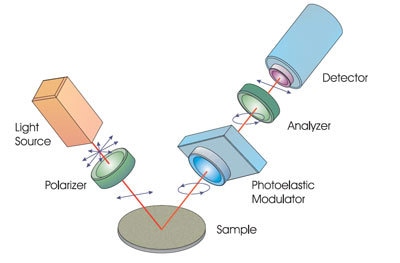
Figure 1. Optical setup of the UVISEL
Description of the Phase Modulation Technology
What is a Photoelastic Modulator ?
The photoelastic modulator is a fused silica bar exhibiting isotropic behaviour when no stress is applied. The photoelastic modulator is an optical element that can be described as a birefringence modulator.
If a mechanical strain is applied to the quartz bar, such as by a piezoelectric transducer attached to the end of the bar, the modulator becomes birefringent (n0 ≠ ne). This means that light travels along one axis faster than the other when passing through it which produces a different phase velocity for each, and a modulated phase shift is induced to the light beam.
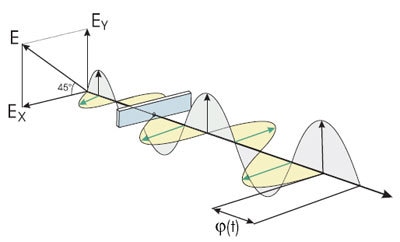
Figure 2. Schematic of the photoelastic modulator working
What are the Advantages of the Photoelastic Modulator over Other Forms of Polarization Modulation?
Wide Spectral Range Coverage
A major advantage is that a wide spectral range from the FUV to the NIR is covered without the need for several hardware configurations, and without moving any optical elements, the UVISEL provides a continuous and accurate measurement over the wide spectral range from 190 to 2100 nm.
Large Acceptance Angle
The photoelastic modulator optical element has a large tolerance of the incident angle allowing more simple alignment of the system. As the light beam need not follow the principal axis of a rotating element this is a great advantage when performing measurements in liquid cells, on deposition / etch reactors in-situ.
Microspot Capability
The UVISEL integrates mirror based optical coupling to the sample providing a microspot capability up to 50 μm over the whole spectral range. Measurements with microspot are useful for the characterization of patterned materials found in semiconductor wafers, display materials, and biosensors. It provides as well several advantages for the analysis of rough layers and devices with transparent substrates.
High Accuracy Measurements for All Values of Psi and Delta
The phase modulated ellipsometer delivers optimum accuracy for all values of Ψ and Δ for any sample by measuring the parameters:
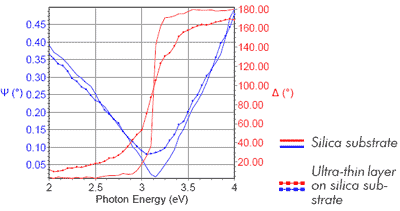
Figure 3. Photon Energy (eV)
High Sensitivity
The sensitivity of an ellipsometer is determined by all the different components used. When a PEM is used as the key component, its 50 kHz modulation frequency provides a wide dynamic range without noise. When combined with powerful digital signal averaging the UVISEL phase modulated ellipsometer features an excellent signal to noise ratio from the FUV to NIR.
Fast Data Acquisition Speed
With a modulation frequency of 50 kHz the phase modulated ellipsometer can work with response times as short as 1ms/point, and with good signal : noise ratio. This makes the instrument the ideal system for real-time process control, and to follow dynamic studies and liquid-surface measurements in real-time.
Advanced Measurement Capability
Depolarization Effects
Depolarization can occur in case of incoherent reflection, roughness, scattering, inadequate spectral resolution, inhomogeneity. By measuring Is, Ic and Ic’ the UVISEL software allows the calculation of the degree of polarization as defined as:
P = (Is)2 + (Ic)2+ (Ic’)2
- When P=1, the sample is not depolarizing.
- When P<1, the sample is depolarizing.
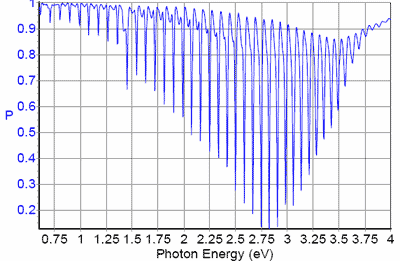
Figure 4. Degree of polarization <1 exhibited by a 5 μm organic layer
Mueller Matrix
Up to 11 elements of the Mueller matrix can be measured by the UVISEL Phase Modulated Ellipsometer. Mueller matrix measurements are useful when the sample is both depolarizing and anisotropic.
UVISEL Phase Modulated Ellipsometer Performance Qualified
Ellipsometric Accuracy for Cases where Δ is Close to 0°: Straight-Through Air measurements
The only material for which the ellipsometric parameters are absolutely known is air: an ellipsometric measurement in the straight-through configuration should by definition return Ψ = 45° and Δ = 0°.
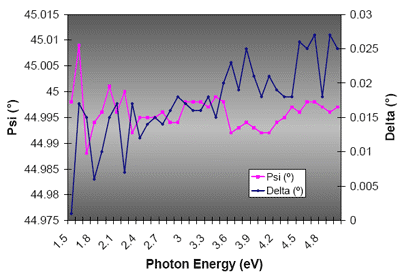
Figure 5. Straight-through ellipsometric measurements of air performed on UVISEL in the range 1.5 – 5 eV at 2000 ms integration time
Average value for Ψ is in the range: 44.98º to 45.02º. Average value for Δ is in the range : -0.02º to 0.02º. Standard deviation for Ψ is 0.0035 and Δ 0.0057, this is ±0.01º.
Ellipsometer Accuracy and Repeatability
Standard Reference Materials
The accuracy and repeatability measurements of the UVISEL ellipsometer were performed using a standard reference materials (SRM) supplied by the National Institute of Standards Technology (NIST). Standards consist of thermal oxide on silicon and the NIST 100 nm was used.
The NIST 100 nm gives the following certified values (for a one layer model) :
- Thickness: 973.00 Å
- Refractive index: 1.465
Definitions
The repeatability is defined as the standard deviation of 10 static measurements made at the same spot location. The accuracy is the difference between the average value of the sample properties (thicknesses and refractive index)over 10 measurements and the NIST nominal value.
Performance
Ten measurements on NIST 100 nm were performed at an angle of incidence of 70°, using an integration time of 200 ms/point across the spectral range 190-2100 nm. A single layer model of SiO2 on c-Si was used. The optical constants of the SiO2 were determined using the classical Lorentz oscillator dispersion formula.
Results provide an excellent repeatability over the whole spectral range showing:
- an average thickness value of 973.23 ± 0.11 Å,
- an average refractive index value of 1.4627 ± 0.00006.
According to the definition above the UVISEL features an accuracy of:
- 0.23 Å for the thickness,
- 0.002 for the refractive index.
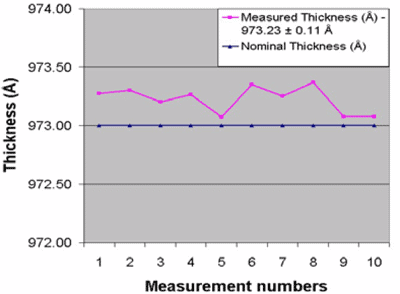
Figure 6. Measured Thickness example
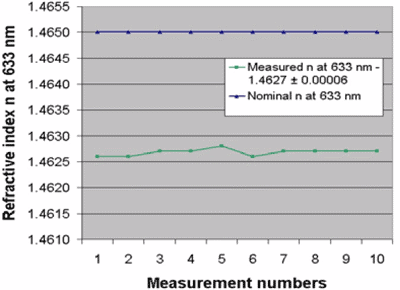
Figure 7. Measured Refractive Index example
Repeatability Versus Integration Time
For usual applications an integration time of 100ms or 200ms per point is generally used.
Experimental conditions:
- Number of measurements: 10 at 2.75 eV (450 nm)
- Sample: thermal oxide (~840Å) on Si
- Integration time: ranges between 1000 and 1 ms
Table 1. Experimental Data
|
|
|
|
|
|
|
|
Ψ (%)
|
0.02
|
0.03
|
0.05
|
0.05
|
0.07
|
|
Δ (%)
|
0.01
|
0.02
|
0.03
|
0.04
|
0.06
|
|
|
|
|
|
|
|
|
Ψ (%)
|
0.14
|
0.23
|
0.32
|
0.61
|
0.86
|
|
Δ (%)
|
0.10
|
0.16
|
0.20
|
0.25
|
0.41
|
Conclusion
Spectroscopic ellipsometry based on photoelastic modulation delivers very high accuracy and repeatability. Owing to this technology the UVISEL allows the unique combination of high performance and experimental versatility to meet advanced customers needs and application capabilities.
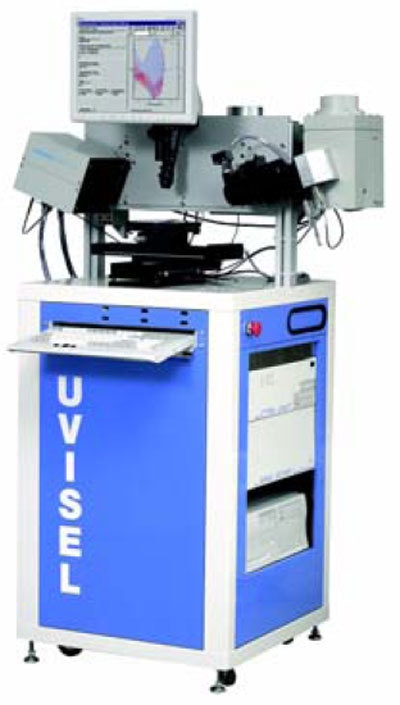
Figure 8. UVISEL: Spectroscopic Phase Modulated Ellipsometer

This information has been sourced, reviewed and adapted from materials provided by HORIBA.
For more information on this source, please visit HORIBA.