Oct 27 2009
Gold is the perfect raw material for rapid testing. A rapid test is an inexpensive, disposable, membrane-based technique that provides visual evidence of the presence of an analyte in a liquid sample.
Applications for rapid tests include clinical uses (fertility tests, tumor markers, toxicology, allergies), agricultural uses (food safety, plant and crop diseases) and environmental uses (biological and environmental contamination.)
Rapid Tests in the Past
Early rapid tests used coloured latex to form the visual signal. However, gold labels were first introduced into membrane-based rapid tests in the late 1980s, because of their greater potential stability and an ever-increasing demand for ultra sensitivity. These labels are based on gold colloids (a suspension of nanometer sized gold particles individually surrounded by a negative charge layer. This charge layer provides the means for the gold particles to repel each other and stay in suspension indefinitely.)
Current Applications of Gold in Rapid Tests
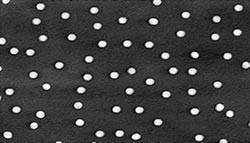
Gold is essentially inert and forms almost perfectly spherical particles when properly manufactured. Proteins bind to the surfaces of these gold particles with enormous strength when correctly coupled, thus providing a high degree of long-term stability in both liquid and dry states. If manufacturing processes ensure that gold particles of any accurately defined size can be manufactured reproducibly, there will be minimal batch to batch variation. What's more, different sizes of gold may be used for different applications, thus making it a very flexible raw material for both manufacture and development.
Overall, the superior stability, sensitivity and reproducibility of manufacture, make gold a first class raw material component for a wide range of rapid test applications.
Source: World Gold Council
For more information on this source please visit World Gold Council