Nov 27 2004
Shot peening is a way of enhancing the surface hardness of titanium and producing desirable finishes on items used in multiple industries.
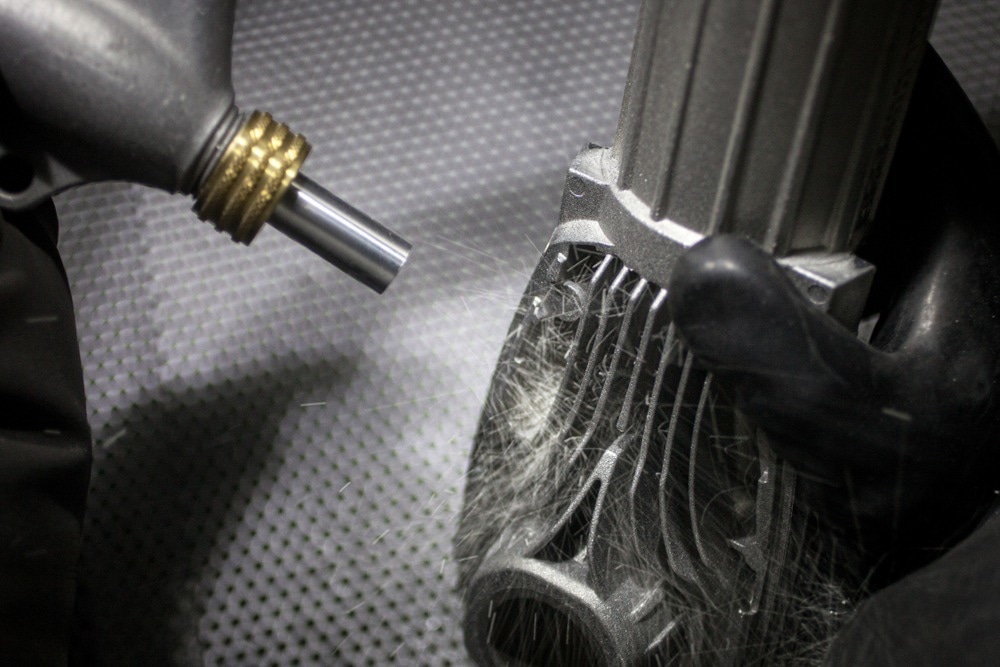
Image Credit: Lofix/Shutterstock.com
Background
Titanium has a tendency to gall when in rubbing contact with itself and other surfaces. A number of techniques have been developed to engineer the titanium surface and overcome this problem to strengthen the metal:
• Lubrication
• Anodising
• Electroplating
• Ion Implantation
• Nitriding
The Shot Peening Process
Shot peening is a cold working process in which the surface of a component is bombarded with small spherical particles of metal, glass, or ceramic – the shot. Each piece of shot striking the metal surface in the blast stream acts as a tiny peening hammer, imparting to the surface a small indentation or dimple. To create this dimple the surface layer must yield tension when shot blasting.
More from AZoM: Titanium and Titanium Alloys - Forming and Formability of Titanium and Titanium Alloys
Below the surface, the bulk metal, in attempting to regain its original shape, generates compressive stress on the cold worked surface. The maximum residual compressive stress produced just under the surface of a titanium part due to the peening intensity is at least 50% of the tensile strength of the material being peened. The surface may be smoothed or textured, and peened surface hardness increased due to the cold working effect of the peening.
Note: SS = surface compressive stress
CS max. = maximum induced compressive stress
d= effective depth of compressive stress effect
TS max. = maximum induced tensile stress. This is controlled to maintain stress equilibrium in the part. It must not be so large that internal failure becomes possible.
Applications for Shot Peened Titanium
Shot peening of titanium sheet is used to produce a range of attractive finishes for architectural panels and personal items, such as watches. Compressive stresses are beneficial in increasing resistance to fatigue, but only when this initiates from the component surface.
Shot peening is regularly and widely used on titanium components for aerospace and industrial applications to provide enhanced fatigue resistance and reduced susceptibility to galling, fretting, and stress corrosion cracking. Shot peening alone confers the benefits indicated, but may also be used in conjunction with other surface treatments.

This information has been sourced, reviewed and adapted from materials provided by Titanium Information Group.
For more information on this source, please visit Titanium Information Group