Due to the spike in energy prices, there is intense interest in locating and developing additional oil and gas reserves. These reserves are located in sedimentary basins and predictions can be made of the quantity of oil and gas in these reservoirs by the identification and characterization of petroleum source rocks. However, this requires an understanding the burial and thermal maturation histories of the strata in these basins.
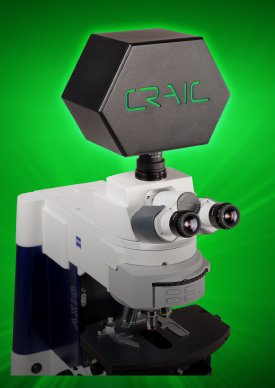
Commonly, this is done by measuring the vitrinite reflectance of kerogens, the organic components of the source rock, with instruments such as the QDI CoalPro™ Vitrinite Reflectance Measurement System. The level of vitrinite found in kerogens is an indicator of the thermal maturity of the petroleum source rock and therefore allows predictions of the amount and timing of petroleum generation.
Vitrinite is a maceral that is a key component of kerogen, the organic components of petroleum source rocks. By measuring the amount of vitrinite, the thermal maturity of the source rock can be determined and an estimate can be made of the amount of oil or gas contained within a particular reservoir. The procedure has been delineated in ISO and ASTM standards and requires a microphotometer: a device designed to measure the intensity of light reflected from a microscopic sampling area at 546 nm. The procedure is simple: the microphotometer measures the amount of light reflected from the kerogen at hundreds of points after which a statistical analysis is done. The results of the statistical analysis are used to determine the amount of vitrinite in the petroleum source rock and therefore its thermal maturity. As hundreds of measurements need to be done on each sample, this used to be a very time consuming process. Today, instruments such as the QDI CoalPro™ from CRAIC Technologies can automate this process and dramatically improve the number of samples analyzed in a day.