Artificial intelligence (AI) is altering how R&D teams develop, test, and commercialize new products. However, fragmented data, disconnected systems, and legacy software can prevent organizations from using AI effectively across the full product development lifecycle.
This eBook explores what an AI-native platform for end-to-end product development should deliver, from experimental data capture and formulation design to quality management, compliance, and commercialization.
It also provides a framework for comparing platforms and identifying the capabilities needed to support long-term R&D innovation.
Download the full guide
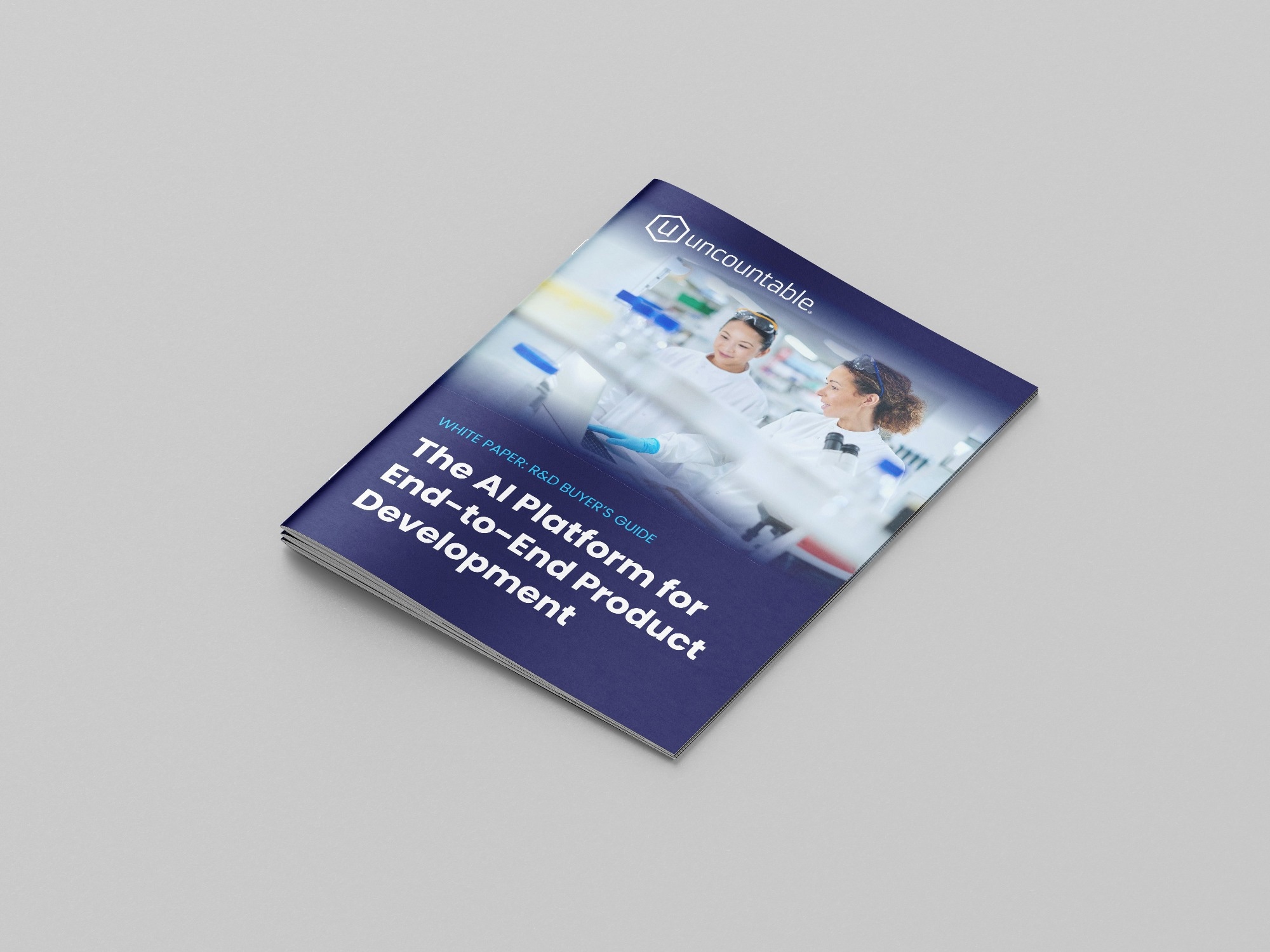
Download the Guide Now to Explore:
- How AI-native platforms differ from LIMS, ELNs, Scientific Data Management System (SDMS), spreadsheets, and other legacy systems
- Why structured, connected data is essential for effective AI adoption
- The role of unified data layers, predictive analytics, and experiment optimization
- How instrument connectivity can automate data capture and reduce transcription errors
- Ways to improve collaboration across laboratories, departments, and global teams
- The key platform capabilities needed to support R&D, quality, and product lifecycle management
- Which industries and R&D roles can benefit from an end-to-end AI platform
- Essential questions to ask vendors about integration, scalability, security, customization, and support
Whether your organization is replacing fragmented legacy tools or building an AI-ready R&D infrastructure, this guide helps you assess potential platforms and select a solution aligned with your workflows, data strategy, compliance requirements, and future growth.
Download the full guide here


This information has been sourced, reviewed, and adapted from materials provided by Uncountable Inc.
For more information on this source, please visit Uncountable Inc.