In order to increase its flexibility, mineral oil is added to crystal polystyrene. The technique requires a high degree of regulation, as adding too much mineral oil will dissolve the polystyrene polymer. Nuclear magnetic resonance (NMR) offers a quick and efficient way of monitoring the mineral oil content in crystal polystyrene.
Method
NMR has a number of benefits over other techniques:
- Calibration is possible for a range from 0 to 100%.
- The measurement time is short, around two seconds, allowing rapid sample throughput.
- The NMR technique is non-destructive, so the analyzed polystyrene is still usable.
- NMR is not sensitive to air voids between polystyrene granules.
- NMR is highly stable over the long-term, so calibrations will rarely require adjustment.
- NMR does not need the use of hazardous solvents.
- Both weighing and non-weighing methods are available for this application.
Calibration and Results
In this article for demonstrative purposes, five samples of crystal polystyrene were chosen for the analysis of mineral oil content. Each sample was weighed into a tared 26-mm glass tube and preconditioned for an hour at 105 °C, before being placed in an MQC-23 for analysis. The graph in figure 1 shows the calibration of the NMR measurements against mineral oil contents determined by an alternative method for these samples. The quality of the calibration exhibited in figure 1 is high, as shown by the correlation coefficient of 1 and the standard deviation of 0.07.
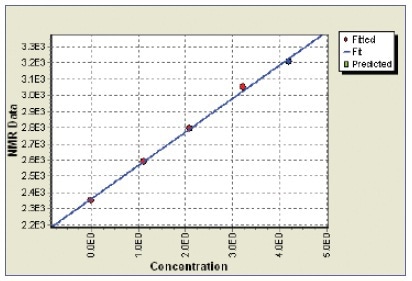
Figure 1. Calibration of NMR data and reference values for oil content. Correlation: r = 1; SD = 0.07.
The MQC-23 fitted with a 26-mm diameter probe is ideal for this application. The Oil in Crystal Polystyrene package comprises the following:
- MQC-23 with a built-in computer operating the latest version of Microsoft Windows (no separate PC is required).
- MultiQuant software including RI Calibration, RI Analysis, and the EasyCal ‘Oil in Crystal Polystyrene’ application.
- 26-mm glass tubes.
- Installation Manual.
- ‘Oil in Crystal Polystyrene’ method sheet.
- A dry heater and aluminium block with 26-mm holes for sample conditioning at 105 °C.
- A precision balance.
Advantages of MQC-23
The instrument offers a number of benefits when compared to its counterparts:
- High signal sensitivity.
- Small benchtop footprint.
- Low maintenance.
- Recyclable sample tubes, lowering consumable costs.
- Minimal sample preparation.

This information has been sourced, reviewed and adapted from materials provided by Oxford Instruments Magnetic Resonance.
For more information on this source, please visit Oxford Instruments Magnetic Resonance.