The Thermo Scientific™ Sentinel™ 4000 Drop Through System (Sentinel 4000D) is designed to detect metal contamination in free-falling products, making it especially effective for bulk materials like grains, powders, and granules.
Equipped with advanced multi-frequency technology, the Sentinel 4000D delivers high sensitivity and precision across a broad range of metals. This ensures even the smallest metal contaminants are identified and removed, helping protect downstream equipment and maintain consumer safety.
The Sentinel 4000D with Multiscan technology, the newest addition to the Sentinel family, features five detecting frequencies that can be selected by the user. This enhances the sensitivity and detection of contaminants in any application.
In addition to its improved detection capabilities, the Sentinel 4000D is designed for ease of use and seamless integration into existing manufacturing processes. It features a user-friendly interface and a robust build, with a high-definition version available, making it suitable for demanding industrial environments.
In one example, the Sentinel 4000D was deployed at a customer site to support product quality in a legume processing application. The customer had been experiencing metal contamination, with metal scraps traced back to their processing equipment.
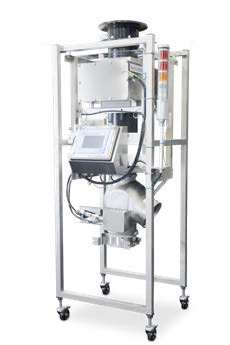
Sentinel 4000D MultiIscan Metal Detector. Image Credit: Thermo Fisher Scientific – Production Process & Analytics
The Sentinel 4000D successfully addressed these issues, providing reliable detection and removal of metal contaminants. The table below outlines the confirmed detection sensitivities and the contamination rates found in the customer’s product.
Since the system’s installation, the customer has maintained consistent daily inspections and achieved accurate, automated rejection of contaminated product.
Detection sensitivities and product drop rate for bulk peanuts. Source: Thermo Fisher Scientific – Production Process & Analytics
| Product |
Ferrous |
Non-Ferrous |
Stainless Steel 316 |
Drop Rate |
| Peanut |
0.7 mm |
0.7 mm |
1.2 mm |
4.41 Lbs/hour |

This information has been sourced, reviewed and adapted from materials provided by Thermo Fisher Scientific – Production Process & Analytics.
For more information on this source, please visit Thermo Fisher Scientific – Production Process & Analytics.