Hydraulic systems form the backbone of industrial machinery, since they ensure efficient operation, lubrication, and cooling. However, particulate contamination is one of the key causes of unplanned downtimes, costly repairs, and system failures. Effective monitoring of contamination and control strategies is essential to extending equipment life and maintaining optimal performance.
Image Credit: genkur/Shutterstock.com
What is Particulate Contamination?
Particulate contamination in hydraulic oil refers to solid particles that become suspended in the fluid, which can originate from multiple different sources, such as:
- Wear debris from valves, actuators, and pumps
- External contamination from dirt, dust, or moisture ingress
- Oil degradation products, such as sludge and varnish
- Improper maintenance or filtration practices
Even tiny, microscopic particles can cause damage by eroding components, reducing lubrication efficiency, and blocking small passages
Industry Standards for Hydraulic Oil Cleanliness
Various ISO standards define methods for monitoring particulate contamination in hydraulic fluids to ensure reliability:
- ISO 21018-1: Introduces alternative methods, including Dynamic Image Analysis, for monitoring contamination when traditional methods prove insufficient.
- ISO 11171: Standardizes the calibration of automatic particle counters using light extinction.
- ISO 4406: Specifies a cleanliness code based on particle counts at different size ranges.
Common Methods for Contamination Monitoring
Several different techniques can be used for particulate contamination analysis in hydraulic oils, each with its own advantages and disadvantages.
1. Light Obscuration (ISO 11171)
- Widely accepted and commonly used
- Struggles with soft contaminants, air bubbles, and water droplets
- Does not differentiate between different types of contamination
- Quick and automated particle counting
2. Microscopic Analysis (ISO 4407)
- Can classify dirt, fibers, and wear debris
- Gives direct visual confirmation of particles
- Requires an expert’s interpretation
- Labor-intensive and time-consuming
3. Dynamic Image Analysis (ISO 21018-1 Compliant)
- Reduces the likelihood of false positives from air bubbles or water droplets
- Provides shape-based classification to identify wear particles, fibers, and gels
- Takes high-resolution images of contaminants
- Identifies contamination sources, supporting proactive maintenance
- This is a newer technology, so its adoption is still growing
Best Practices for Hydraulic Oil Contamination Control
To extend system longevity and maintain optimal oil cleanliness, follow these best practices:
1. Regular Oil Analysis
Routinely testing oil enables the early detection of contamination before it causes extreme wear or even system failure.
2. Proper Filtration
Use high-efficiency filters and replace them regularly to prevent the buildup of contaminants.
3. Contamination Source Identification
Comprehending where contaminants come from (such as external dust, seal degradation, or metal wear) enables the development of targeted maintenance strategies.
4. Compliance with Industry Standards
Following ISO 4406 cleanliness codes ensures that hydraulic systems meet the required contamination limits for different applications.
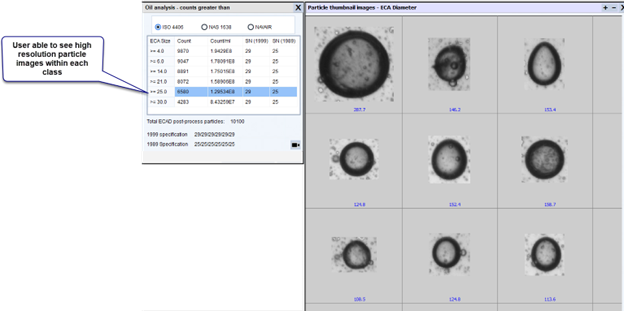
Figure 5. Oil wear reporting to meet requirements, as well as thumbnail images for any selected class, as objective evidence. Image Credit: Vision Analytical Inc.
Conclusion
Particulate contamination in hydraulic oil has been shown to reduce system reliability. By using effective monitoring techniques, employing best practices, and following industry standards, industries can significantly reduce their maintenance costs, improve overall efficiency, and prevent failures
With the introduction of ISO 21018-1, innovative methods such as Dynamic Image Analysis are providing more advanced insights into contamination sources, helping industries shift from reactive to proactive maintenance strategies.

This information has been sourced, reviewed and adapted from materials provided by Vision Analytical Inc.
For more information on this source, please visit Vision Analytical Inc.