Sponsored by InterpowerReviewed by Ify IsiborApr 15 2026
Offering customers more choice can help make a product more marketable. An accessory power system is one way to achieve this by simplifying power connections and opening new markets.
An accessory power system using IEC 60320 components creates an electrical product more easily adapted to global market needs, without requiring user reconfiguration.
A product fitted with an accessory power system can be used in many countries, offering the company a cost-saving benefit by eliminating the need to stock different types of plugs or to keep them available.
IEC 60320 components are a common connector interface employed globally. These components provide a framework for product design and testing, streamlining the process of specifying a connector for a cord set. Their configurations also help to prevent improper connections, ensuring safe connections by providing a uniform connector for similar voltages.
The sheer range of plug/socket patterns used around the world can pose practical or cost-related challenges when exporting to global markets, but the use of IEC 60320 components makes it easier to build for global markets because these components are typically accepted worldwide.
In the past, companies often had to supply different power connections for different countries, with a separate cord for each one. These changes mean a single country-specific cord set can now serve as the main power connection.
Accessory Power: Defining Power Connections to Peripheral Equipment from a Central System
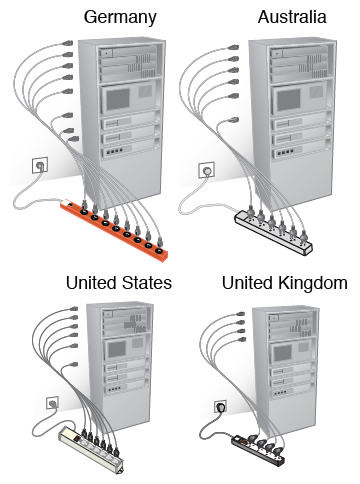
Image Credit: Interpower
Country-specific plugs and sockets are not required for accessory power connections. The image above features a typical accessory power system using IEC 60320 interconnection components, with a country-specific cord set (a Continental European cord set in this case) that connects to a wall socket.
Using Accessory Power
Dan Ford, Technical Support Specialist at Interpower, outlines the benefits of using accessory power: “Accessory power is specifying one plug and socket configuration that is accepted globally for connections between equipment systems. A country-specific mains connection is needed only for the primary power supply connections.”
“Accessory power is specifying one plug and socket configuration that is accepted globally for connections between equipment systems. A country-specific mains connection is needed only for the primary power supply connections. This makes it easier to design and build equipment that can be accepted worldwide.
“The IEC 60320 interconnection system is generally accepted for use throughout the world. By using a plug and socket configuration that is accepted globally, it can allow the equipment to be more marketable.”
A range of settings can benefit from utilizing accessory power to distribute and control power to peripheral equipment via a central system. These include industrial, information technology, ophthalmological, medical, dental, test-and-measurement, and food-production environments.
Designers implementing an accessory power system can build a product with a simplified, organized rack and/or multiple equipment units. The main power system can be controlled by the accessory power strip when there is insufficient panel space or when overall power control is needed to coordinate different pieces of equipment.
Accessory power systems are used in several mall and airport kiosks, for example. Space is at a premium in these settings, with numerous electrical devices that need power.
Using an accessory power system means that only one cord set is plugged into the power source, with other devices powered via jumper cord sets connected to the accessory power strip. A computer setup with a range of components is another example where this type of system can be beneficial.
Key Components of an Accessory Power Distribution System
A few key components make up an accessory power distribution system.
Accessory Socket Strip
A single-socket strip features multiple power outlets, allowing several pieces of equipment to be connected to a single power source.
Jumper Cord Sets
Global cord sets connect peripheral equipment to the accessory socket strip.
Country-Specific Cord Set
Using a single cord set to connect the system to the electrical power source is key to minimizing the number of country-specific cord sets kept in inventory.
Advantages of an Accessory Power Distribution System
Incorporating these components into an accessory power distribution system offers a range of benefits.
Production Efficiencies
A product’s primary components can be the same across designs, with the only component differing in the product’s assembly being the country-specific cord set.
Cost Savings
It is possible to achieve price-volume discounts while also maintaining lower inventory levels.
IEC 60320 Components Used in Accessory Power
Incorporating accessory power distribution components compliant with IEC 60320 enables products that do not require user reconfiguration.
IEC 60320 components also allow product designers to simplify power supply connections for electrical equipment, enabling different components to work together in a single system.
Outlet
The outlet is often a key part of the equipment. An outlet will generally be either screw-mount or snap-mount, and it may be integrated with an EMI shield and filter in order to minimize conducted and radiated noise emissions.
The use of a connector lock should also be considered in applications where equipment vibration or transportation could result in unwanted power disconnections.
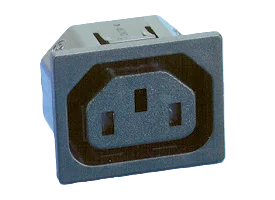
Image Credit: Interpower
Connector
The connector is typically assembled on or molded onto a flexible cable.
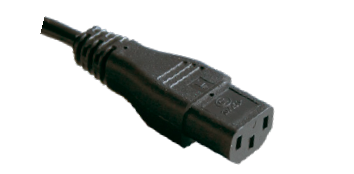
Image Credit: Interpower
Plug Connector
The plug connector is commonly assembled on or molded onto a flexible cable. This is the IEC 60320 plug equivalent of a country-specific plug.
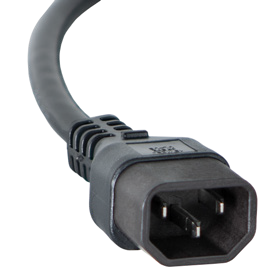
Image Credit: Interpower
Jumper Cord
A jumper cord is a combination of a plug connector and a connector on a flexible cable. This is the IEC 60320 cord set equivalent of a country-specific cord set.
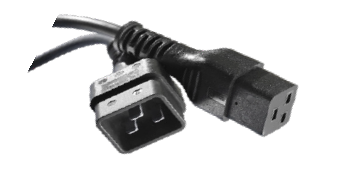
Image Credit: Interpower
Interpower Connector Locks
Connector locks help to prevent accidental power interruptions. This design helps secure the connection and does not require tools.
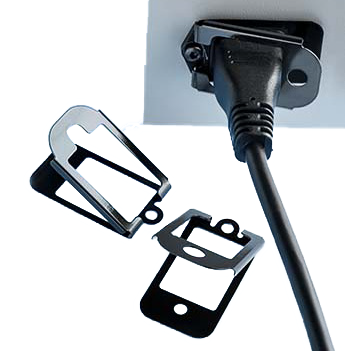
Image Credit: Interpower
Power Inlet
The AC power inlet is common to both the input power and accessory power distribution. This component is either screw-mount or snap-mount.
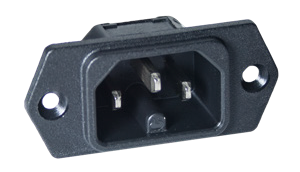
Image Credit: Interpower
Accessory Power System at Interpower
In recent years, Interpower has designed and perfected its own accessory power system. Using the Accessory Power Strip (APS) and the Power Distribution Unit (PDU), it is possible to build equipment with different components working together in a single system.
The APS is a socket strip designed to provide multiple power outlets, allowing all equipment to connect to a single source of electrical power.
The PDU is a socket strip utilizing IEC 60320 components in a case enclosure. This component is larger than an APS, fitting into a 19-inch rack.
It is possible to install both the APS and the PDU wherever power is needed to supply multiple units of equipment.
Accessory Power Strip (APS)
Ford outlined the characteristics of the APS: “At its core, this power strip incorporates the AC power inlet, with multiple AC power outlets, typically four, but as many as 20 outlets. Other features commonly included are power on/off switches, circuit breakers, supplementary overcurrent protectors or fuse holders, and fuses.”
“It is important to note that overcurrent protection is for the entire power strip. A power strip with a 15A circuit breaker does not mean that each outlet can deliver 15A maximum each. It means that the entire power strip, whether four or 20 outlets, can deliver up to 15A across all outlets combined,” he continued.
Source: Interpower
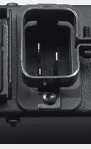
| Features of the APS |
IEC 60320
C14 Inlet
Rated up to
15 A/250 V |
 |
|
IEC 60320
C20 Inlet
Rated up to 20 A/250 V,
Connector Lock available with
C14 & C20 inlet |
 |
|
Push-to-
Reset CBE
Rated up to
20 A/250 V |
 |
|
Lighted
Rocker
Style CBE
Rated up to 20 A/250 V |
 |
IEC 60320
Sheet F Outlet
Rated up to
15 A/250 V |
 |
|
IEC 60320
Sheet J Outlet
Rated up to
20 A/250 V |
 |
|
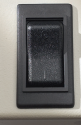
Rocker
Style
CBE
Rated up
to 20 A/250 V |
 |
|
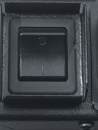
Circuit
Breaker
Guard |
 |
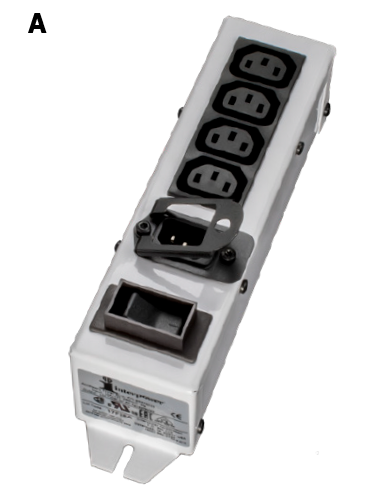
A. 4-Position Accessory Power Strip w/ Connector Lock. P/N: 852J2D10. Image Credit: Interpower
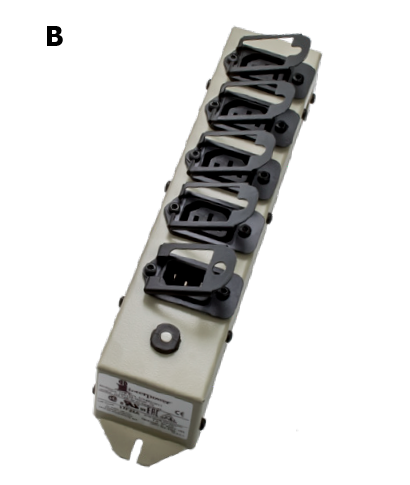
B. 4-Position Accessory Power Strip w/ Connector Locks. P/N: 852J2D11. Image Credit: Interpower
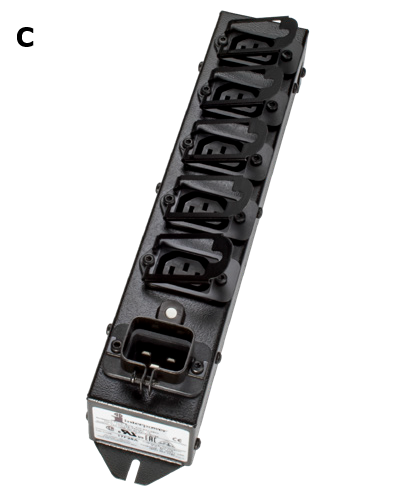
C. 5-Position Accessory Power Strip w/ Connector Locks. P/N: 852J2E01. Image Credit: Interpower
Power Distribution Unit (PDU)
A PDU is typically located in an equipment rack, with all installed into a single rack and working together as a specific unit. This rack is designed to hold various system components, including a complete computer system (monitor, keyboard, CPU, and printer), medical research equipment, test equipment, and telephone equipment.
Source: Interpower
| Features of the PDU |
|
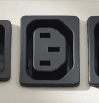
IEC 60320 Sheet F Outlet
Rated up to 15 A/250 V |
 |
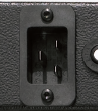
IEC 60320 C20 Inlet
Rated up to 20 A/250 V |
 |
IEC 60320 Sheet J Outlet
Rated up to 20 A/250 V |
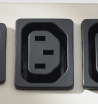 |
Rocker Style CBE
Rated up to 20 A/250 V |
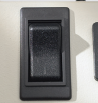 |
Lighted Rocker Style CBE
Rated up to 20 A/250 V |
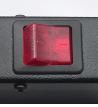 |
Working with Interpower
“At Interpower, we can make it easier to build equipment that can be sold worldwide because different components work together in one system,” Ford said.
“Instead of having to make four different systems to export to four different countries, a company can design one system and then add a cord set with a country-specific plug. This allows the same system to be exported globally with cost-saving benefits.”
Jumper Cord Sets
Interpower also offers jumper cord sets designed for use in the Accessor Power system. Each jumper cord set features an IEC 60320 plug connector (Sheet E or Sheet I) at one end and an IEC 60320 connector (C5, C13, or C19) at the other end.
Jumper cord sets are designed for use in specific applications where they can ‘jump’ power between units operating within a single application, enabling multiple pieces of equipment to work together.
Using jumper cords with the Accessory Power Strip allows a single cord set to connect to the primary power source (wall socket).
Interpower offers a wide range of jumper cord sets in different conductor sizes and cable types, including current and voltage ratings of 2.5 A to 20 A and 225 VAC to 250 VAC.
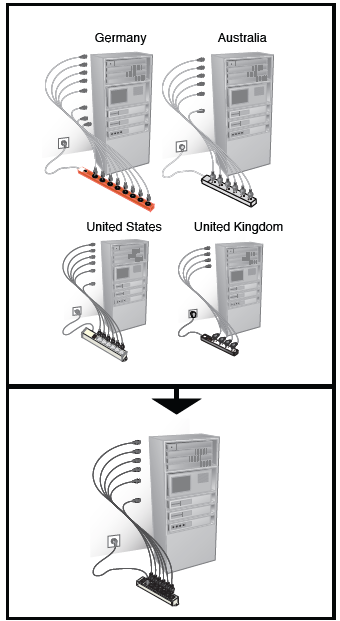
Image Credit: Interpower
Acknowledgments
Produced from materials originally authored by Interpower.

This information has been sourced, reviewed, and adapted from materials provided by Interpower.
For more information on this source, please visit Interpower.