Sponsored by InterpowerReviewed by Ify IsiborApr 14 2026
Even with cutting-edge servers, processors, and solid-state hard drives, data centers remain fully dependent on mains power and the power cords that supply it.
Cornerstones of the Data Center
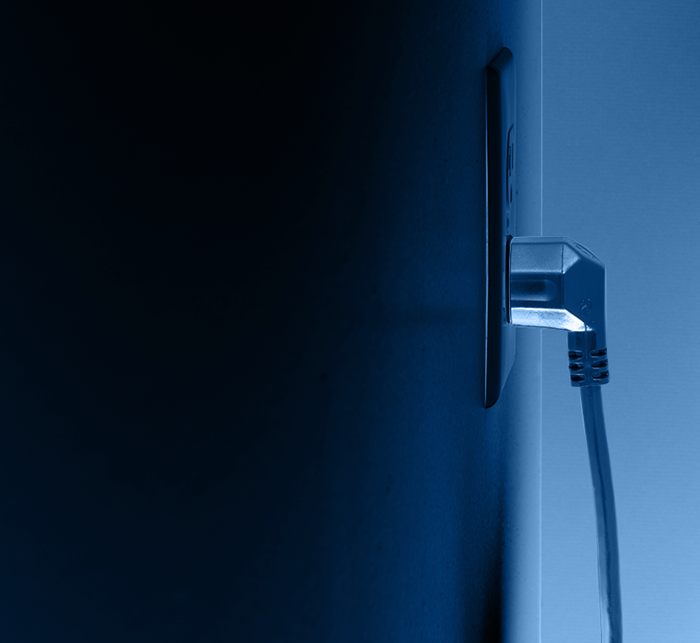
Image Credit: Interpower
Mains Connections
Although the most recent CAT 8 copper ethernet cable streams data at extreme speeds, and the near-light-speed fiber optic cables continue to grow more resilient to harsh temperatures as their delicate bend radius increases, the foundation of all data centers is still the wall outlets supplying mains power, and the power cords plugged into those outlets to power hardware.
Connected Power
Whether network cabling is structured or unstructured, the need to add or replace existing integrated hardware connected to those cables is unavoidable. This includes equipment and devices such as servers, routers, switches, uninterrupted power supplies, external backups, monitors, and printers. It can also encompass sector-specific testing and research equipment equipped with native Ethernet ports and powered by alternating current.
Integrated Systems
Cords, including the Interpower® NEMA 5-15 (5-20, 6-15, and 6-20) power cord, connect to the mains power, while the IEC connector end plugs into a server or the inlet on a power distribution unit (PDU) or an accessory power strip (APS). IEC Jumper cords can subsequently be connected to the PDU or APS to power equipment requiring integration within a single unit - or neighboring units or racks - to simplify architecture.
This integration may include a pod of servers, or routers, modems, and other critical equipment such as uninterrupted power supplies, external backups, monitors, and printers. It can also involve testing and research equipment.
Decreased Clutter Means Increased Safety
Even in data centers or offices containing a variety of wall outlets and longer cords to reach them, those longer cords can generate more EMI (more conductor length, more interference), potentially resulting in an unnecessary excess of wires that pose a tripping hazard.
Any power cord exceeding 50 feet becomes derated and may present a fire hazard, as electrons push harder through the impedance to reach their destination.
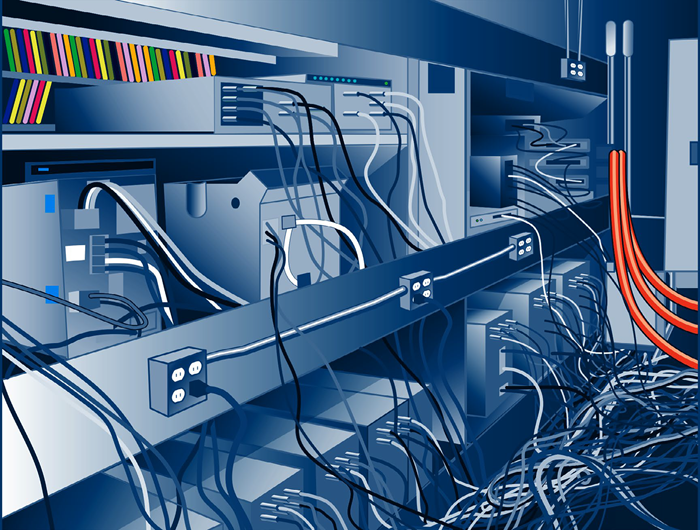
Before Custom Length Cords.Image Credit: Interpower
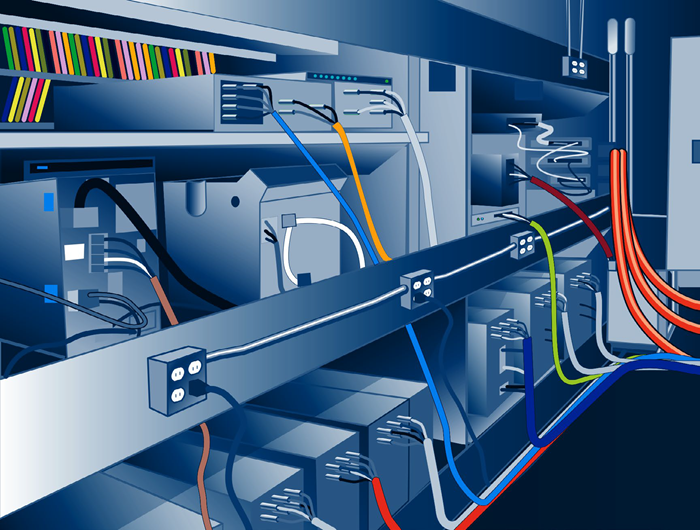
After Custom Length Cords. Image Credit: Interpower
Data Centers Explained
There are several types of data centers, ranging from facilities that rent rack space for servers and Internet connectivity to those that deliver and manage software applications and maintenance, along with everything in between.
Hybrids within hybrids are common, and this paper outlines only a fraction of the functions these centers perform. A large proportion of these centers contain miles of power cords.
Edge Data Centers
Although edge data centers can be characterized in multiple ways, the term often refers to an organization’s data processing at the “edge” of its infrastructure or premises, such as an IT department within a corporate headquarters rather than a large data center.
Notably, edge centers may use various options offered by other data centers, including renting rack space or using cloud computing for storage or managed services.
Edge data centers are typically compact facilities operating within the immediate geographic regions of their end users. They commonly reside in their own buildings that house additional operations alongside their IT departments, much like smaller Enterprise data centers that maintain on-site IT operations.
These data centers facilitate content, maintenance, and service delivery with low latency owing to their dimensions and proximity to end users. Edge data centers are simpler to construct and network than larger facilities.
Although latency is a key factor in Edge centers, hardware and software customizations are also essential to deliver a more efficient experience for end users.
Managed Data Centers
This type of data center serves as a third-party provider. Managed data centers offer dedicated tech support to manage, monitor, and deploy data. Services are delivered either completely or partially, based on client preference.
If fully managed, this center would oversee all or most data behind its own firewall. If partially managed, clients would handle the back-end data, particularly proprietary or classified information. These data centers implement upgrades to operating systems and other system-level programs.
As third-party providers, managed data centers can be cloud-based or a colocation facility. They also restore backups if service is interrupted and mainly serve midsize to large businesses.
Colocation Data Centers
Colocation centers, or “colos,” are generally large facilities that rent storage space such as rack units or individual racks for servers, routers, and other network devices. These data centers are typically well-suited for companies that lack the physical space or the capital required to provide sufficient cooling (air, water), as well as the physical security necessary both inside and outside the facility.
In addition, colocation centers provide networking equipment connections. They are ideal for organizations operating nationwide, as they can network in multiple colocation sites to reduce latency for end users.
Beyond providing rack space and network connections, colocation centers deliver additional services, including managed services such as the hybrid cloud. When cloud companies rent colocation space, it highlights the overlap between different data centers.
Additional benefits of colocation include rack cooling (overhead costs) and excellent perimeter and internal security. Needless to say, these benefits come with an up-front fee, which typically follows a pay-as-you-go model.
Cloud Data Centers
A cloud data center (public) is a type of facility in which the cloud company oversees and maintains the actual hardware with the support of a third-party managed services provider. Clouds are increasingly popular because they allow customers to run applications and manage websites and information within virtual infrastructures while storing data across multiple servers at various locations - redundancies that help ensure data retrieval.
When data is uploaded to cloud servers, it is duplicated across multiple locations. The cloud provider ensures that multiple backups are available. This is particularly advantageous for click-and-mortar organizations that require data backups for their regional or national store chains in the event of a catastrophic event and subsequent data loss.
Clouds can be public, private, or hybrid. A hybrid cloud permits businesses to process data on their private cloud in conjunction with a third-party cloud provider (public). Clouds can be categorized into four broad groups: Serverless, Platform as a Service (PaaS), Infrastructure as a Service (IaaS), and Software as a Service (SaaS).
Furthermore, an organization can contract with numerous public clouds, placing it in the multicloud category. Unlike conventional IT models, which require up-front expenditures for hardware and software, public cloud services are often pay-as-you-go, with subscription- and consumption-based pricing.
Clouds are a popular choice for businesses concerned with overhead expenses, including the public utilities required for data center maintenance - such as water chillers, (electricity/water), air-conditioning with additional fans and blowers (electricity).
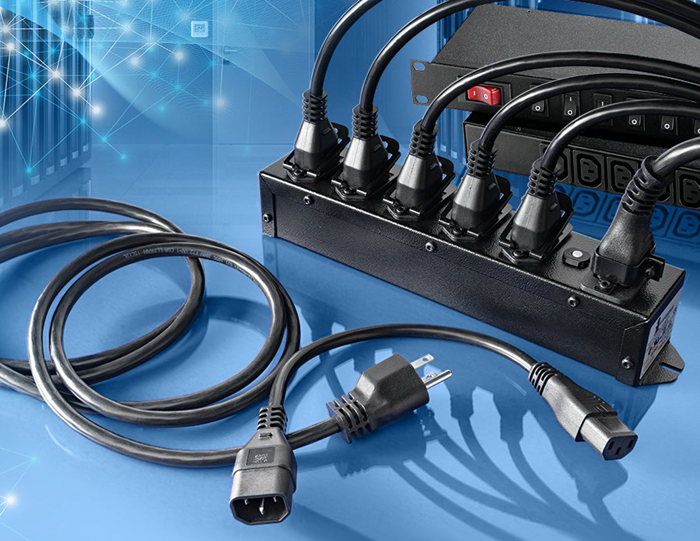
Image Credit: Interpower
Enterprise Data Centers
Architecturally, enterprise data centers are engineered to support private organizations with high numbers of concurrent end users. These centers can be on-site or off-site, depending on the primary location of their end users.
For example, if the organization is based in Alaska but most of its end users work or live in the continental U.S., the enterprise data center will likely be located there to reduce latency for that larger subset of concurrent end users.
The architecture of these data centers remains uniform throughout the enterprise. As with most other facilities, enterprise storage arrays feature servers with hard disk drives, solid-state disks, or a hybrid of both to move data between networks.
To benefit from its scale, various enterprise systems, despite functioning as separate autonomous centers, provide consistent data modeling across the organization.
These centers may also be organized into separate ethernet and intranet centers. As a result, the data processed by enterprise centers will be uniformly modeled with corporate-wide approaches, ensuring consistent data processing, training, and overall applications.
Conclusion
The data centers outlined in this paper provide companies with diverse choices, including leasing hardware, software, and data storage, as well as individual racks or units of rack space, maintenance, and even administration management, such as timely software updates.
Although each type of data center has its own distinguishing features, overlaps in services and structures are common. Another shared characteristic is substantially enhanced cybersecurity, whether virus-related or on-site security hardened.
Current and future challenges include shortages of rare metals used in computer components and maintaining a stable electric grid amid warnings of brownouts, blackouts, and prolonged outages.
Even large generators are only temporary solutions and run on various fuels, such as natural gas. In addition, EMP-hardened facilities are being developed to be as electronically bombproof as possible.

This information has been sourced, reviewed, and adapted from materials provided by Interpower.
For more information on this source, please visit Interpower.