In this interview, industry expert Tom Strombotne explains how EDXRF and WDXRF compare for online slurry analysis, including efficiency, detection limits, and percent solids measurement.
First, can you explain the basic difference between EDXRF and WDXRF?
The key difference is how the X-ray photons are detected and quantified.
In energy-dispersive X-ray fluorescence (EDXRF), the system measures the energy of the X-ray photon directly. In wavelength-dispersive X-ray fluorescence (WDXRF), the system works with the wavelength of the X-ray photon. Energy and wavelength are inversely proportional, so the higher the energy, the shorter the wavelength.
In a wavelength-dispersive system, the detecting element is a scattering crystal. The lattice planes within that crystal are spaced at a specific distance. When an X-ray photon passes through the crystal, it diffracts through those planes and exits at a certain angle. That angle is representative of the photon’s energy. A detector is positioned at that angle to count the photon events. So, WDXRF acts on the physical wavelength of the photon, while EDXRF measures the energy of the photon directly.
How does WDXRF measure multiple elements?
WDXRF can measure multiple elements, but it usually requires either a detector positioned for each element or a goniometer. A goniometer is a moving detector system that sweeps across different angles to build a wavelength-versus-events histogram of the sample.
This is a very established and effective method, and it has been used since the earliest days of X-ray fluorescence. In fact, the first X-ray detectors were based on scattering crystals. However, this type of system is delicate. It needs to be temperature-stabilized and mechanically stabilized, which is much easier to do in a laboratory instrument than in an online process control environment.
In an online slurry process, many variables are harder to control. If the goniometer has to move across different angles and stop at each position to make a count, that takes time. To compensate for that, WDXRF systems often use a powerful X-ray source, sometimes 1 or 2 kW, to generate enough counts quickly. The scattering process is relatively inefficient, so the system needs more power to achieve good counting statistics.
How is WDXRF typically used in online XRF systems?
For online XRF applications, WDXRF is often used in a fixed-angle configuration rather than with a moving goniometer. These are sometimes called monochromators. In this setup, a scattering crystal and detector are arranged to measure a specific element, such as copper, molybdenum, or iron.
That single channel can be very effective. It is more compact and simpler, and it does not rely on moving parts, making it a more practical solution for online WDXRF. However, if you want to measure many elements, you need one detector or monochromator per element.
A useful way to think about the difference is that EDXRF uses a single detector for many elements, whereas WDXRF typically uses one detector per element. If you want to measure 15 elements with WDXRF without a goniometer, you would need to fit 15 different monochromators around the measurement zone. That quickly becomes difficult from a space and design perspective. In practice, WDXRF systems are often limited to around five elements plus a scattering channel for density measurement.
How does EDXRF detect and measure X-Ray photons?
EDXRF uses a solid-state detector, which is essentially a photodiode sensitive to X-ray fluorescence. When an X-ray photon enters the detector, its energy is converted into an electron charge. The number of electrons produced is proportional to the energy of that X-ray photon.
That electron charge is then moved out of the detector and converted into a voltage pulse. These events happen extremely quickly, in fractions of microseconds. The faster the system can process these events, the more photons it can count per unit time.
Modern EDXRF systems use silicon drift detectors. These detectors can have a large format, for example, 50 square millimeters, with many pixels for detecting X-rays. This allows very high count rates and gives the detector a large solid angle when looking at fluorescence from the sample. In practical terms, that means EDXRF can measure a much larger spot size than WDXRF.
Click here to watch Analyze That episode 9 - Comparing XRF Technologies: What Matters for Slurry Analysis?
Why is EDXRF more efficient than WDXRF?
EDXRF is much more efficient than WDXRF because it measures many energies at once with one detector. To get the same count intensity with WDXRF, you generally need much more X-ray power.
For example, if an EDXRF system such as the Thermo Scientific™ MEP-400 Multi-Element Probe uses around one watt to achieve a certain count intensity, an equivalent WDXRF system might need around 100 W to achieve a similar result. That means WDXRF often requires a larger, more powerful X-ray source, which can increase cost and complexity.
This efficiency is important for the cost of ownership. Because EDXRF can operate at lower X-ray beam power, the X-ray tube lifetime and replacement costs are much better. In an online process environment, that matters because the analyzer needs to be reliable, practical to maintain, and cost-effective over time.
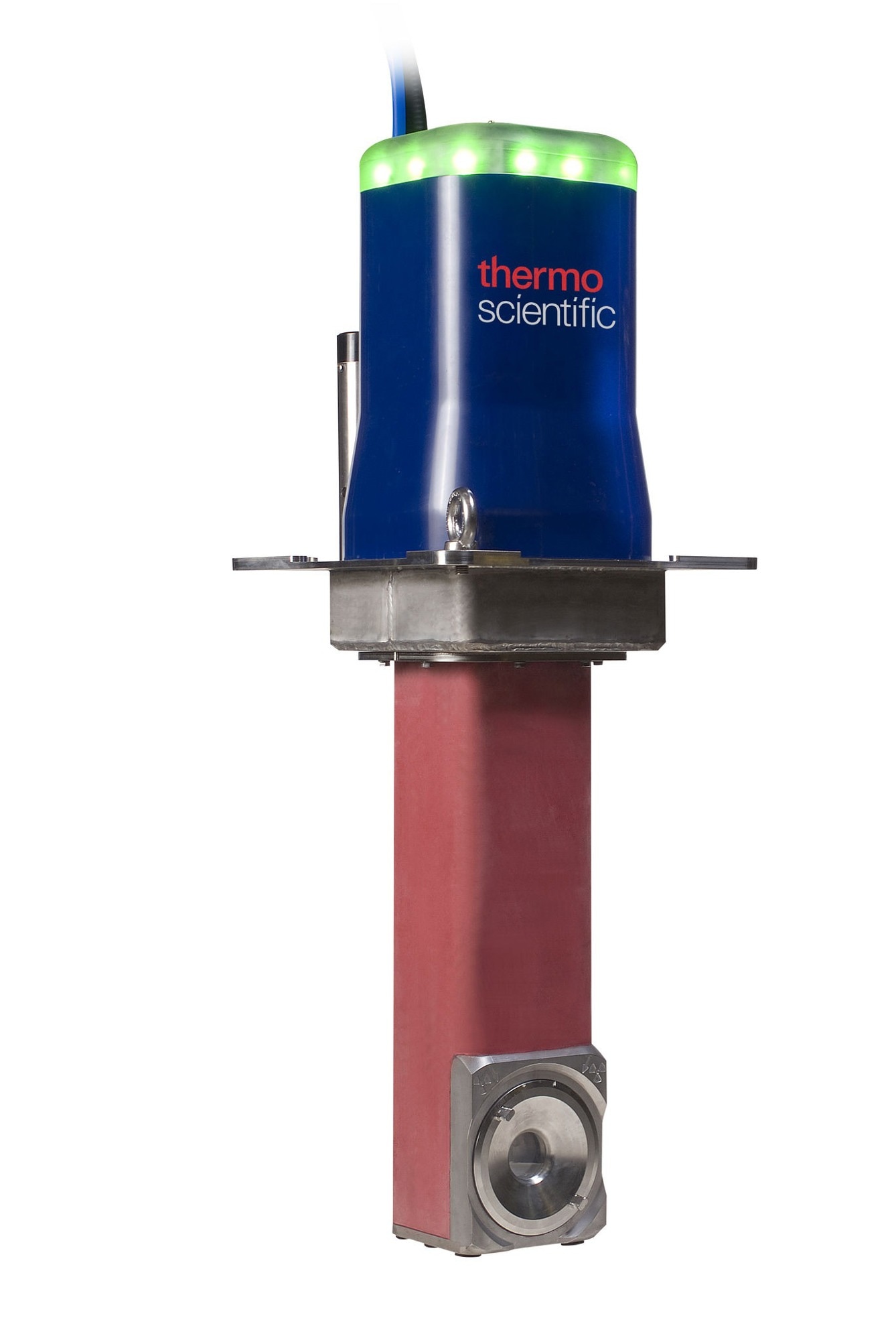
Image Credit: Thermo Fisher Scientific
Has EDXRF improved compared with older systems?
Yes. When EDXRF was first used in this type of work, the technology was much more limited. The earliest detectors were proportional counters, followed by cryogenically cooled solid-state detectors. Those detectors performed well for many years, but they required liquid nitrogen cooling.
In 2015, with the Thermo Scientific™ MEP-300 Multi-Element Probe, Thermo Fisher moved away from cryogenic cooling and began using silicon drift detectors. These detectors provided much better energy resolution and stability compared with older cryogenic detectors.
WDXRF still has superior energy resolution. For example, EDXRF may have an energy resolution of around 150–160 eV, while WDXRF may have an energy resolution of around 10 eV. However, better energy resolution is not always necessary. It depends on whether you need that level of peak separation. For many base metal slurry applications, the WDXRF level of resolution is not required. Modern EDXRF detectors and advanced signal processing can separate many peaks that would have been more difficult to resolve decades ago.
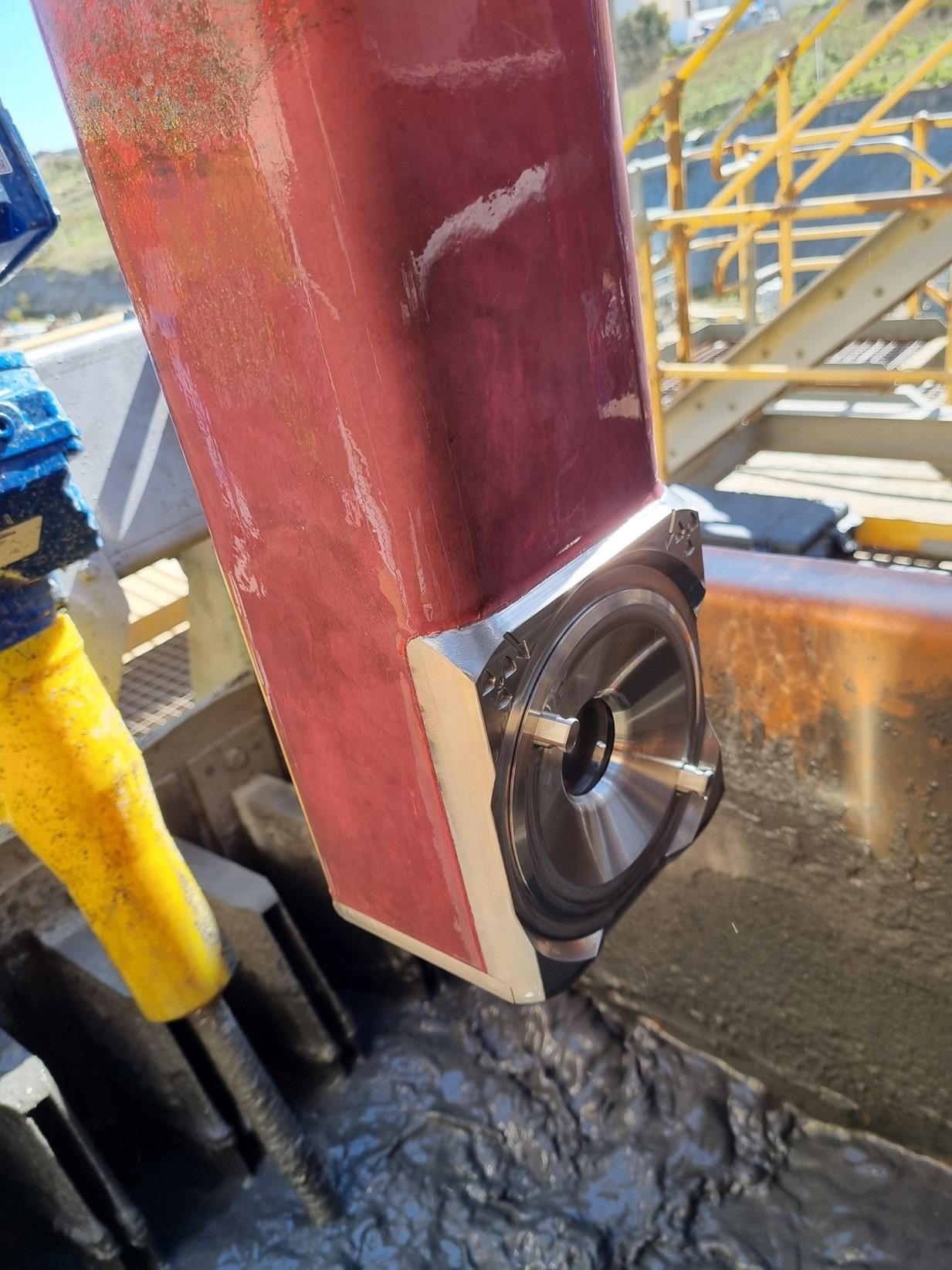
Image Credit: Thermo Fisher Scientific
When does WDXRF still have an advantage?
WDXRF still has an advantage when very high energy resolution is needed, especially for minor or trace elements where the energies are close together. This is particularly relevant toward the lower end of the periodic table, where the X-ray energies can become closer and harder to separate.
There are also known cases where peak separation can be challenging, including elements such as nickel, zinc, copper, and cobalt. WDXRF has traditionally been strong in this area because it can separate X-ray photon energies very effectively.
That said, energy resolution is no longer the major drawback for EDXRF that it was 30 or 40 years ago. With modern silicon drift detectors and advanced signal processing, EDXRF is now a very capable method for many slurry applications. For most base metal applications, it can provide the required level of performance while offering benefits in efficiency, simplicity, and cost of ownership.
Click here to watch Analyze That episode 9 - Comparing XRF Technologies: What Matters for Slurry Analysis?
If a new element appears in the ore, can EDXRF be calibrated for it?
Yes, as long as the system can detect it. Every analytical technology has a limit of detection, which means there is a concentration level below which the system cannot make a useful measurement. If the element is within the device's energy range and detection limit, a calibration can be developed.
With the MEP-400, the detection limit has been lowered substantially compared with the MEP-300. That makes it possible to measure minor elements that may not have been visible before, such as bismuth or arsenic, even at concentrations below 100 ppm in some cases.
If the analyzer is originally set up to measure elements such as lead, zinc, and iron, but an arsenic peak begins to appear, and the plant wants to measure arsenic, a region of interest can be added in the software. The team would then collect calibration samples and use regression tools to develop a model. In many plants, users already know how to manage this because they have been trained by field service teams. Adding another channel of information about the process stream is therefore not usually very expensive or difficult.
What are the main factors when choosing between EDXRF and WDXRF?
The first factor is what you need to measure. If the main concern is measuring minor or trace elements with energies that are very close together, then WDXRF may be worth serious consideration because of its superior energy resolution.
However, if the goal is to measure the main elements in a process stream reliably, then EDXRF can be a more versatile and cost-effective option. In a copper concentrator, for example, the first priority is usually to measure copper very well across the relevant streams. In that situation, the analyzer needs to be rugged, reliable, and trustworthy. It also needs to be simple enough for plant teams to maintain and operate.
Both technologies have their place. There are many WDXRF installations worldwide performing excellent work in slurry applications. However, modern EDXRF, especially now that isotope-free systems are available, can provide very equivalent performance in many cases while offering advantages in efficiency, simplicity, and reliability.
Why is percent solids measurement important in slurry analysis?
One of the major challenges in slurry analysis is that the sample is diluted by water. In the laboratory, samples are usually measured as dry, 100% solids. In a slurry stream, the same material may be present at 30% solids, which means the apparent concentration is much lower than it would be in a dry sample.
To correct for this dilution, the analyzer needs to measure the percent solids. This is typically done by measuring scatter. X-rays from the source interact with the sample and scatter back into the detector. These are not fluorescence peaks from an element; they are scattered X-rays, and the scattering region can be used to indicate the percent solids of the sample.
This is an area where EDXRF has an advantage. WDXRF has a smaller spot size and measures a very narrow band of energy. For percent solids measurement, it is better to measure a wider band of energy and collect a high count rate because the relationship between percent solids and scatter intensity is highly nonlinear. EDXRF makes this easier because a wide region of interest can be set in the spectrum.
Accurate percent solids measurement is important because the analyzer reports results on a dry basis. For example, the reported percent copper is the concentration in the dry solid portion of the sample, not the apparent diluted concentration in the slurry. The more accurately the analyzer can measure percent solids, the more accurately it can correct for dilution and report the dry basis assay. This directly affects accuracy, availability, reliability, and trust in the assay results.
Analyze That episode 9 - Comparing XRF Technologies: What Matters for Slurry Analysis?
Comparing XRF Technologies: What Matters for Slurry Analysis?
About Tom Strombotne
Tom Strombotne holds a BSEE in Electrical and Electronics Engineering from the University of Colorado Boulder. At Thermo Fisher Scientific, he has held senior minerals-focused product and applications roles, including Senior Product Applications Specialist and Global Product Manager for samplers and analyzers used in mineral processing.

This information has been sourced, reviewed and adapted from materials provided by Thermo Fisher Scientific.
For more information on this source, please visit Thermo Fisher Scientific – Analytical Instruments & Solutions.
Disclaimer: The views expressed here are those of the interviewee and do not necessarily represent the views of AZoM.com Limited (T/A) AZoNetwork, the owner and operator of this website. This disclaimer forms part of the Terms and Conditions of use of this website.