In this interview, AZoMaterials speaks with Mathieu Bauer, Senior Application Scientist at Thermo Fisher Scientific, about the broad industrial impact of Thermo Scientific™ Niton™ handheld XRF analyzers and how this technology delivers lab-quality results across diverse sectors, including mining, recycling, environmental monitoring, and quality control.
Can you please introduce yourself and your role at Thermo Fisher Scientific?
My name is Mathieu Bauer, and I’m a Senior Application Scientist at Thermo Fisher Scientific, specializing in handheld XRF analyzers. I support global customers across a wide range of industries by helping them apply this technology to their specific workflows, from mining, metal fabrication, precious metals to scrap recycling and environmental testing and beyond.
For those unfamiliar, what exactly is handheld XRF, and how does it work?
XRF stands for X-ray fluorescence spectrometry. It’s a method of elemental analysis that detects and quantifies the elements in a sample. Our handheld devices use this principle to provide near-instant results with lab-level precision. The beauty of this technology is that it delivers high-quality data directly in the field, with little or no need for sample prep or lab time.
How safe is it to use a handheld XRF analyzer?
Despite involving X-rays, handheld XRF analyzers are very safe when operated correctly. Our Niton instruments meet stringent global compliance standards. Users undergo basic training to understand best practices – like never pointing the analyzer at yourself or anyone else, or holding a sample in your hand. or using a test stand for small parts. With these precautions in place, exposure levels are negligible, well below occupational thresholds.
What makes Niton handheld XRF analyzers stand out across such a diverse range of industries?
Their ease of use is key – even non-technical users can get lab-quality results right out of the box. You don’t need years of lab training to get accurate data. Niton analyzers are also incredibly fast, providing real-time analysis without sending samples to a lab. This immediacy dramatically boosts productivity across industries such as mining, scrap recycling, and manufacturing.
Click here to watch Analyze That episode 2 - Instant Elemental Answers: The Power Behind Handheld XRF
Which industries are seeing the biggest impact from this technology?
Scrap metal recycling and precious metals trading are the major ones – being able to sort metals by alloy grade or measure gold content in jewelry ensures profitability. In mining and exploration, handheld XRF accelerates discovery and assessment by providing instant geochemical data, often reducing assay costs by a factor of 10. It’s also heavily used in environmental analysis for soil contamination, and in manufacturing for at-line quality control to avoid mix-ups or costly recalls.
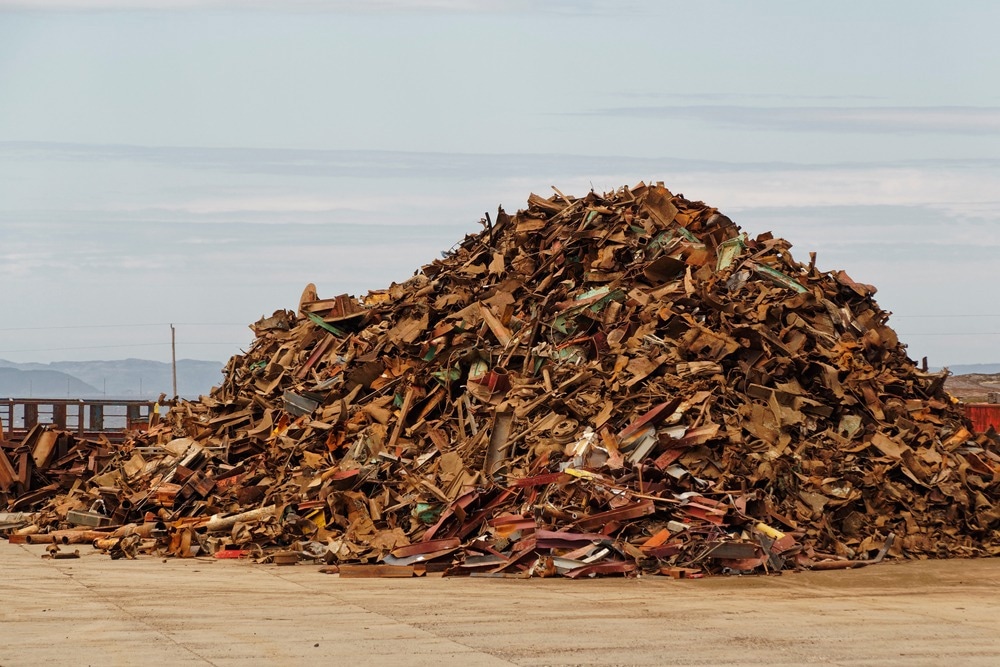
Image Credit: ggw/Shutterstock.com
Can you give an example of how Niton analyzers improve profitability, particularly in the scrap industry?
Sure. In a scrapyard, distinguishing between stainless steel grades such as 304 and 316 is critical. Grade 316 fetches nearly double the price due to its higher nickel and molybdenum content. A Niton analyzer identifies these grades in seconds, helping operators avoid overpaying or underpricing and delivering a rapid return on investment.
How do features like Light Metals Quick Sort improve efficiency?
Sorting aluminum alloys used to take more time. With our new Light Metals Quick Sort mode, users can now identify aluminum grades like cast versus wrought alloys in just 1–2 seconds. That’s a game-changer for high-throughput environments like aircraft dismantling or aluminum foundries, where time is money.
Click here to watch Analyze That episode 2 - Instant Elemental Answers: The Power Behind Handheld XRF
How do Niton analyzers support geologists and exploration teams in the field?
They provide rapid, on-site elemental analysis of soils, rocks, or drill cores. With integrated GPS, users can geotag each data point and map potential deposits in real time. This significantly speeds up exploration while reducing lab assay costs and helping teams make faster, more informed decisions.
Counterfeit detection is important in the precious metals market. How does Niton help with that?
Our patented AuDIT technology can detect thin gold plating up to 8 microns. In many circumstances, it prevents precious metal traders, pawn shops, and collectors from purchasing gold-plated jewelry or other lookalike materials. Given today’s high metal prices, it’s critical to ensure every transaction is accurate and trustworthy.
What makes handheld XRF ideal for manufacturing and quality control?
It allows non-destructive, real-time analysis at the production line. Manufacturers can verify alloy compositions, prevent mix-ups, and ensure compliance with specifications without sending samples to a lab. This minimizes downtime, avoids costly errors, and strengthens traceability – all of which help protect product quality and brand reputation.
Analyze That episode 2 - Instant Elemental Answers: The Power Behind Handheld XRF
Instant Elemental Answers: The Power Behind Handheld XRF
About Mathieu Bauer
Mathieu Bauer is a Senior Application Scientist at Thermo Fisher Scientific, specializing in handheld X-ray fluorescence (XRF) technology.
He has extensive experience helping customers worldwide apply XRF to real-world applications in mining, recycling, environmental analysis, manufacturing, and precious metals. With a strong background in materials science and spectroscopy, Bauer plays a vital role in optimizing workflows and educating users on how to get the most from their analyzers. He frequently works alongside product managers and field teams to support Niton’s broad user base and ensure successful implementations of this transformative analytical tool.

This information has been sourced, reviewed and adapted from materials provided by Thermo Fisher Scientific.
For more information on this source, please visit Thermo Fisher Scientific – Analytical Instruments & Solutions.
Disclaimer: The views expressed here are those of the interviewee and do not necessarily represent the views of AZoM.com Limited (T/A) AZoNetwork, the owner and operator of this website. This disclaimer forms part of the Terms and Conditions of use of this website.