In this interview, industry experts Lukas Märk and Jens Herbig discuss how real-time chemical monitoring supports semiconductor contamination control, emissions compliance, safer turnarounds, and autonomous environmental research networks.
To start, what is changing in industrial and environmental monitoring that is making real-time chemical insight more important than ever?
Lukas Märk: The landscape is undergoing a massive shift driven by stricter global regulations, a relentless push for manufacturing efficiency, and the sheer complexity of modern chemical processes. Historically, industry relied on time-averaged and, even worse, delayed data – collecting a sample over hours in a canister or filter, sending it to a specialist lab, and getting results days or weeks later.
Today, that retroactive approach is completely obsolete. Whether you are running a high-throughput semiconductor fab or managing regional air quality, you need to know exactly what is in the air right now. Real-time insights allow operators to shift from a purely reactive posture to a predictive one, preventing costly product losses or environmental compliance breaches before they escalate.
Moreover, instead of getting a single sample that captures only a snapshot or summary, where lows and highs are leveled out, real-time data captures process dynamics, concentration changes, and the ability to correlate with events as they happen. At IONICON, our vision has always been to close this gap by making highly sophisticated real-time tracking an accessible operational standard.
Many high-precision measurements have traditionally happened in specialist laboratories. What are the main challenges in moving that level of insight into live industrial or field environments?
Jens Herbig: Proton Transfer Reaction – Mass Spectrometry (PTR-MS) has long been considered the “gold standard” for real-time trace gas analysis in research labs. Translating this technology to the field means replacing one key ingredient: the scientist.
In a lab, a scientist relies on experience and intuition to know if their instrument is running optimally. To move to the field, we replaced this with automated system health checks. During the measurement, switching ionization modes to maximize information is exactly the kind of routine task that the scientist would not do manually but by automation. So, while that was simple to implement in software, the hardest part was replacing the scientist in interpreting the data.
Our software for Automated Measurement and Evaluation (AME) acquires, pre-processes, and consolidates data. For the data interpretation, we developed advanced algorithms. For real-time monitoring, the software must deliver immediate results, whereas typical lab experiments are evaluated retrospectively. After many years of applying our AME software in the field, we can not only say that it does its job, but that it actually surpasses the capabilities of a human scientist.
The hardware components of the VOCentinel and AMCentinel are similar to their laboratory counterparts. Modifications were made primarily to enhance system serviceability and integration into a 19-inch rackmount chassis while optimizing robustness for autonomous, 24/7 field operation.
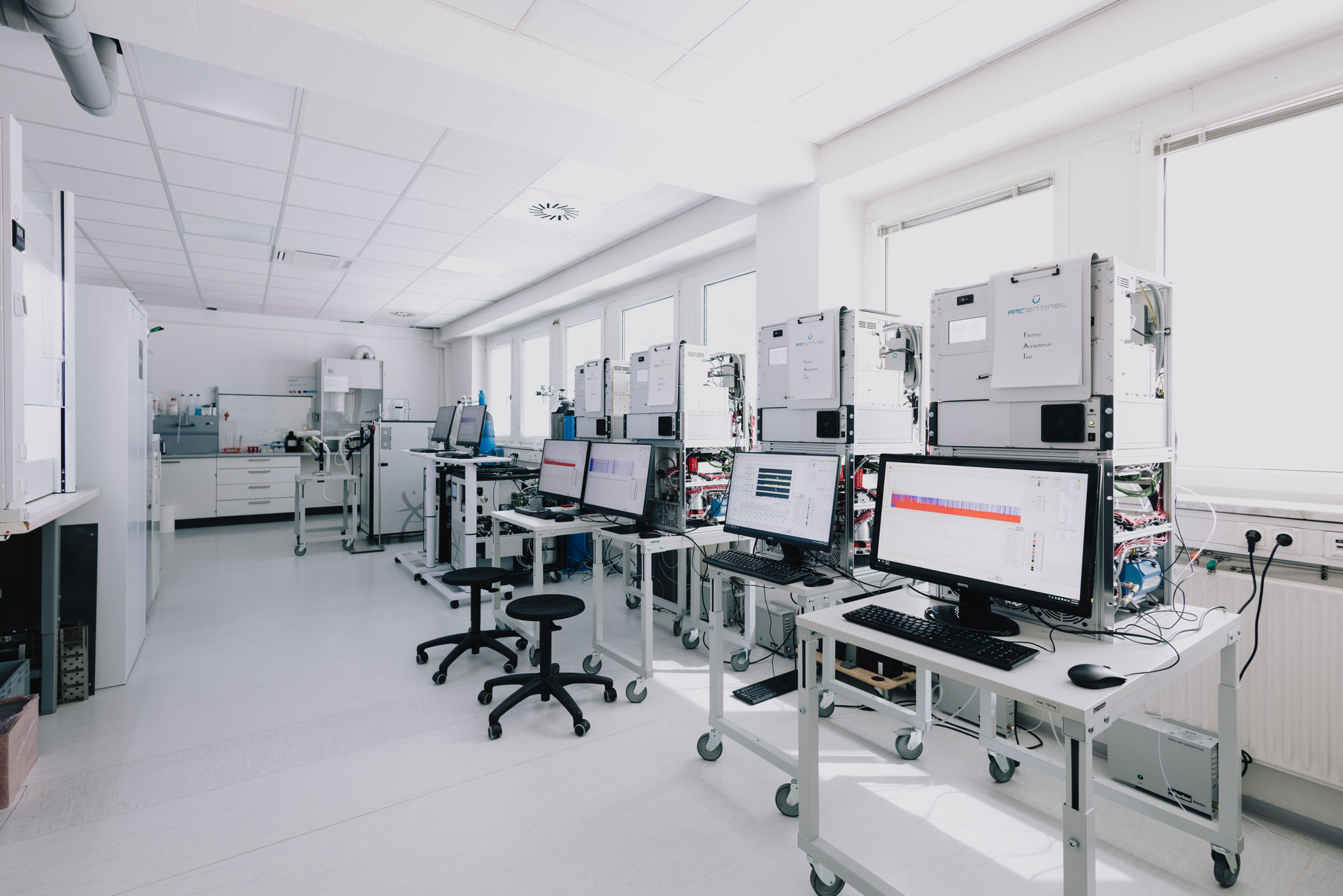
Image Credit: IONICON Analytik
In semiconductor manufacturing, contamination can happen at extremely small scales. Why is airborne molecular contamination such a critical issue?
Lukas Märk: As features on a silicon wafer shrink to single-digit nanometer nodes, the margins for error entirely disappear. At this scale, airborne molecular contamination (AMC) is a silent yield-killer. Even a trace amount of an organic compound, a stray solvent molecule, or an airborne acid landing on a wafer during a critical process step can ruin an entire chip. This can lead to millions of dollars in scrapped material, compromised tool uptime, and delayed shipping schedules. Controlling AMC isn't just a technical preference for process engineers anymore; it is an absolute financial and operational corporate imperative for modern high-tech semiconductor fabs. Contamination Management is key, and it begins with AMC monitoring.
With AI driving huge demand for advanced chips, how is pressure on semiconductor production changing the expectations around monitoring and quality control?
Lukas Märk: The global explosion of generative AI and high-performance computing has placed unprecedented pressure on semiconductor fabs to deliver advanced logic and memory components at maximum yield. There is zero room for downtime. This hyper-accelerated environment has completely transformed quality control expectations. Fabs can no longer afford to wait for periodic cleanroom sampling or for integration filters to be analyzed retrospectively. The industry now demands continuous emissions monitoring and real-time AMC tracking that integrates directly into the fab's automated manufacturing execution systems (MES) to catch trace contamination the exact second it occurs.
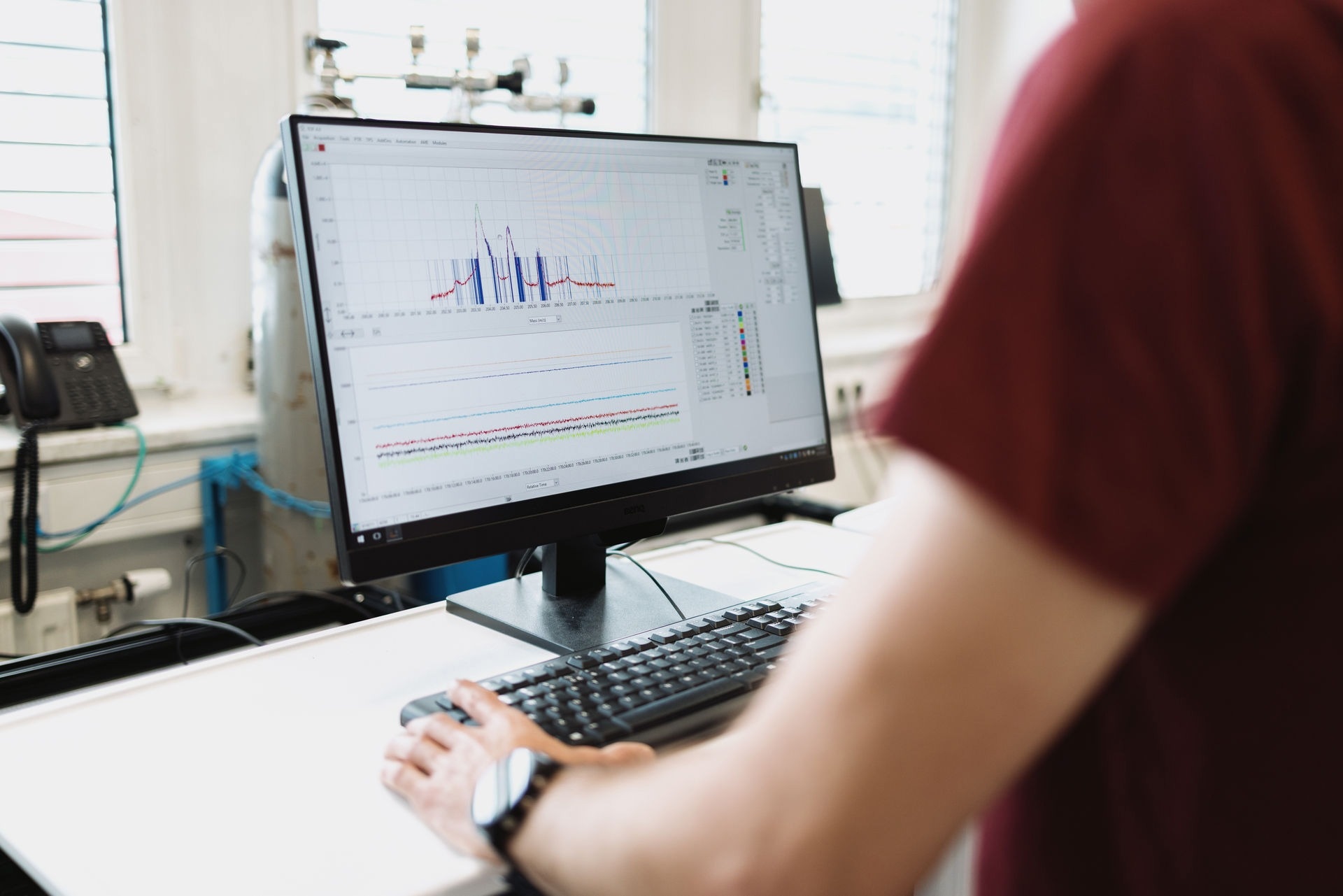
Image Credit: IONICON Analytik
When you look at environments such as FOUPs, wafer handling areas, or advanced packaging lines, where are the most overlooked contamination risks likely to occur?
Jens Herbig: Initial monitoring initiatives focused on AMC in cleanroom air and micro-environments, such as FOUPs, which are now standard practice for most high-end manufacturers. However, overlooked contamination risks frequently emerge during the new, innovative process steps, for example, advanced packaging – a technology essential for AI development. Within these dense, multi-die configurations, trace organic contaminants or siloxanes can become permanently encapsulated within the component, leading to catastrophic latent failures. These localized, brief exposure windows are frequently neglected, yet represent exactly where the AMCentinel provides essential protection.
What kinds of warning signs can real-time AMC monitoring reveal that might be missed by periodic sampling or delayed laboratory analysis?
Jens Herbig: Periodic sampling only gives you a time-weighted average, which completely smooths over short, highly damaging chemical spikes. Real-time AMC monitoring exposes these precise transient events, such as a brief solvent spill, a momentary filtration bypass, or chemical off-gassing during an adjacent maintenance procedure.
An exposure in milliseconds is sufficient to ruin an entire batch. To avoid this, you need sensitive, continuous monitoring with immediate results.
Today’s manufacturers do not merely require data collection; they require actionable, real-time telemetry. Rapid detection of localized spikes enables automated systems to initiate isolation protocols immediately, mitigating contamination risks and protecting wafer yields before irreversible structural defects occur.
How can continuous monitoring help teams understand not just that a contamination event occurred, but where it came from and how it moved through a facility?
Lukas Märk: The AMCentinel, offering analysis speed far exceeding typical monitoring requirements, is at the heart of state-of-the-art AMC monitoring systems that leverage the speed for multi-point monitoring.
By automatically cycling through different sampling lines, the system provides a comprehensive view of contamination levels across the entire fab, a dynamic 'spatial chemical map' of the facility. This allows process engineers to trace the vector of any contamination event, identifying exactly where it originated, which specific tool or seal failed, and how it propagated through the cleanroom. Furthermore, it provides immediate feedback on whether a fix attempt was successful.
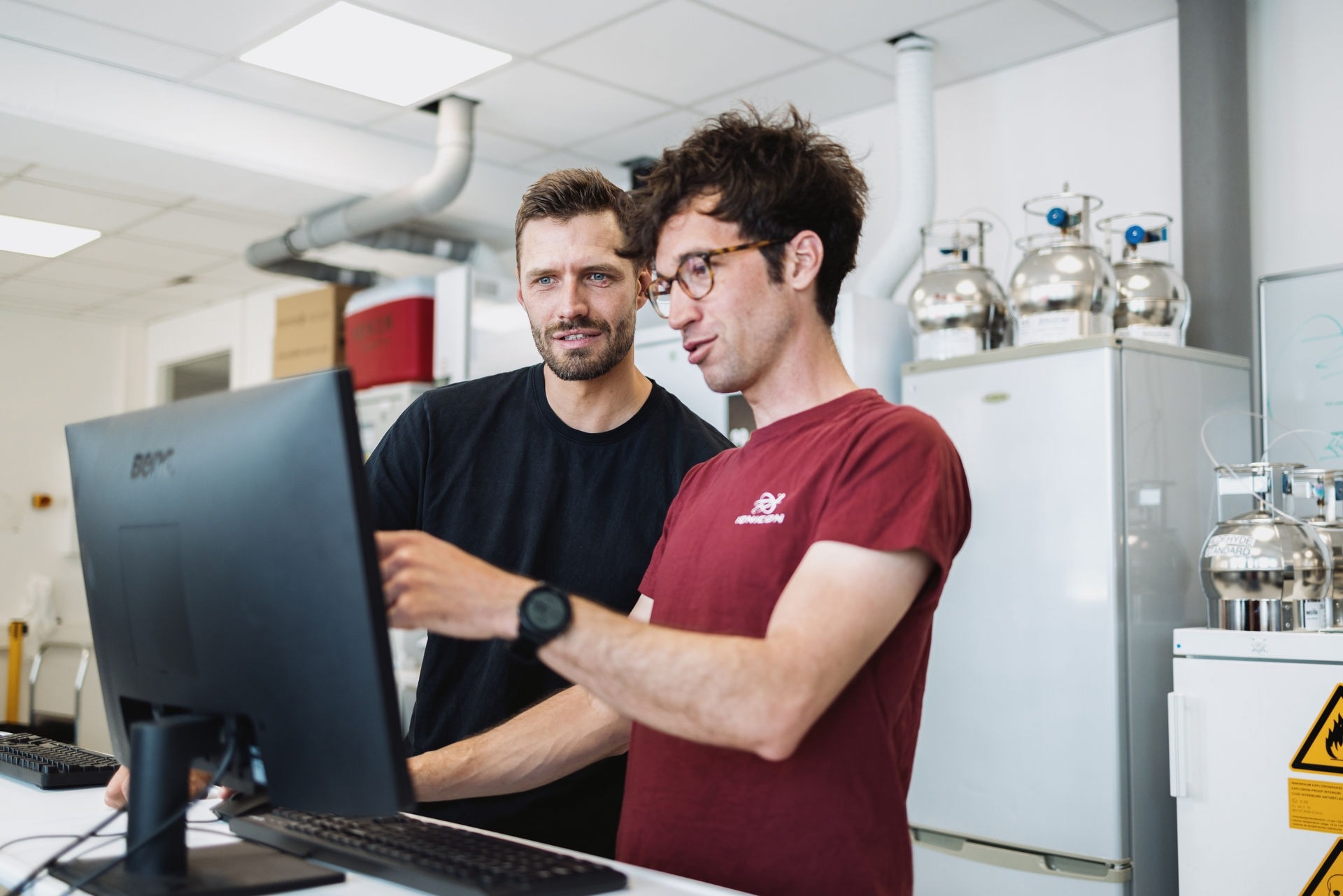
Image Credit: IONICON Analytik
Does the success story for the AMCentinel translate to other fields of application where real-time monitoring is an emerging topic?
Lukas Märk: Absolutely. While the AMCentinel is customized for the extreme, zero-tolerance environments of semiconductor cleanrooms, the underlying core technology – our ultra-sensitive PTR-TOF platform – is highly versatile.
The exact same requirement for autonomous, real-time, parts-per-trillion-level chemical detection is emerging across other high-stakes sectors.
Fenceline Monitoring in the Petrochemical Industry is very similar, as several sampling points are monitored along a property line instead of across a fab.
In industrial maintenance, the speed and sensitivity in detecting toxic compounds enable instant clearance measurements that revolutionize turnaround management. And finally, we have introduced our autonomous monitoring solutions with the VOCentinel brand in environmental research projects. Traditionally, this is the market for our high-end analyzers, which also benefits from the robustness and high level of automation of our systems.
Industrial turnarounds can be fast-moving, complex and risky. What role can real-time monitoring play during shutdowns and maintenance windows?
Lukas Märk: Turnarounds represent massive operational complexity where time is literally money, and safety cannot be compromised.
During a shutdown or maintenance window, personnel need absolute assurance that a vessel, pipeline or workspace is entirely clear of toxic or hazardous VOCs before access or entry. Real-time monitoring acts as an indispensable tool for turnaround management. Instead of waiting hours for lab validation of a grab sample, our systems provide instantaneous clearance data, dramatically shortening turnaround times while enhancing safety protocols.
For fenceline or property line monitoring, how does continuous data change the conversation between industrial operators, regulators, and surrounding communities?
Lukas Märk: Continuous fenceline monitoring completely transforms this dynamic. Deploying autonomous systems like the VOCentinel along a facility’s perimeter creates a continuous, legally defensible audit trail that streamlines regulatory compliance. If an emission spike or odor complaint occurs, real-time data combined with local wind vectors immediately pinpoints whether the source is internal or external – such as highway traffic or a neighboring plant.
Crucially, unlike offline sampling that often confirms liability only after the fact, real-time monitoring provides the early warnings necessary for immediate, proactive intervention. This transparency replaces historically adversarial dynamics with a collaborative dialogue, effectively de-escalating conflicts before they arise.
In atmospheric research networks such as ACTRIS or ICOS, why is consistency and comparability of data so important across different sites and countries?
Lukas Märk: Pan-European and global research networks like ACTRIS and ICOS are critical for modeling climate change and evaluating long-term air quality policies. For these models to be effective, data gathered in a forest in Scandinavia must be directly comparable to data collected over an urban center in Central Europe. Historically, this research has been the domain of our high-end systems, which are used by scientists in all leading research groups.
If every station operated by different experts employing different manual protocols or varied calibration frequencies, macro-level conclusions fall apart. Our autonomous VOCentinel system bridges this gap by ensuring absolute data harmony across international sites and reducing the operational workload.
The milestone deployment at the University of Innsbruck’s Atmospheric Observatory (IAO) in 2025 confirms that we can deliver lab-grade precision in a standardized, "hands-off" format. Furthermore, our AME software standardizes data interpretation through advanced algorithms, enabling specific substance identification and eliminating the ambiguities inherent in conventional mass-only monitoring.
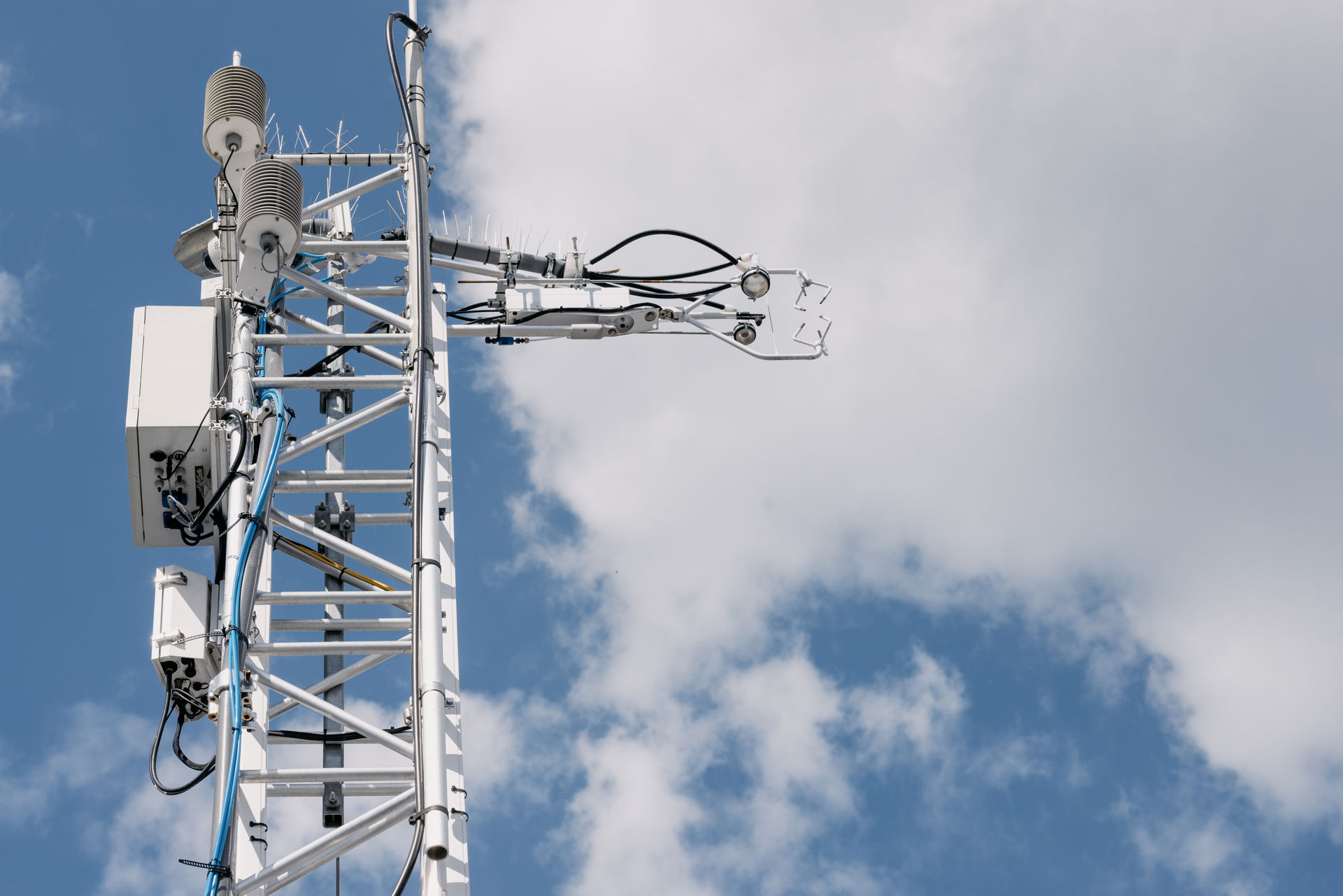
Image Credit: IONICON Analytik
As monitoring systems become more autonomous, what still requires human expertise when interpreting complex chemical data?
Jens Herbig: Human expertise remains irreplaceable when it comes to digging deeper into the data. Our system effectively handles the heavy lifting of routine operations, managing measurements, evaluating data, and delivering quality-assured results. Yet the simplicity and robustness make you forget that, under the hood, a high-resolution PTR-TOF is at work, collecting vast amounts of data across multiple ionization modes. This is where human expertise becomes pivotal: when the system flags an unprecedented anomaly, an expert can examine the raw data to identify unknown compounds and decide whether to incorporate them into future monitoring routines.
By automating repetitive manual data acquisition, we are not replacing the scientist; rather, we are reclaiming their time to drive genuine scientific discovery by mining the hidden treasures in the rich, high-quality raw data.
Looking ahead, where do you see the biggest shift happening?
Lukas Märk: The technical barriers to using PTR-technology have fallen dramatically, and our ongoing efforts will lower them even further. Today, an automated, highly robust PTR-TOF system allows operators to collect exceptional data without needing deep analytical expertise. This accessibility has been the foundation for our success in semiconductor and fenceline applications.
The ultimate shift here is the democratization of this technology. Moving forward, this ease of use will open the door for entirely new industries to adopt real-time chemical monitoring. It also completely changes the landscape for scientists and researchers who are strictly application-focused. They no longer need to be CI-MS experts to utilize lab-grade, high-resolution mass spectrometry. Harmonizing data across global networks like ACTRIS is just the first example of what this enables. Bringing uncompromised laboratory precision directly into the field – and making it effortless for anyone to use – isn't just the future of chemical monitoring; it is the reality we are scaling today.
About Jens Herbig 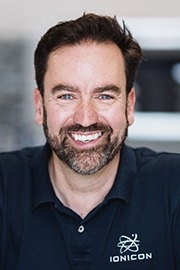
Dr. Jens Herbig earned a PhD in Physics before joining IONICON in 2013 as Chief Technology Officer. He leads the development of industrial PTR-MS technologies, driving innovation in real-time air monitoring applications while advancing the company's technical strategy and product development.
About Lukas Märk 
Lukas Märk holds an MBA in International Business from MCI Management Center Innsbruck and a degree in International Business from the University of Innsbruck. He has spent over 20 years at IONICON, progressing from Marketing & Sales Manager to CEO, where he leads the company's continued growth and innovation.
This information has been sourced, reviewed, and adapted from materials provided by IONICON Analytik.
For more information on this source, please visit IONICON Analytik.
Disclaimer: The views expressed here are those of the interviewee and do not necessarily represent the views of AZoM.com Limited (T/A) AZoNetwork, the owner and operator of this website. This disclaimer forms part of the Terms and Conditions of use of this website.