Sponsored by CavitarReviewed by Ify IsiborAug 10 2026
Welding is an important part of industrial manufacturing, but it also poses considerable health concerns for workers.
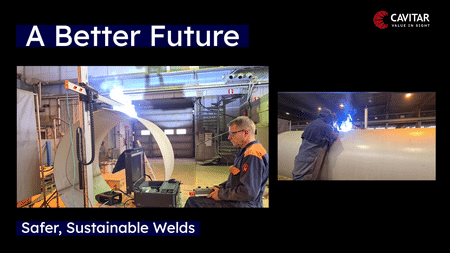
Image Credit: Cavitar
Extreme arc brightness, toxic fumes, and physically demanding postures can all cause long-term health problems. While protective equipment and ventilation systems have improved, emerging technologies are redefining welding safety by reducing direct exposure to potential hazards.
Cavitar and MV-Welding for Remote, Efficient, and Safe Welding
Video Credit: Cavitar
Eye Safety: Blinding Arc UV Radiation
Welding arcs produce intense brightness and ultraviolet (UV) radiation, which can result in arc eye (photokeratitis), retinal damage, and long-term vision issues.
Welders often use protective helmets and specific filters to decrease eye strain, but these options have limitations, especially during long periods of work. Remote monitoring solutions enable welders to observe the welding process without exposing their eyes directly to the arc, lowering the risk of eye fatigue and permanent damage.
Lung Safety: Toxic Fumes and Particles
Welding emits dangerous vapors comprising fine metal particles and toxic gases like ozone and nitrogen oxides. Long-term exposure is associated with significant respiratory ailments such as welder's lung, chronic bronchitis, and neurological disorders.
Even with adequate ventilation, some working conditions, such as confined spaces, make it difficult to avoid inhaling these hazardous substances. Remote operating and monitoring solutions help limit direct exposure for welders, improve air quality, and create a healthier workspace.
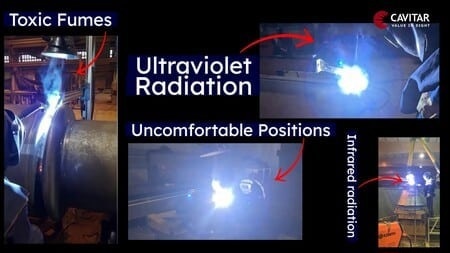
Image Credit: Cavitar
Ergonomics and Reducing Physical Strain
Many welding activities include operating in awkward positions, such as overhead welding, within tanks, or around tight corners. Prolonged strain on the back, neck, and shoulders causes chronic discomfort and musculoskeletal diseases.
Reducing the need for welders to be physically near the workpiece improves ergonomics, minimizing discomfort and the likelihood of long-term injury. In addition, real-time visibility enables welders to retain precision without excessive repositioning, thus lowering fatigue.
Enhancing Safety in High-Risk Environments
Welders commonly work in hazardous conditions, such as high-temperature locations, poorly lit rooms, and elevated positions. The inability to see the welding process in real time increases the risk of accidents, burns, and structural defects.
Technologies that give greater visualization and remote access help to provide a safer work environment by allowing operators to check welding quality from a safe distance, lowering the risks associated with limited or high-risk regions.
Cavitar: A Solution for Safer Welding
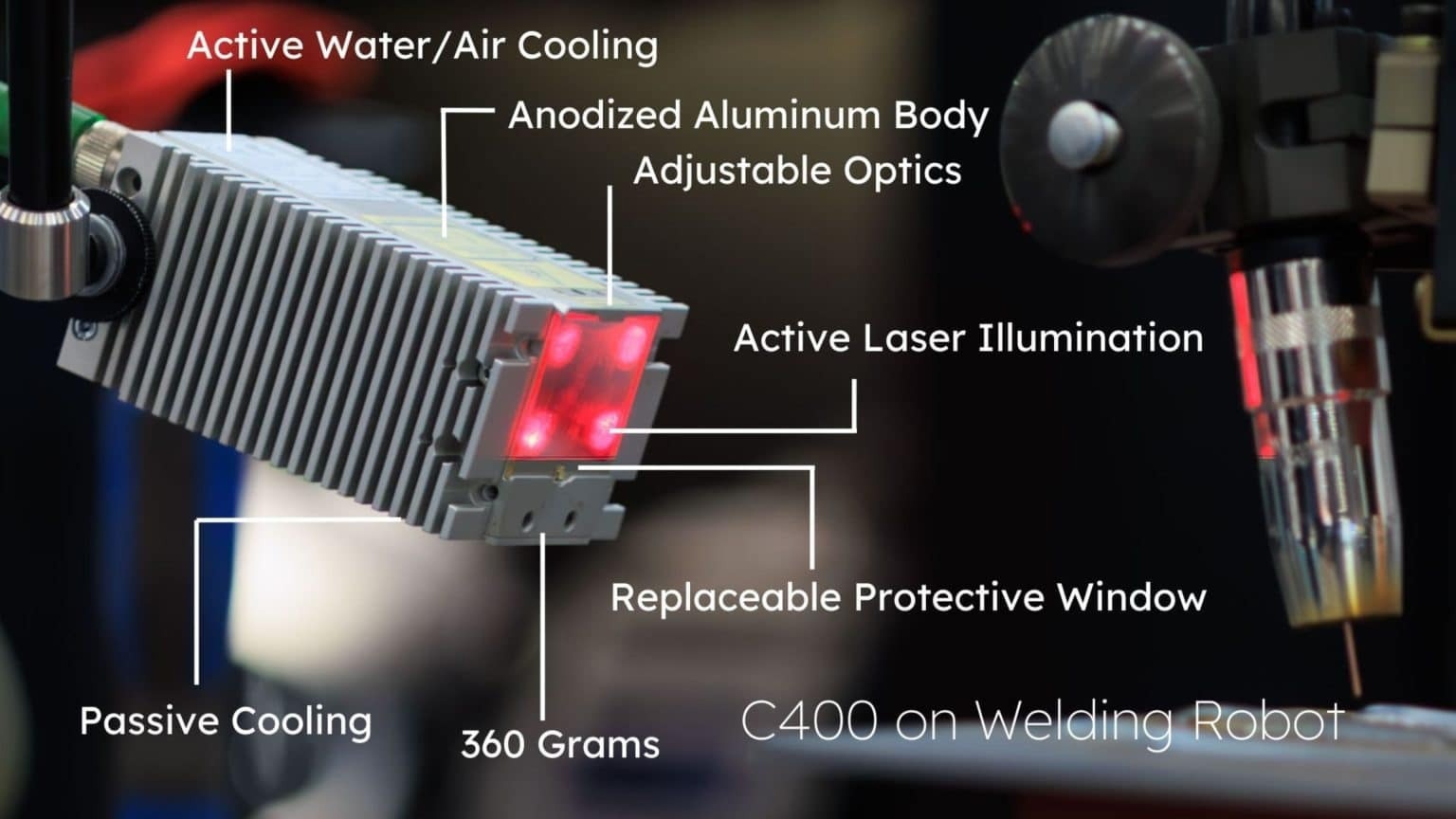
Image Credit: Cavitar
To address these challenges, Cavitar Ltd., an innovative Finnish company based in Nekala, Tampere, developed the world's first welding camera with active laser illumination, resulting in what it terms #ArcLessVision.
Cavitar’s welding camera offers a clear view of the welding process for remote monitoring, decreasing eye strain, fume inhalation, and physical strain on welders.
The camera allows for real-time process tracking, remote operation, and comprehensive post-event analysis, significantly improving both worker safety and welding quality. Cavitar's goods are proudly designed, engineered, and manufactured in Finland.
Cavitar Welding Camera C300 - Product Video
Video Credit: Cavitar

This information has been sourced, reviewed, and adapted from materials provided by Cavitar.
For more information on this source, please visit Cavitar.