Sponsored by MKS NewportReviewed by Olivia FrostSep 1 2026
Silicon carbide (SiC) has a density comparable to that of aluminum and granite, and it is stiffer than any other material used in precise motion applications, including steel and aluminum. It has a thermal conductivity six times lower than aluminum and a lower thermal expansion coefficient than granite.
Image Credit: MKS Newport
The table below shows the weight and stiffness advantages of SiC in motion applications.

Image Credit: MKS Newport
The advantages of employing SiC include the capacity to move and stop at higher accelerations because of its light weight and high rigidity, as well as improved accuracy and repeatability due to its reduced susceptibility to thermal fluctuations. Another observable benefit of SiC's desirable properties is position stability.
Material Properties of SiC, Granite, and Other “Traditional” Stage Material. Source: MKS Newport
| |
Granite |
Steel |
Aluminum |
SiC |
| Density: d |
3 |
7.8 |
2.7 |
2.7 |
| Young's Modulus: E (GPa) |
70 |
210 |
70 |
250 |
| Stiffness (E/d) |
23 |
27 |
26 |
93 |
| Thermal Conductivity: TC (W/m*K) |
2 |
50 |
180 |
30 |
| Thermal Expansion: TE (10-6/K) |
5 |
11 |
22 |
3.5 |
Applications
CeraMech's rigidity and lightweight design make it well-suited for production environments that require dynamic and precision performance.
From wafer-level procedures and inspection to large-panel laser drilling, there are ideal applications where the required performance is comparable to air bearings, but the cost is lower than with mechanical bearing systems. Examples of applications requiring increased precision and throughput are described below:
- Automatic optical inspection
- Wafer Inspection
- Wafer dicing and grooving
- Metrology
- Laser microprocessing of large panel displays
- Laser Via drilling for large panel boards
- Flexible circuit cutting and drilling
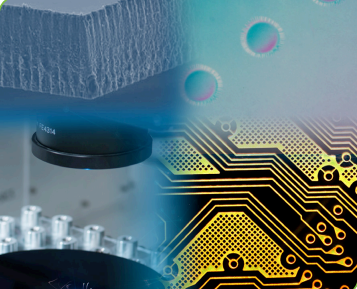
Image Credit: MKS Newport

This information has been sourced, reviewed, and adapted from materials provided by MKS Newport.
For more information on this source, please visit MKS Newport.