This webinar series aims to demystify PFAS, from fundamentals to first lab steps, and is designed for mass spec researchers as a practical training resource for lab supervisors to establish competent food testing teams.
Per- and polyfluoroalkyl substances (PFAS) are everywhere from drinking water to food packaging: understanding how to identify and analyze them is more important than ever.
Whether you are just starting out or looking to improve your skills, this new four-part webinar series covers the fundamentals of PFAS analysis through expert-led sessions, practical tools, and real-world examples.
This series is intended for lab analysts and managers, but it may also serve as a structured training resource to onboard new analysts, provide refresher training, and establish uniform proficiency across the team.
Agenda
PFAS First Steps: A Roundtable for New Analysts
Host: Craig Butt, Senior Technical Manager, Food and Environmental
Panelists: Megumi Shimizu, Maryam Sayeed, Simon Roberts
Join the panel as they discuss frequent issues experienced by new analysts. From debugging poor linearity to assuring regulatory preparation, this roundtable is jam-packed with practical tips and peer insights.
What you will learn:
- How experienced PFAS professionals troubleshoot common challenges for rookie analysts
- Practical lab strategies to boost confidence in your workflows
- Understand regulatory readiness for early career analysts
Getting Started with LC-MS/MS for PFAS
Speaker: Simon Roberts, Staff Applications Scientist, SCIEX
Discover method setup fundamentals such as polarity switching, reversed-phase procedures, and internal standards. Learn how to reach ultra-low detection limits (0.2 ng/L in water, 0.001 µg/kg in food) with hands-on learning.
What you will learn:
- How to create a PFAS-ready LCMS/MS method from the bottom up
- Understand the practical steps to achieve ultra-low detection limits
- Virtual training provides hands-on experience to boost confidence
Reducing Sporadic PFAS Contamination: Sample Prep and Chromatography Strategies
Speaker: Maryam Sayeed, Product Manager, Phenomenex
Learn how to simplify sample preparation and avoid background contamination, which is one of the most common problems in PFAS measurement. This workshop provides actionable techniques for achieving clean, consistent results.
What you will learn:
- Practical ways to ease PFAS sample preparation
- How to identify and remove hidden sources of background pollution
- Actionable advice to maintain data quality and reduce false positives
PFAS 101: What, Why, and Where?
Speaker: Megumi Shimizu, LC-MS Application Scientist, SCIEX
Begin your journey with a fundamental understanding of PFAS chemistry, lifetime, exposure mechanisms, and emerging global laws. This session establishes the framework for the remainder of the series.
What you will learn:
- Build a solid scientific foundation in PFAS chemistry
- Understand the PFAS lifetime and human/environmental exposure routes
- Confidently navigate the rapidly evolving global regulatory landscape
Speakers:
Megumi Shimizu: LC-MS Application Scientist, SCIEX

Megumi Shimizu, a Senior Application Scientist on SCIEX's Environmental Application Team, offers technical support, troubleshooting, and personalized workflow development for LC-MS.
She has a PhD in Marine Science from Duke University and eight years of experience working on PFAS analysis and environmental toxins.
Megumi works with customers across nominal and high-resolution platforms to create sensitive, robust technologies for PFAS detection, quantification, and characterization in complex environmental matrices.
Maryam Sayeed: Product Manager, Phenomenex

Maryam Sayeed has worked with the company for three years. She works to develop new solutions for chromatographic products and consumables in the food and environmental markets.
Her expertise also includes developing devices to address issues with PFAS analysis and background contamination at low detection levels.
Maryam joined Phenomenex after nine years of expertise in the food and beverage business, including HPLC analysis. She has an MS in Biology with a concentration in Biochemistry.
Simon Roberts: Staff Applications Scientist, SCIEX

As a postdoctoral associate at the Colorado School of Mines, Simon collaborated with Doctors Christopher Higgins and Jennifer Field to uncover novel PFAS chemical classes in aqueous film-forming foams (AFFFs).
Simon works at SCIEX, where he focuses on method optimization and data reporting, assisting labs across the country in establishing PFAS and other environmental analytical procedures.
Simon has spent almost 15 years studying the dispersion of PFAS in the environment. He has used his knowledge to set up, optimize, and debug PFAS studies at numerous major commercial, government, and academic environmental laboratories across North America.
Craig Butt: Senior Manager, Food and Environmental
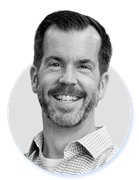
Craig Butt has more than 20 years of mass spectrometry experience and is now the Senior Manager of the Applied Markets group at SCIEX's Global Technical Marketing division.
He formerly worked at SCIEX as an Applications Scientist, where he developed methods for both targeted and non-targeted techniques in the cannabis, environmental, and food and beverage industries.
He earned his PhD in environmental chemistry from the University of Toronto, where his thesis looked into the fate of poly- and perfluorinated organic substances (PFAS) in biological systems.
He began as an NSERC postdoctoral research fellow at Duke University's Nicholas School of the Environment before becoming a research scientist in the department.