Huntsman offers robust, high-performance industrial adhesives that firmly adhere to almost all materials. High-strength bonds between materials can be readily achieved after degreasing and removing loose particles, e.g. rust, from the material surfaces.
However, it is highly recommended that mechanical or chemical surface pretreatment should be performed in cases that demand maximum strength and long-term durability.
The type of surface preparation needed before bonding depends entirely on the intended performance level (Figures 18, 19, and 20), the service conditions of the constructed parts, and commercial cost considerations (ratio cost vs. benefit).
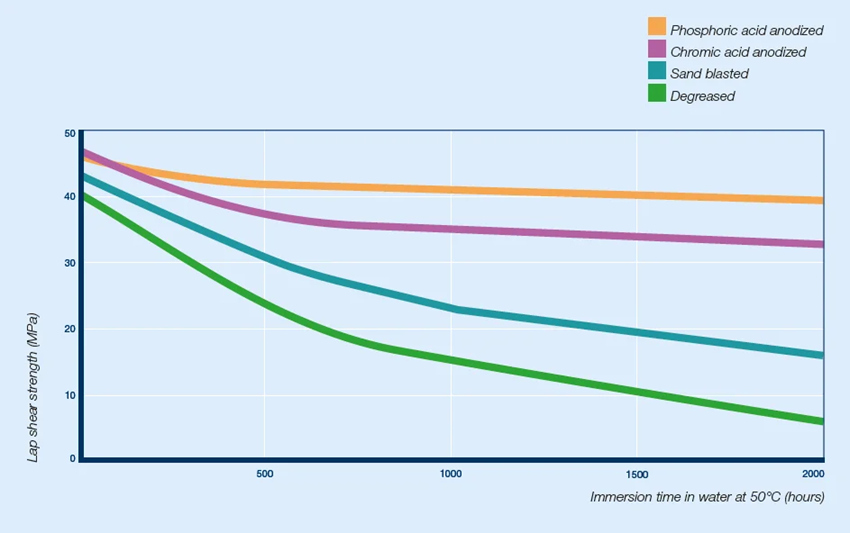
Figure 18. Effect of different surface preparations on bond strength during water immersion for an aluminum assembly bonded with a one-component epoxy adhesive. Image Credit: Huntsman Advanced Materials
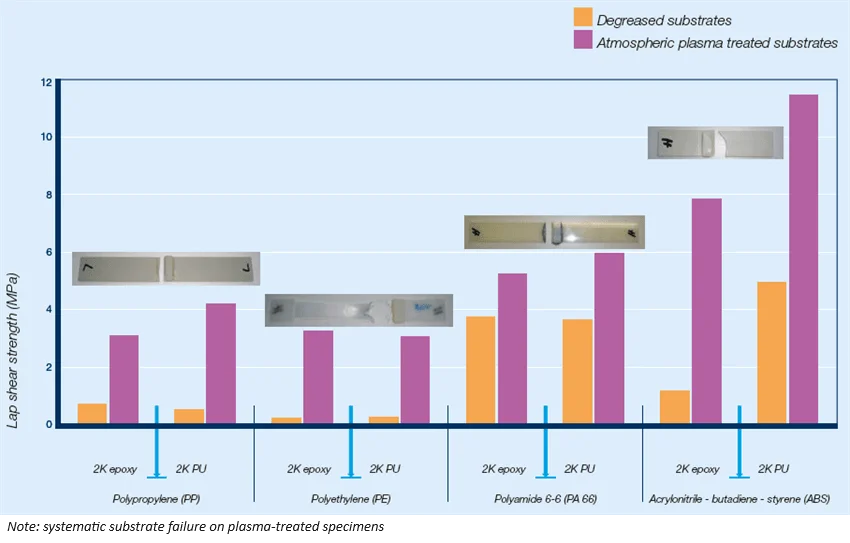
Figure 19. Effect of plasma surface treatment on plastic bonding. (Two-component toughened epoxy adhesive - two-component polyurethane adhesive). Image Credit: Huntsman Advanced Materials
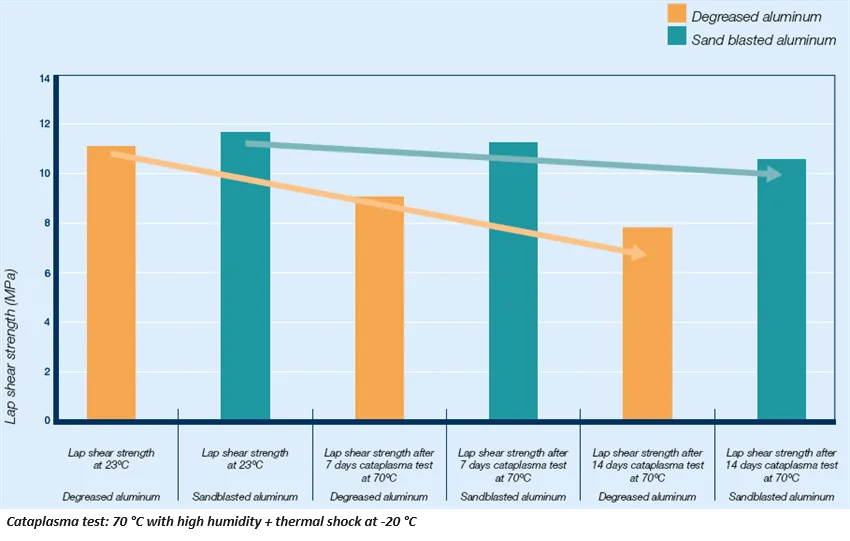
Figure 20. Effect of surface preparation on ageing performance of aluminum bonded with two-component toughened epoxy adhesive. (Wet cataplasma aging). Image Credit: Huntsman Advanced Materials
Why Use Surface Preparation?
To avoid contaminating surfaces, due care and attention must be taken during or after pretreatment. Contamination can be caused by skin contact (clean gloves should be worn), oil contaminated abrasives, contaminated cleaning rags, and using second-rate degreasing methods or subpar chemical solutions.
Contamination may also be a result of nearby work processes going on around the bonding area. The release of oil vapors from machinery, spraying operations (paint, mold release agent, etc.), and processes where powdered materials are used must be avoided as much as possible.
Whatever pretreatment procedure is selected, it is considered best practice to bond the surfaces immediately after performing the pretreatment procedure, i.e., when optimal surface properties have been achieved.
Note: If it is impossible to prevent delays between pretreatment and bonding, surface properties can be preserved by applying a suitable primer immediately after pretreatment.
To guarantee ideal wetting conditions and sufficient adhesion on the substrate, a comprehensive surface preparation is essential:
- To eliminate contaminants and/or low cohesion layers (oxides)
- To create a clean bonding surface
- To enhance the bonding area
- To ensure that the adhesive fully wets the substrate surface (e.g., by enhancing the surface energy of the substrate)
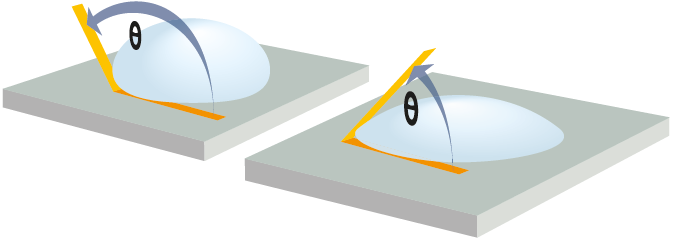
Wetting angles before surface preparation (Left) And after (Right). Image Credit: Huntsman Advanced Materials
Test for a Clean Bond Surface
Apply several drops of distilled water to a surface. If they spread over it evenly – or if, on drawing the surface from distilled water, the water does not disperse into droplets – then it is safe to assume that the surface is sufficiently contamination-free.
Uniformly wetting the surface with distilled water suggests that an adhesive will likely wet it. However, it should be considered that certain plastics, even when clean, cannot be wetted with distilled water, even if they are later wetted with suitable adhesives.
Furthermore, it should be noted that wetting, no matter how sufficient, is not an indicator of the assembly's potential bond strength and durability. It is a necessary but not adequate condition for achieving high bond strengths.
The water droplet test is a straightforward and basic method to see whether the bonding surface is clean. It is most suited to metals. It is not possible to measure the surface tension of plastic materials directly and therefore, this trait is usually characterized indirectly using contact angle methods or testing inks.
Several standardized methods have been developed to address the various analyzed substrate types (see literature, e.g., Adhesives Technology Handbook – W. Andrew Editions).
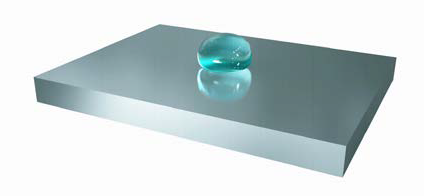
Bad wetting. Image Credit: Huntsman Advanced Materials
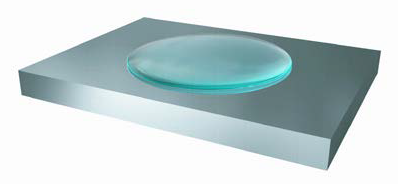
Good wetting. Image Credit: Huntsman Advanced Materials

This information has been sourced, reviewed and adapted from materials provided by Huntsman Advanced Materials.
For more information on this source, please visit Huntsman Advanced Materials.