When using adhesives to bond material surfaces, it is crucial that all traces of oil, grease, or release agents are removed from the surface. It is highly recommended that one of the degreasing methods listed below should be performed even if the surfaces to be bonded appear clean.
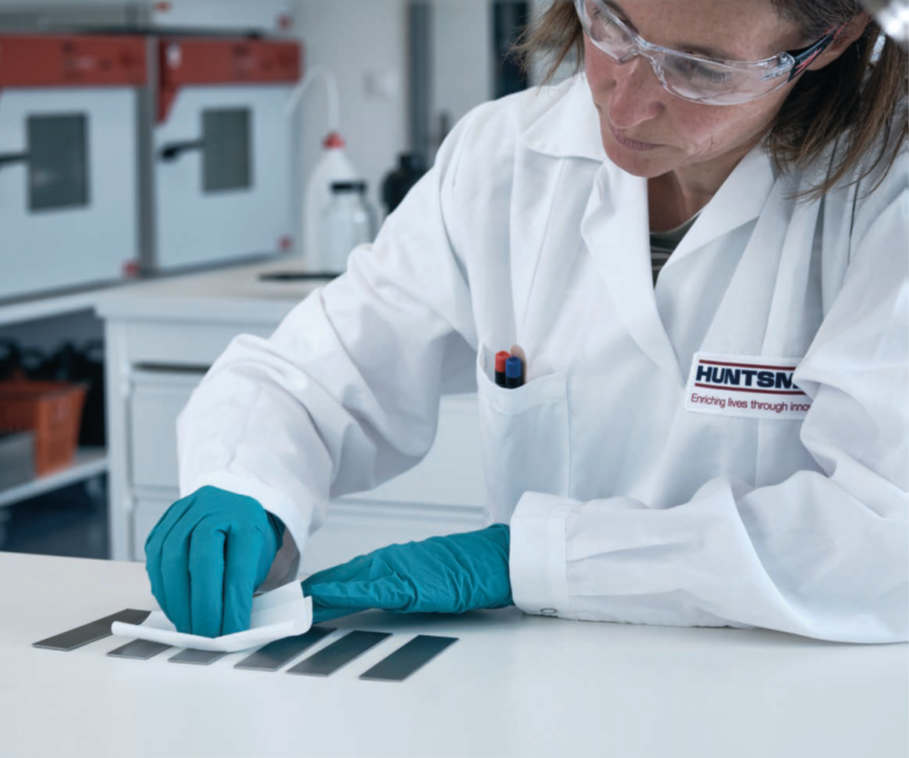
Image Credit: Huntsman Advanced Materials
Vapor Degreasing
Surface parts are suspended in a vapor degreasing unit, using regular degreasing solvents such as acetone, ethanol, methyl ethyl ketone (MEK), or isopropanol. The unit may include a compartment to facilitate initial washing in the liquid solvent.
Solvent Immersion
If it is not possible to access a vapor degreasing unit, two tanks filled with the same degreasing solvent can be used for successive immersion. The first tank is where the initial wash can be performed; the second tank is used for rinsing.
When heavy contamination can be seen in the wash tank solvent, the tank should be cleaned out and refilled with fresh solvent. This tank can then be used for the rinse, and the other tank for the wash.
Brush or Wipe
Using a clean brush, cloth, or lint-free paper soaked in a commercial degreasing solvent, brush or wipe the joint surfaces thoroughly. For fine, detailed work, cleaning with an aerosol solvent may be a more appropriate solution; this technique also ensures that the solvent remains perfectly clean.
Leave to stand for a minute or two for complete evaporation from the joint surfaces. On today’s market, there is an extensive range of proprietary solvent degreasing agents with low-hazard ratings. Note: these should be used carefully following the manufacturer’s instructions.
Learning Lab: How to Degrease Materials Before Adhesive Bonding
Want to remove all traces of oil and grease from the surfaces to be bonded ?. Video Credit: Huntsman Advanced Materials
Alkaline Degreasing
Alkaline degreasing is a suitable alternative to detergent degreasing. For this method, sodium or potassium hydroxide, borates, carbonates, phosphates, complexing agents, and organic surfactants are all suitable candidates.
This method can be performed under hot or cold conditions, with or without the use of an electrical current.
Complete washing, as close to neutralization, is required to eliminate any residual traces of alkaline cleaners. Proprietary products are recommended in accordance with the manufacturer’s instructions for use.
Ultrasonic Degreasing
Ultrasonic degreasing is commonly used for the preparation of small specimens by way of ultrasonic vapor degreasing or solvent immersion.
Detergent Degreasing
The joint surfaces should be scrubbed in a solution of liquid detergent. Non-ionic detergents tend to deliver the best results. Wash and rinse with clean hot water and allow to dry completely – if possible in a stream of hot air from a forced-air heater.
Removal of oil or grease residues is an important practice for surface preparation but should always be combined with other surface preparation methods for optimal bonding:
- Degreasing only (good)
- Degreasing, mechanical abrasion followed by loose particle removal (very good)
- Degreasing and chemical pretreatment (excellent)
This information has been sourced, reviewed and adapted from materials provided by Huntsman Advanced Materials.
For more information on this source, please visit Huntsman Advanced Materials.