Sponsored by PittconReviewed by Danielle Ellis, B.Sc.Feb 12 2026
The idea that light can behave as both a particle and a wave is one of the strange central concepts in quantum mechanics known as wave-particle duality. Towards the end of the 19th century and the beginning of the 20th, there were an increasing number of experimental results that could not be explained by the prevailing physical theories of the time, classical mechanics.
The observation of classical wave-like diffraction of light had been made in approximately 1655 by Francesco Maria Grimaldi.1 Classical waves are continuous in nature, so they can possess any energy. However, later observations by Hertz, of what came to be known as the photoelectric effect, could only be explained by the idea of quantization – the idea that light and other particles could only possess discrete, fixed amounts of energy.
The concept of quantization and wave-particle duality, as well as the wealth of instrumentation development that occurred during this period, came to underpin the rapid development of photoionization mass spectrometry. What is considered to be the first mass spectrometer was built in the 1920s and used for isotope separation – the first time that anyone had observed that particles of the same element could have different masses.3 Being able to separate particles by their mass-to-charge (m/z) ratio is what makes mass spectrometry such a useful and diverse tool in analytical chemistry, and while the Manhattan Project did see mass spectrometry instrumentation become more common, it was really by the 1960s that mass spectrometers had become a ubiquitous piece of laboratory equipment.2,3
Photoionization Mass Spectrometry: A History
Photoionization is the use of electromagnetic radiation to remove electrons from a species of interest. Photoionization mass spectrometry uses a photoionization source to create the charged particles that can then be separated by the m/z ratios for identification.
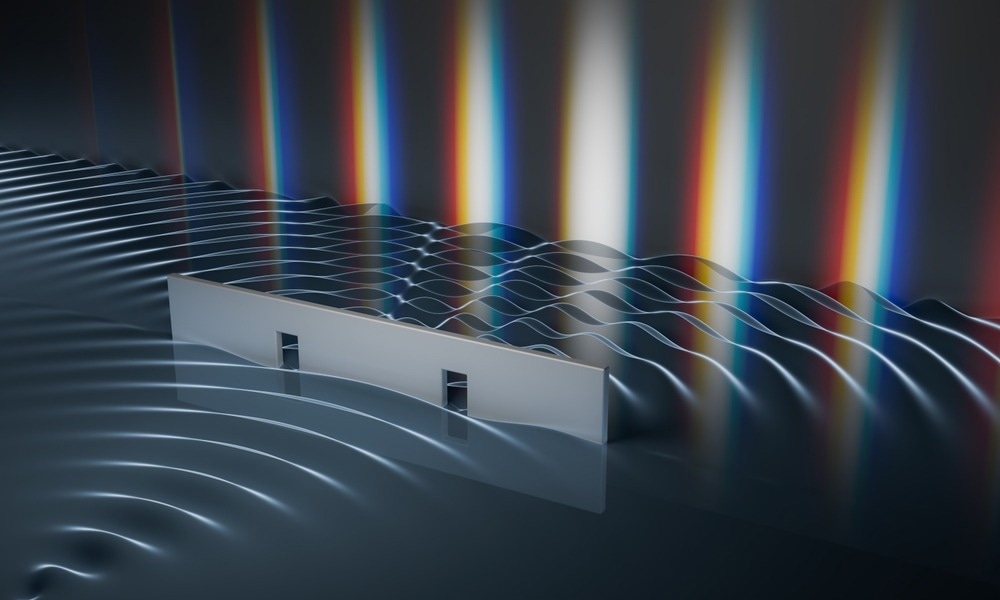
Image Credit: vchal/Shutterstock.com
The first photoionization sources were developed by F.L. Mohler in 19264,5, who also carried out many of the earliest photoionization mass spectrometry experiments. The source he used was a type of discharge lamp, where thermionic emission from a metal filament is used to excite a surrounding gas, which then undergoes energetic relaxation by emitting photons that can be used to ionize a target. These early experiments marked the beginning of a technique that would become the predominant means of analyzing organic molecules for the next 60 years.2,3
As technologies advanced, it became possible to perform photoionization mass spectrometry measurements on a wider range of sample types, and by the mid-1980s, even on samples at ambient pressure.8 Rather than looking at isotopes of a single analyte, by this stage, it was possible to analyze quantitative mixtures of different chemical families. Analysis of complex chemical mixtures is one advantage of modern hyphenated mass spectrometry techniques, which incorporate a pre-separation stage for analytes. The development of ambient pressure mass spectrometry was key in enabling the advancement of liquid chromatography mass spectrometry (LC-MS).
For photoionization mass spectrometry, 2026 is a very significant year. 2026 marks 100 years since the first demonstration of photoionization mass spectrometry, 40 years since the development of atmospheric pressure photoionization (APPI), and 25 years since the first commercial AAPI source. To acknowledge and celebrate 100 years of photoionization mass spectrometry, the leading international conference, Pittcon, will host an anniversary session of talks.
Covering a number of different aspects of photonization mass spectrometry, from applications in cultural heritage to online analysis, aerosol measurements, and the application of advanced light sources, Pittcon is hosting a series of experts to discuss the following:
SPMS for Aerosols
Single particle mass spectrometry (SPMS) – a mass spectrometry technique for characterization of individual airborne or suspended particles7 – has become a key measurement technique in aerosol research. Aerosols are liquid or solid particles suspended in a gas that can occur both naturally and from anthropogenic sources in the environment. Aerosols play an important role in maintaining global temperatures through radiative balance8 and aerosol monitoring has become increasingly common as aerosols are important in determining air quality and certain classes may have detrimental impacts on human health.9
SPMS is a useful technique in aerosol research as it can be used to characterize a number of different aerosol properties in a single measurement. Researchers such as Alla Zelenyuk-Imre utilize SPMS to measure multiple particle properties simultaneously. This multidimensional analysis of particle size, chemical composition and the dynamic evolution of particles, mean that Zelenyuk-Imre can gain new insights into the fundamental relationships between particle properties and their behavior and better predict their environmental impact.10
At Pittcon, Zelenyuk-Imre will be presenting some of her latest results in her talk “Unraveling Aerosol Complexity One Particle at a Time: Multidimensional Single Particle Characterization” which will show how SPMS can be applied in fields as diverse as pharmaceuticals and explosives.
Pittcon and the Future of Photoionization Mass Spectrometry
In addition to celebrating past scientific achievements by bringing together international experts across all disciplines, Pittcon will also herald the next 100 years of developments in photoionization mass spectrometry.
If you are looking for support with your own mass spectrometry measurements, expert advice, or how photonionisation mass spectrometry could help you tackle your challenges, Wiley Science Solutions will be exhibiting at Booth: 1429 at Pittcon. Wiley Science Solutions is an expert in mass spectrometry data analysis workflows, tools, and spectral databases, and is available for discussion during Pittcon.
To learn more about how to participate in Pittcon, please visit the homepage. Information on the conference schedule and details of all speakers can be seen on the Technical Program.
References and Further Reading
- Hall, A. R. (1990). Beyond the Fringe: Diffraction as seen by Grimaldi, Fabri, Hooke and Newton. (1990). Notes and Records of the Royal Society of London, 44(1), pp.13–23. DOI: 10.1098/rsnr.1990.0002. https://royalsocietypublishing.org/rsnr/article-abstract/44/1/13/55836/Beyond-the-Fringe-Diffraction-as-seen-by-Grimaldi?redirectedFrom=fulltext.
- Mulligan, J. F. (1989,). PHYSICS TODAY. (1989). Heinrich Hertz and the Development of Physics. (online) Available at: https://physicstoday.aip.org/features/heinrich-hertz-and-the-development-of-physics.
- Griffiths, J. (2008). A Brief History of Mass Spectrometry. Analytical Chemistry, (online) 80(15), pp.5678–5683. DOI: 10.1021/ac8013065. https://pubs.acs.org/doi/10.1021/ac8013065.
- McLafferty, F.W. (2011). A Century of Progress in Molecular Mass Spectrometry. Annual Review of Analytical Chemistry, 4(1), pp.1–22. DOI: 10.1146/annurev-anchem-061010-114018. https://www.annualreviews.org/content/journals/10.1146/annurev-anchem-061010-114018.
- SMITH, G.E. (1997). J. J. Thomson and The Electron: 1897?1899 An Introduction. The Chemical Educator, 2(6), pp.1–42. DOI: 10.1007/s00897970149a. https://www.semanticscholar.org/paper/J.-J.-Thomson-and-The-Electron%3A-1897%E2%80%931899-An-Smith/e460d3d24fc80d1a4c5e4486f3672843af8faab9.
- Ellett, A., Foote, P.D. and Mohler, F.L. (1926). Polarization of Radiation Excited by Electron Impact. Physical Review, 27(1), pp.31–36. DOI: 10.1103/physrev.27.31. https://journals.aps.org/pr/abstract/10.1103/PhysRev.27.31
- Mohler, F.L. (1926). A Photo-Ionization Experiment with Hydrogen. Proceedings of the National Academy of Sciences, 12(8), pp.494–496. DOI: 10.1073/pnas.12.8.494. https://www.pnas.org/doi/10.1073/pnas.12.8.494.
- Kostyanovskii, R.G., et al. (1985). Chemical ionization over a wide range of pressures. 1. Mass spectra of dimethyl esters of maleic and fumaric acids. Russian Chemical Bulletin, 34(4), pp.737–741. DOI: 10.1007/bf00948048. https://link.springer.com/article/10.1007/BF00948048.
- Noble, C.A. and Prather, K.A. (2000). Real-time single particle mass spectrometry: A historical review of a quarter century of the chemical analysis of aerosols. Mass Spectrometry Reviews, 19(4), pp.248–274. DOI: 10.1002/1098-2787(200007)19:4%3C248::aid-mas3%3E3.0.co;2-i. https://analyticalsciencejournals.onlinelibrary.wiley.com/doi/10.1002/1098-2787(200007)19:4%3C248::AID-MAS3%3E3.0.CO;2-I.
- Stier, P., et al. (2007). Aerosol absorption and radiative forcing. Atmospheric Chemistry and Physics, 7(19), pp.5237–5261. DOI: 10.5194/acp-7-5237-2007. https://acp.copernicus.org/articles/7/5237/2007/.
- Pozzer, A., et al. (2022). Mortality attributable to ambient air pollution: A review of global estimates. GeoHealth. DOI: 10.1029/2022gh000711. https://agupubs.onlinelibrary.wiley.com/doi/10.1029/2022GH000711.
- Shrivastava, M. B., et al. (2021) Applying novel analytical tools for analyzing multidimensional secondary organic aerosol measurements (No. PNNL-31981). Pacific Northwest National Laboratory (PNNL), Richland, WA (United States). Available at: https://www.osti.gov/servlets/purl/1975818.

This information has been sourced, reviewed and adapted from materials provided by Pittcon.
For more information on this source, please visit Pittcon.