In this interview, AZoMaterials speaks with Dr. Patrick Lömker from Scienta Omicron and Professor Anders Nilsson from Stockholm University about the role of High-Pressure Photoelectron Spectroscopy (HPPES) in advancing catalysis and materials research. They explore how real-time, operando surface analysis under ambient and high pressures is unlocking insights into industrially relevant reactions such as ammonia synthesis and methanol production.
Can you please introduce yourselves and your roles?
Patrick Lömker: I’m the Product Manager for ambient and high-pressure photoelectron spectroscopy at Scienta Omicron. I deepened my scientific knowledge during my PostDoc in Stockholm, where I focused on HPPES in catalysis applications and helped further develop the POLARIS instrument, the prototype to our BAR XPS product today. Since 2018, I’ve been supporting synchrotron users doing high-pressure XPS systems.
Anders Nilsson: I’m a Professor of Chemical Physics at Stockholm University. I lead a group that studies catalytic reactions that produce mainly alkanes, methanol, and ammonia. We focus on understanding how these reactions happen at the surface level under operando conditions, using high-pressure spectroscopy techniques like POLARIS.
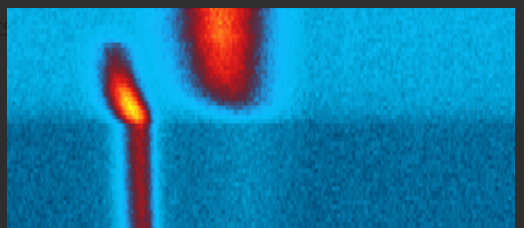
Image Credit: Scienta Omicron
What is high-pressure photoelectron spectroscopy (HPPES), and why is it important?
Patrick Lömker: HPPES allows us to study reactions at elevated pressures - typically in overcoming the millibar and reaching into and above the bar range.
Traditional ambient pressure systems couldn’t replicate realistic reaction environments for certain reactions, which limited our understanding of how materials behave under real-world conditions. With HPPES, we can now observe how surfaces respond during many more catalytic processes. This is especially important for applications in energy conversion and industrial catalysis.
What are the challenges of performing XPS at high pressures?
Patrick Lömker: Electrons have a short mean free path in gases, which makes XPS at millibar pressures technically demanding and at bar pressures almost impossible. To get reliable data, the sample has to be positioned very close to the electron analyzer. We also need a tightly focused beam to minimize scattering and reduce interactions with the surrounding gas.
On top of that, the system must handle high temperatures and reactive environments. Solutions like BAR XPS and POLARIS tackle these challenges using differential pumping, specialty materials and the virtual gas cell, a specialized inlet geometry.
What is POLARIS, and how does it help you study catalytic reactions?
Anders Nilsson: POLARIS is a system that uses grazing incidence hard X-rays, which allows us to operate at pressures up to and even above 1 bar.
This allows us to study reactions like hydrogenation and oxidation under realistic conditions. For example, we’ve used POLARIS to investigate ammonia synthesis on iron and methanol synthesis on copper-zinc alloys.
What did you learn about ammonia synthesis using Polaris?
Anders Nilsson: We studied model systems like single crystals of iron and ruthenium under reaction conditions.
Our results showed that nitrogen dissociation is the rate-limiting step and that the catalyst surface stays largely metallic during the reaction. We also found that surface steps play a key role in enhancing reactivity, especially on iron, highlighting how important catalyst morphology is for performance. Accessing pressures up to 1bar allowed us to overcome the pressure gap.
What did you discover about methanol synthesis and the role of zinc?
Anders Nilsson: Using a Cu(211) single crystal with zinc on top, we observed that zinc stays metallic in CO but forms oxide in CO2. In CO2 + H2 mixtures, we detected intermediates like formate and methoxy, indicating ongoing reactions.
One key finding was evidence of Cu-Zn alloy formation, which suggests that the active phase may actually be a surface alloy rather than just metallic copper or zinc oxide.
How does beam damage affect measurements, and how do you manage it?
Anders Nilsson: Beam damage is always a concern, especially when using very bright and concentrated X-ray sources.
To monitor it, we typically start with low-temperature measurements to see if the signal changes over time. We initially keep the photon flux low and use a defocused beam spot to reduce intensity. For particularly sensitive measurements, we scan the beam across the surface to avoid prolonged exposure in a single area.
What other techniques do you use alongside HPPES?
Anders Nilsson: We use complementary methods like infrared spectroscopy, X-ray absorption spectroscopy and sum frequency generation.
We also work with a reactor cell designed for transient studies, which lets us switch gases and track how the surface changes in real time. Combining these approaches helps us build a more complete understanding of the reaction processes.
Can you explain the design of the BAR-XPS system and its benefits?
Patrick Lömker: BAR-XPS is Scienta Omicron's HPPES system based on the successful POLARIS prototype and built for operando studies. It features a virtual cell that allows users to reach high pressures locally (i.e. >1bar) while keeping the analysis chamber at low pressures (10s of mbar). Stationing this instrument at a light source supplying a tightly focused X-ray beam and a highly efficient electron analyzer allows for productive data collection workflows.
The system is highly versatile and allows high temperatures and a wide range of gases, for varied scientific needs.
Where do you see HPPES research going in the future?
Patrick Lömker: We expect HPPES to be used for studying increasingly complex materials and reactions, especially with the help of fourth-generation synchrotrons that offer improved beam properties. Techniques like HPPES will play a key role in refining catalyst design, uncovering reaction mechanisms, and supporting the development of new technologies in energy materials research and chemical production.
About the Interviewees
Dr. Patrick Lömker
Dr. Patrick Lömker is Product Manager at Scienta Omicron, specializing in ambient and high-pressure photoelectron spectroscopy (AP/HPPES). He deepened his scientific horizon during a PostDoc at Stockholm University, where he was involved with furthering the development of the POLARIS system for operando catalytic studies at industrially relevant conditions.
His work focuses on supporting researchers in using advanced spectroscopy tools to understand surface processes under realistic reaction environments.
Professor Anders Nilsson
Professor Anders Nilsson is a Professor of Chemical Physics at Stockholm University. He holds a Ph.D. from Uppsala University and has also served as Professor of Photon Science at Stanford University.
He is internationally recognized for his work in catalysis, water chemistry, and surface science, with over 330 publications in journals like Nature and Science. His research group develops advanced methods, including HPPES, to study chemical reactions under operando conditions.

This information has been sourced, reviewed and adapted from materials provided by Scienta Omicron.
For more information on this source, please visit Scienta Omicron.
Disclaimer: The views expressed here are those of the interviewee and do not necessarily represent the views of AZoM.com Limited (T/A) AZoNetwork, the owner and operator of this website. This disclaimer forms part of the Terms and Conditions of use of this website.