Sponsored by InterpowerReviewed by Olivia FrostApr 22 2026
Using a Clipper lift, reels of copper conductor wire (cable) can easily unspool one reel at a time. The Clipper lift keeps the spool perfectly aligned with the extrusion line as the wire unreels. The wire is held taut with a tensioner fitted at the front end and an accumulator fitted at the back end. When dealing with three-wire spools, each of the three conductors is individually extruded by its color designation for ground, line, and neutral.
With the wire running down the line as fast as 1000 feet per minute, the walls of the extruded conductors are consistently measured down to a factor of 1/ 10,000 of an inch. This is achieved by employing several laser-scanning at strategic intervals along the extrusion line; a bank of LED displays shows the live measurements and real-time corrections in the width and thickness of the resin, which is applied to the conductors (both ‘hot’ and ‘cold’) according to the specific cable standards.
Laser-measured corrections are performed before, during, and after hot, liquid resin is extruded onto the wires. Measurements are also taken several times down the line before the resin enters a cold-water trough for cooling, where another measurement is taken. A three-extruder system applies the designated colors, such as blue, brown, and white, to the relevant wire.
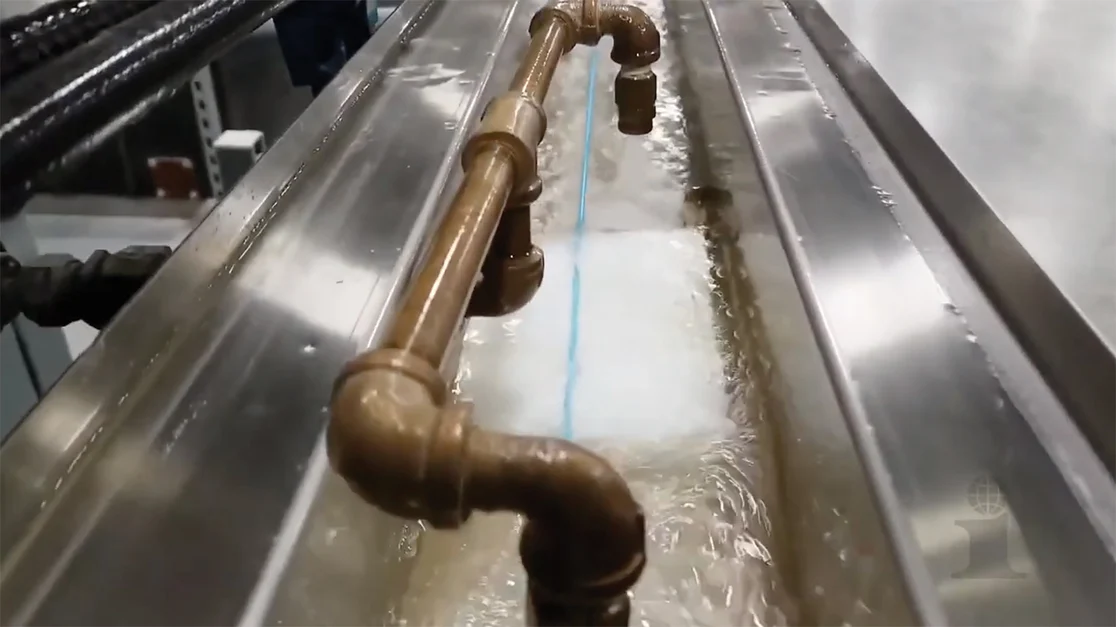
Cold Water Bath on Extrusion Line. Image Credit: Interpower
A key detail during the cabling process is the ‘length of lay’ in which the conductors are braided by a rotating capstan to give the power cord its flexibility. This phase takes place immediately before respooling the three conductors as they run down the extrusion line to be fitted with their outer jacket.
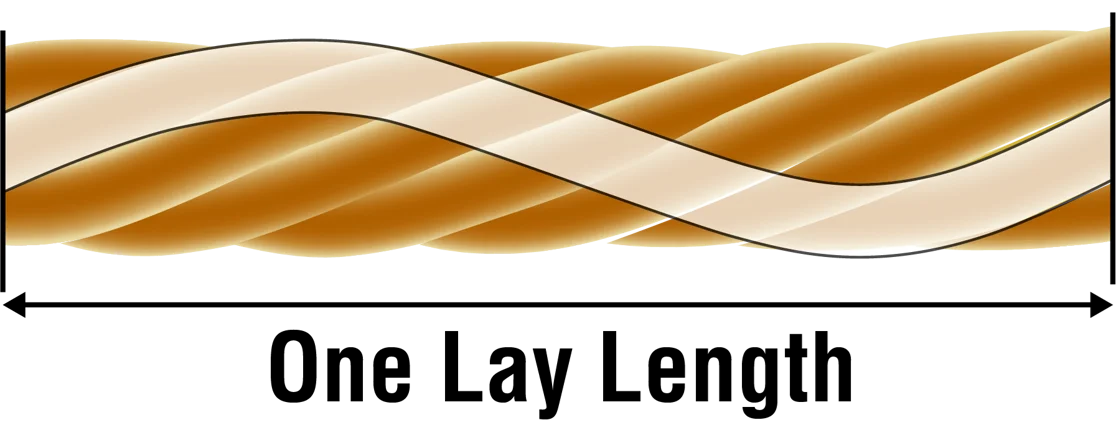
Image Credit: Interpower
North American and international cables are electrical conduits for power cords, manufactured with over-molded bridges to produce plugs that are specific and compliant to each country and region with proprietary diameters, pins, and blade lengths.
The plugs used in each country tend to have a different form factor and will often need to comply with different electrical ratings. The cable will pass through various key station points along the extrusion line: a wire-cleaning station; talc station (for easier stripping); several spark testers (to reveal bare wire from nicks or cuts); a drying station; and a printing station which marks each cord with a maker’s mark, agency approvals (UL/CSA/VDE), date of manufacture, type of jacket material (SJT/SJTOOW/etc.), and voltages and flammability ratings. Once this process has been completed, the cable is spooled, wrapped, and ready for shipping.
The Two Main Types of Power Cord Cables
The main difference in North American and international cable standards is sizing, with one employing AWG measurements and the other using mm2. The differences in the raw materials used are minimal, but the safety standards determined by the individual country agencies often differ more significantly. For instance, in the European market, cable must be RoHS and REACH compliant: most other countries do not apply this standard.
Another example is UL’s flame test versus IEC’s 60695-2 Glow Wire test. The former tests for fire prevention safety, whereas the latter is more concerned with how components may overheat and potentially lead to malfunction. Each country tends to have its own approval agencies, such as the United States (UL), Canada (CSA), and Germany (VDE).
Basic Cabling Material
- Thermoplastic: Thermoplastic can be easily softened through heating and hardened through cooling. This means it can be manipulated when heated, but it preserves its structure after cooling. Thermoplastic is the opposite of thermoset.
- Thermoplastic Elastomer: TPE materials have similar properties to rubber and thermoplastic.
- Thermoset: Thermoset is achieved through a heating process known as curing. Once the plastic is cured, its shape remains fixed and rigid.
- PVC: PVC is a common thermoplastic material, frequently used for cables, conductor jackets, and some molded plugs.
- Rubber: Rubber, a thermoset-type material, is also commonly used for cables. It is often more expensive than thermoplastic cable, but it demonstrates better durability and water and abrasion resistance levels. Rubber is an excellent choice for most outdoor applications.

This information has been sourced, reviewed, and adapted from materials provided by Interpower.
For more information on this source, please visit Interpower.