Carefully managing redox reactions during spark plasma sintering can shape the internal structure of steel-spinel composites, creating a more controlled approach to building materials for demanding high-temperature electrochemical applications.
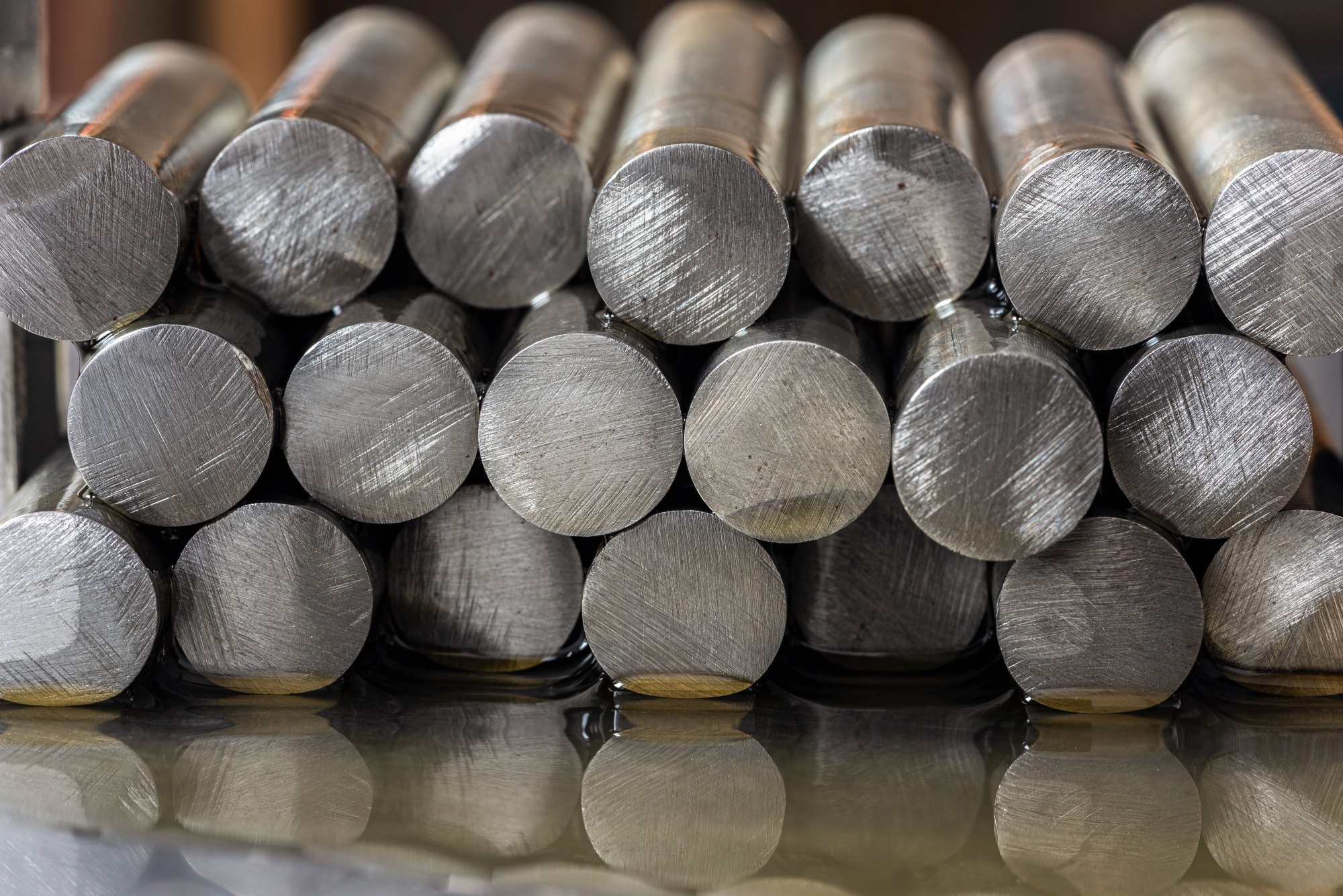 Study: Microstructure Design of Steel-Spinel Composites via Spark Plasma Sintering Process. Image Credit: Flegere/Shutterstock.com
Saving this for later? Download a PDF here.
Steel-MgO composites based on AISI 316L stainless steel are being explored for uses such as inert anodes in aluminum electrolysis, where materials must withstand aggressive, high-temperature conditions without producing CO2. Their performance depends heavily on the oxide phases that form inside the material, especially spinels, which help protect against corrosion and improve chemical compatibility.
One of the most common ways to create those phases is pre-oxidation. However, with this approach, oxygen levels vary from the surface to the interior, potentially leaving unwanted compositional gradients and uneven microstructures. Near the surface, this irregularity can also affect electrical conductivity.
A new study, published in Advanced Engineering Materials, takes a different route. By adding Cr2O3 or Fe2O3 directly to the starting powders, the researchers sought to control oxygen activity within the composite during sintering.
Three-way Spinel Comparison
The group compared three systems: a simple MgO-Fe2O3 mixture, steel-(MgO+Cr2O3), and steel-(MgO+Fe2O3). All were processed by spark plasma sintering at 1100°C under vacuum using graphite tooling.
After ball milling and consolidation, the samples were analyzed using X-ray diffraction, scanning electron microscopy, energy-dispersive X-ray spectroscopy, electron backscatter diffraction, and electron probe microanalysis. Thermodynamic calculations were used alongside the experiments to explain which phases formed, where they formed, and why.
MgO-Fe2O3 Proves Most Clear
In the MgO–Fe2O3 system, the main reaction was straightforward. MgO and Fe2O3 reacted largely to form MgFe2O4 spinel.
Irregularities were still observed despite this. Near the graphite interface at the sample edge, a lower local oxygen partial pressure promoted partial reduction and led to the formation of magnesiowüstite (Mg,Fe)O. That edge effect made an important point: small local changes in oxygen conditions can shift the phase balance within the same sample.
Cr2O3 Created Relative Stability
The steel-(MgO+Cr2O3) composite behaved in a comparatively orderly way. MgCr2O4 spinel formed as expected, and because Cr2O3 is highly stable, it interacted only weakly with the steel.
That left the metallic grains largely unchanged, producing a simpler microstructure in which spinel regions surrounded the steel.
The paper reports minor reactions at previously oxidized steel surfaces, giving parts of the grain boundaries a slightly fringed appearance, but overall, the Cr2O3 route remained the more predictable of the two.
Fe2O3 Drives A Reactive System
The picture changed sharply when Fe2O3 was used instead. In the steel-(MgO+Fe2O3) system, Fe2O3 acted as an oxidizing agent, drawing chromium and manganese out of the steel and setting off a more complicated sequence of interfacial reactions.
That led to the formation of multiple phases, including MgFe2O4, (MgFe)O, and mixed spinels such as Mg(FeCr)2O4. In some regions, Fe-containing oxides also passed through Fe3+/Fe2+ reduction steps, including Fe3O4-like intermediate stages that are difficult to separate from MgFe2O4 by XRD. Which phases appeared depended strongly on local interface chemistry, especially on whether MgO was present.
The steel also changed. As chromium diffused out, the austenitic structure became unstable and transformed into martensite. The researchers identified Kirkendall pores in the material, linked to the outward movement of alloying elements during these redox reactions.
Denser Composites, Tighter Interfaces
One of the clearest differences between the two steel-based systems was in densification. The Fe2O3-containing composite exhibited a higher density and lower open porosity than the Cr2O3-based material, indicating better closure of internal interfaces and a more compact overall structure.
That matters because it shows redox chemistry is not just influencing which phases form. It is also shaping porosity, interface quality, and the composite's consolidation during sintering.
Two Design Routes Show Strong Promise
The comparison outlines two distinct approaches to designing these composites. Cr2O3 supports a more stable and relatively simple microstructure, with limited interaction between the ceramic and the steel. Fe2O3 creates a much more active redox environment, producing richer phase evolution and stronger densification, but also more extensive changes in the steel itself.
Journal Reference
Mehdizadehlima, M., et al. (2026). Microstructure Design of Steel Spinel Composites via Spark Plasma Sintering Process. Advanced Engineering Materials, e202503157. DOI: 10.1002/ADEM.202503157
Disclaimer: The views expressed here are those of the author expressed in their private capacity and do not necessarily represent the views of AZoM.com Limited T/A AZoNetwork the owner and operator of this website. This disclaimer forms part of the Terms and conditions of use of this website.