Sponsored by InterpowerReviewed by Ify IsiborApr 14 2026
Although 10 A/250 V plugs and sockets appear to be similar, there are several key distinctions to be aware of.
Australia, Argentina, and China all employ Class I, 10 A/250 V AC plugs with a 50 Hz Alternate Current (AC) cycle (Figure 1).
The plug designs in all three countries are similar, and the cable conductors are all color-coded according to international standards. Conductor colors include green/yellow (ground/earth), light blue (neutral), and brown (line) (Figure 2).
Australian and Argentinian plugs are attached to an H05VV-F cable (Harmonized, 300/500 VAC, PVC, Flexible cable), but the Chinese cable is an RVV (PVC-insulated, flexible cable per GB/T 5023.5 and IEC 60227-5) (Figure 3).
So, how compatible are these plugs and sockets? While China and Argentina use similar plug layouts, the line and neutral contact pins are inverted on the plug's face; the Australian and Argentine lines and neutrals are also reversed (Figure 2).
Because of the similarities in patterns and components, manufacturers must account for these wiring variances when exporting electrical items to all three nations.
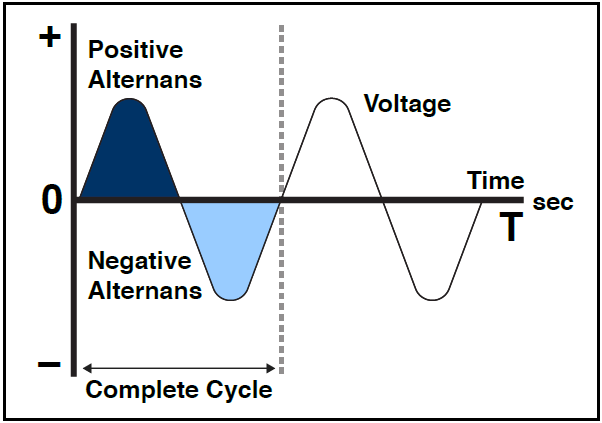
Fig 1. Alternating Current (AC) Wave. Image Credit: Interpower
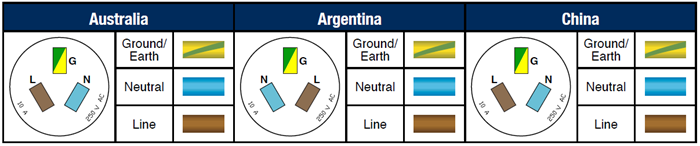
Fig 2. Conductor Color and Pin Orientation. Image Credit: Interpower
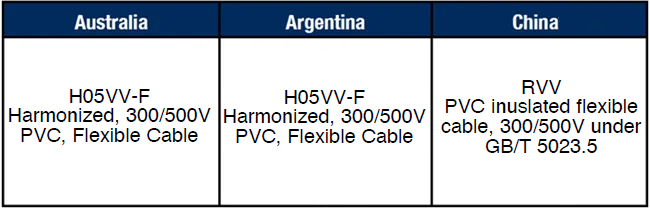
Fig 3. Cable Types. Image Credit: Interpower
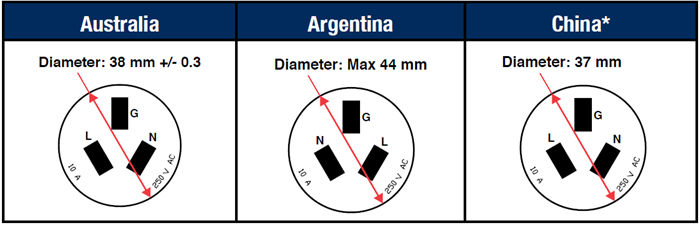
Fig 4. Plug Diameters. Image Credit: Interpower
According to Australian standards, the plug diameter will be 38 mm +/- 0.3, but in Argentina, the plug diameter will be no more than 44 mm + 0.15 - 0.0. (Fig. 4)
*Although Interpower specifies a diameter for its Chinese plug molds, the Chinese regulation states that though the contour of the plug is not specified, no section of the pins should be less than 6.5 mm from the edge.
There are some differences when connecting one country's plug to another's socket: while the Chinese line and neutral pins are 1 mm longer than their Australian counterparts (18 and 17 mms, respectively), the Australian plug will fit the Chinese socket.
Interpower Does Not Authorize the use of country-specific plugs with another country's country-specific socket unless approved by their respective agencies (Figure 5).
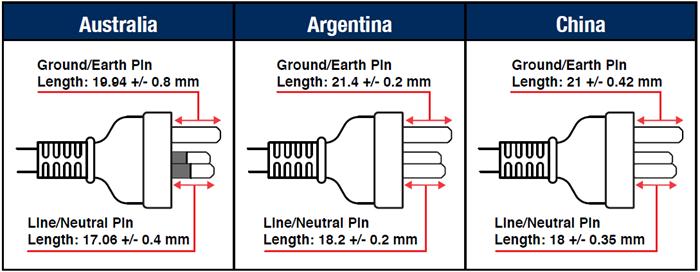
Fig 5. Pin Length. Image Credit: Interpower
Australia
The Australian plugs and sockets are defined in AS/NZS 3112. The normal plug and socket rating is 10 A, while 15 A and 20 A variants are also available. The cord sets can be terminated with a number of IEC 60320 connectors, including the C13. Contact Customer Service to learn about additional connectivity choices.
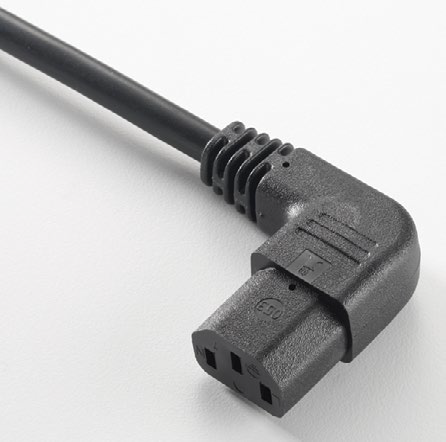
Right/Left Angle. Image Credit: Interpower
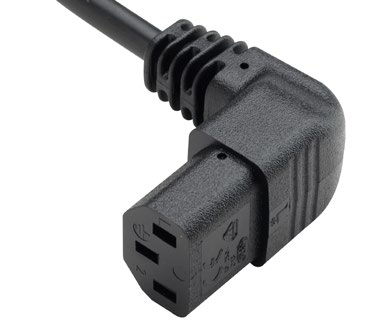
Up/Down Angle. Image Credit: Interpower
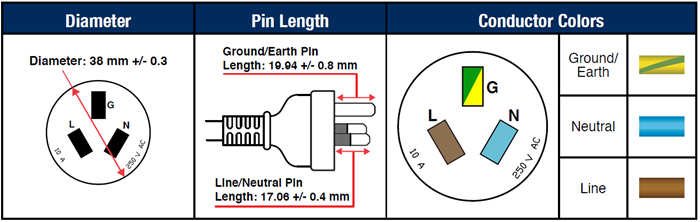
Fig 6. Argentina Plug Design. Image Credit: Interpower
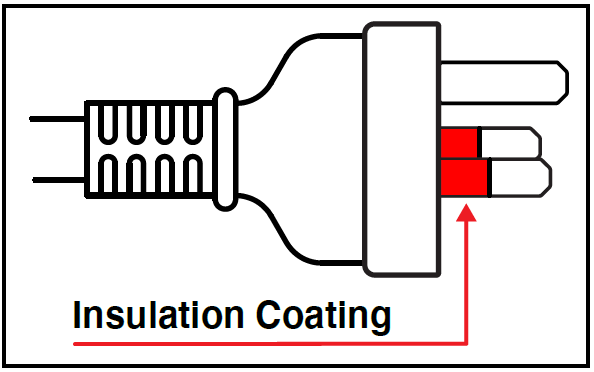
Fig. 7. Insulated Line & Neutral Blades. Image Credit: Interpower
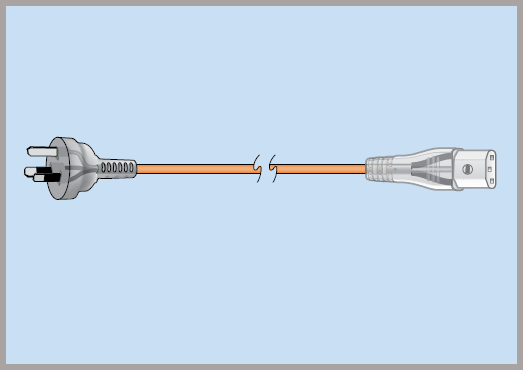
Image Credit: Interpower
According to AS/NZS 3112: "The material for plug pins shall be copper, or an alloy containing 58 % copper for parts made from cold-rolled sheet, or at 50 % for other parts."
Stainless steel can be used if it contains at least 13 % chromium and no more than 0.09 % carbon. Since 2000, Australian regulations require the line and neutral blades of the plug to be insulated (Figure 7).
Insulation for Australian pins cannot be painted, enameled, or sprayed. Except for ceramics, all insulating materials for a plug must conform with AS/NZS 3112, clause 2.13.11: Determination of ignitability and Combustion Propagation, that "Plugs shall comply with the requirements for resistance to fire in accordance with AS/NZS 3100 for equipment designated 'attended’ or 'unattended.’ The glow-wire test temperature (1) shall be 650 °C." The designation can be found in AS/NZS 3100, Annex B (B3.3).
Plugs and connectors in Australia must be approved by one of the country's state-run certifying agencies after being tested in a certified laboratory.
Test results are subsequently submitted to the appropriate Australian province. Only then will they provide the certificate. Approval is not shown by an approval mark like other agencies, but rather by the approval file number on the part.
Australian medical equipment must comply with AS/NZS 3200. There are no specific specifications for molded plugs; it is simply a matter of preference. All Australian plugs must comply with AS/NZS 3112 standards.
In Australian medical applications, some hospitals prefer a transparent plastic plug with an orange, flexible cable. According to AS/NZS 3200.1, if a plug must be replaced with a hand-wired plug, or a hand-wired plug is used on an original assembly, the hand-wired plug must be transparent.
North American & International Cord Sets Made in the U.S.A!
Interpower® produces high-quality electrical cables and chord sets for global markets, manufactured in the United States. These cables and cord sets are made in the United States and have a 1-week U.S. lead time, with same-day shipping on in-stock cord sets.
With crowded ports and growing freight costs in the marine and trucking industries, why wait weeks or months for the electrical cable sets you require?
Interpower can assist you in designing for worldwide markets, ensuring that end users have proper connections to the local mains power supply. Interpower offers customized solutions for orders of one or five thousand cords. All Interpower cables are tested during both the design and manufacturing phases.
Argentina
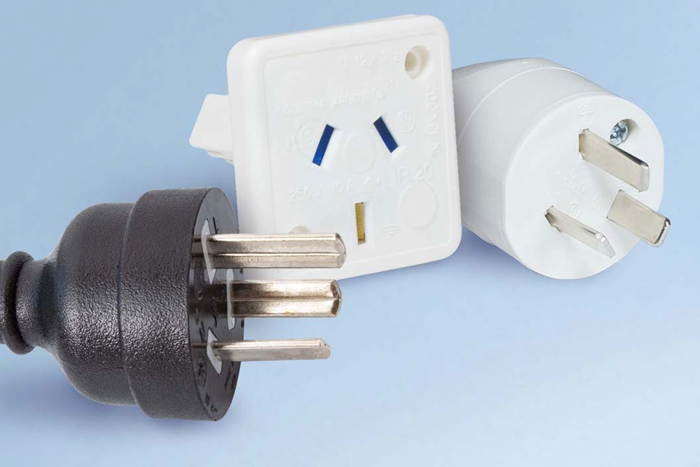
Image Credit: Interpower
Argentine 10 A/250 V AC rewirable plugs are white, whereas molded plugs can be any color other than clear. Their cable sizes range from 0.75 mm2 to 1.0 mm2.
According to Argentine requirements, the plug diameter cannot exceed 44 mm + 0.15 - 0.0*, and the grounding or earthing pin must be 21.4 mm +/- 0.2 in length*. The line and neutral pins measure 18.2 mm +/- 0.2*. The plug's pins are made of nickel-plated brass. Figure 8 shows the three conductor colors: brown, blue, and green/yellow*.
* See Fig. 8
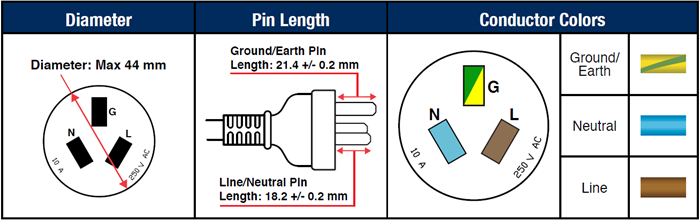
Fig 8. Argentina Plug Design. Image Credit: Interpower
The thermoplastic plug has a working temperature range of -5 °C to 35 °C. The plug's suggested maximum cable diameter is 8.5 mm. Argentina mandates that the plug and connector be IRAM-approved and bear the IRAM marking, as well as the Argentine product safety mark (S).
IRAM 2073 defines the standard plug for Argentina. IRAM is Argentina's standards agency. The Argentine plug, used in Class I applications in Argentina, resembles the Australian connector.
This plug differs significantly from the Australian plug - the pins are one millimeter larger, the body dimensions change slightly, and, most crucially, the wiring is reversed - the locations of the line and neutral contact pins are switched.
As a result, great care must be taken when producing equipment for export to both Australia and Argentina, as well as specifying the appropriate cord or cord set for use with the equipment.
The cable type is H05W-F, with a typical length of 8.2 feet. The Argentine cord set is equipped with a variety of IEC connectors rated at 10 A. All cord sets have the required approvals. The 10 A/250 V AC plug has also been tested for flammability at 750 °C using the glow-wire method.
China
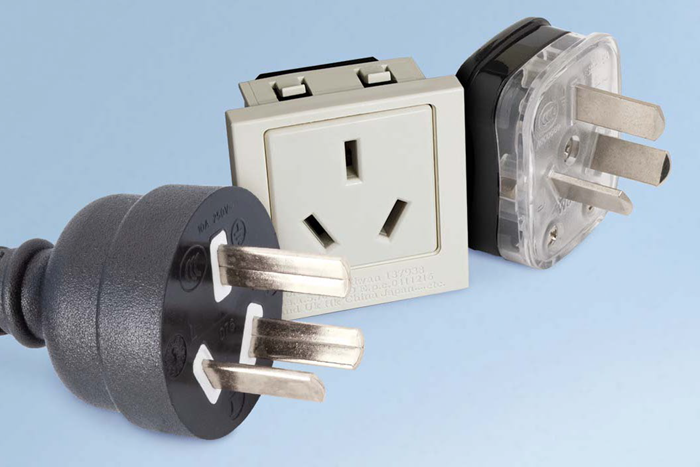
Image Credit: Interpower
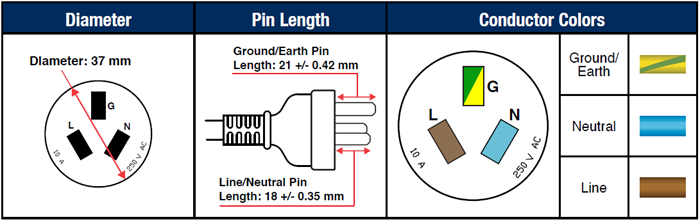
Fig 9. China Plug Design. Image Credit: Interpower
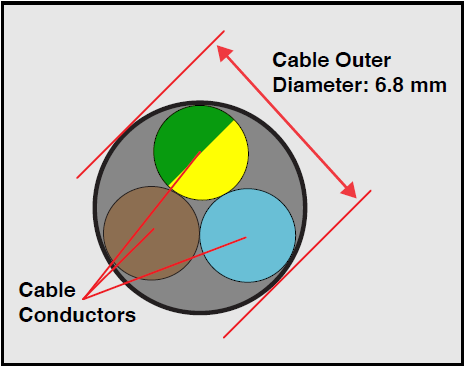
Figure 10. China Cable. Image Credit: Interpower
Interpower's Chinese 10 A/250 V AC rewirable plug is two-tone, with black on the back and clear on the pin side. The molded plugs are solely black. The plug is 37 millimeters in diameter. The grounding/earthing pin is 21 mm long, whereas the line and neutral pins are 18 mm (Figure 9). The conductor size is 1.0 mm2.
China mandates that plugs, connector couplers, and cables used in the manufacture of Chinese cord sets be satisfactorily tested by the China Quality Certification (CQC) center to meet approval for China Compulsory Certification to bear its “CCC” mark.
The cable is RVV and has a standard length of 8.2 feet. It contains three conductors: brown, blue, and greenish-yellow. The cable's outside diameter measures 6.8 mm (Figure 10). The most frequent connection type is IEC 60320 C13.
How Interpower Marks its Products Concerning Standard/Safety Agency Requirements
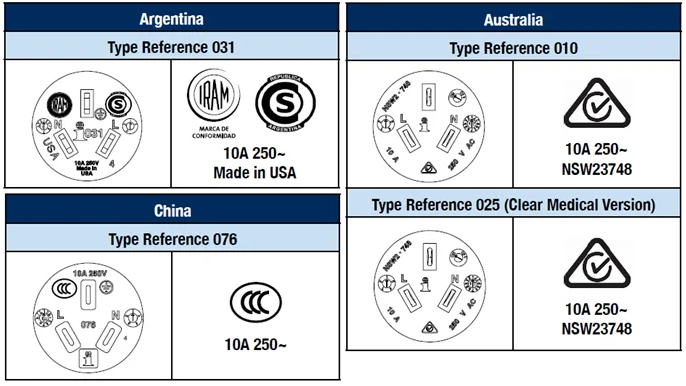
Image Credit: Interpower
Type Reference: Interpower Type Reference codes are mostly used internally for traceability, but they are also used by agencies to identify Interpower’s approval papers.
Australia Type 010 and 025: The 010 is the standard plug. 025 is the transparent medical variant, which uses a different resin combination. The approval agency refers to them individually since the chemical is different. Aside from the varying chemicals, they are identical.
Conclusion
Approvals are a major difference between these three products and explain why one cable set cannot be utilized in another location. Failure to use the right permitted cord set in certain areas is not permissible and will void the cord's certification.
Australia, Argentina, China Plug Comparison Chart
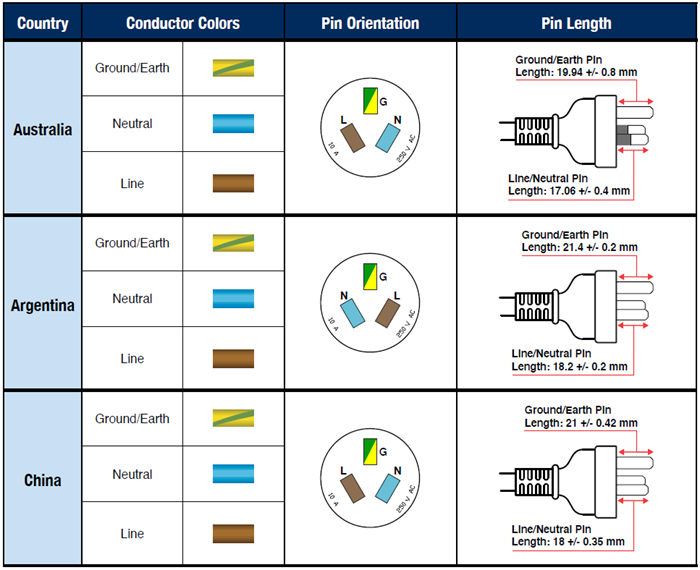
Image Credit: Interpower
Australia, Argentina, China Plug Comparison Chart (Continued)
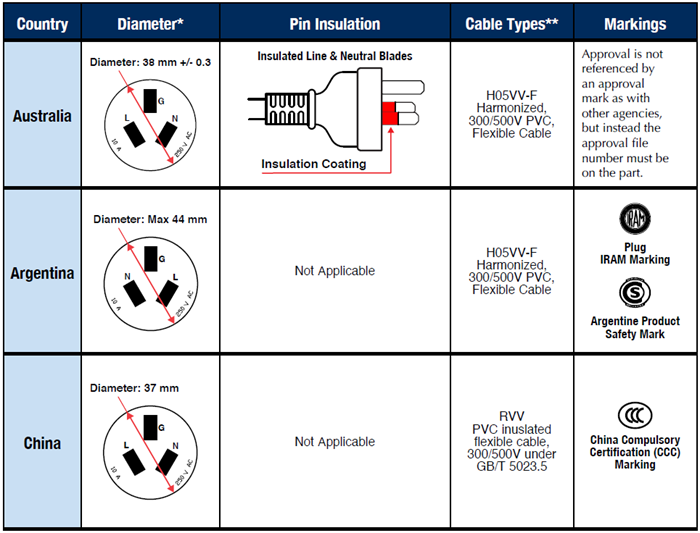
Image Credit: Interpower
* Although Interpower specifies a diameter for our Chinese plug molds, the Chinese standard says the outline of the plug is not specified, but that no part of the pins shall be less than 6.5 mm from the edge of the plug.
** Examples of cable types Interpower uses on our Australia, Argentina, and China cords and cord sets.

This information has been sourced, reviewed, and adapted from materials provided by Interpower.
For more information on this source, please visit Interpower.