AZoM spoke with Héctor D. Abruña of Cornell University at Pittcon, where he received the Pittsburgh Analytical Chemistry Award. He explains how analytical chemistry tools, especially operando measurements and chemically modified electrodes, help researchers see what happens inside batteries, fuel cells, and electrolyzers as they run. He also reflects on how instrumentation has changed over 42 years at Cornell, from early advances in lasers and computing to synchrotrons and today’s machine learning.
You’re receiving the Pittsburgh Analytical Chemistry Award this year. What does the honor mean to you?
It’s really amazing, since it’s one of the top awards in analytical chemistry.
Pittcon is centered around analytical chemistry, and a number of years ago, analytical chemistry was not the most prestigious subdiscipline of chemistry. But it has come a long way in providing a framework for lots of things to be investigated.
In some sense, the title of my talk is a bit whimsical: “Analytical Chemistry: Analytical Chemists Do.” That comes from a direct quote by the late Professor Charles Reilley, one of the monumental figures in analytical chemistry.
His feeling was that a lot of people do analytical chemistry; they just don’t know it. In that context, that’s the spirit of my talk today.
Image Credit: KanawatTH/Shutterstock.com
You’ve been at Cornell for 42 years. Looking back, what have been the biggest changes you’ve seen in analytical chemistry instrumentation?
When I first started at Cornell, we were just a step away from sticks, fire, and water.
Now you look at the whole evolution on two fronts in particular: lasers and computers. When I was in graduate school, computers were just beginning to make a scene, and now they’re pervasive. That has enabled many things we couldn’t even have imagined.
More recently, large installations like synchrotrons have come into play. And really recently, there’s the whole thing about machine learning and artificial intelligence, which is permeating everything we do. It’s hard to have a conversation without mentioning it.
One of the issues, however, is that whereas you can probably find 32 billion pictures of cats, there’s not that much of a database in the sciences. So I think you have to curate those a little more carefully, as the model will only be as good as your database.
Early in your career, you worked on chemically modified electrodes. What was the idea behind that, and how did it connect to your work on sensors and biosensors?
You have to go back to before you were born.
The idea was: if you look at chemistry, electrochemistry in particular, it’s very good at counting electrons. It’s not very good at selectivity.
So the question was, can you endow a surface with the selectivity properties of chemical reagents, but with the sensitivity of electrochemical measurements? The idea was to incorporate ligands on the surface, and there’s an enormous amount of literature on that.
You could choose specific ligands for specific elements, even in specific oxidation states, which is pretty amazing.
I think analytical chemists borrow a lot from other subdisciplines. The example I just mentioned was from inorganic chemistry. The same thing you can say about biochemistry: how do you immobilize an enzyme and retain its activity? That’s the real trick.
Then you generate a product that can be measured electrochemically. So, in essence, in all of these approaches, the measurement step is always electrochemical, because that can be very sensitive and very quantitative. The other approaches provide, let’s say, the selectivity or the other components of the measurement itself.
You’ve also been working with operando techniques. What makes “operando” so valuable in electrochemistry?
Fast forward a couple of decades (actually, more like three). The idea is that if you look at most electrochemical interfaces, they operate under conditions very far from equilibrium. So the idea that you can look at “before” and “after” is really not very satisfactory.
Take a lithium-ion battery. You do experiments, and you want to see what’s inside, so you open it up and put it in a spectrometer. My standard line, and we’ve all written this line in some manuscript, is: “The cell was opened and quickly transferred to a spectrometer.” Unless “quickly” is a microsecond, you’re dead, because you cannot assume that an interface that reactive is going to remain intact.
The evolution goes from ex situ, which means nowhere near operating conditions, to in situ, which approximates them. Operando really means you’re under the real operating conditions of the device: the experiments are a bit more involved, but the interpretation is very direct, because you’re making no assumptions.
We developed operando methods for X-ray, transmission electron microscopy, mass spectrometry, and confocal Raman. All of these things provide enormous information structurally, compositionally, and, in terms of vibrational spectroscopy, for identification.
When you look at energy technologies like batteries, fuel cells, and electrolyzers, where does analytical chemistry make the biggest difference?
All of these are electrochemical devices by definition, so that’s my area. The analytical chemistry of these things, let’s say lithium-ion batteries, is that virtually all lithium-ion batteries operate beyond the thermodynamic limits of their components. Give it a reason, and it’ll go off.
The trick is understanding the chemical transformations, which is really analytical chemistry, on the timescales that matter, which is kinetics. But it has to be coupled in a way that ensures it ends when you want it to, not when it wants to.
In a similar vein, take fuel cells and electrolyzers. Again, the idea is that you operate under conditions very far from equilibrium. One typical consideration is what your catalyst looks like: not outside the cell, but inside it under operating conditions.
On reflection, what stands out most to you about your career?
What really strikes me is how fortunate I’ve been with the people who have worked with me. My standard answer when people ask what I’m most proud of is the people that have worked with me, both graduate students and postdocs, because that has a much more lasting value than anything else we do.
Mentorship is really important: 67 PhD students and about 80 postdocs. That’s a lot of people, at least from my perspective.
What’s it like being back at Pittcon and connecting with colleagues?
It feels like a real connection to Pittcon; I’ve been coming for many years. It could well be the largest chemistry conference in the U.S., and you meet lots of people. You run into friends you haven’t seen in a while, and it’s always fun to come to Pittcon.
Operando Electrochemistry & the Future of Energy Materials with Héctor D. Abruña at Pittcon 2026
About Héctor D. Abruña
Héctor D. Abruña is the Emile M. Chamot Professor in the Department of Chemistry and Chemical Biology at Cornell University. His research takes an interdisciplinary approach to electrochemical phenomena, with a focus on fuel cells, electrical energy storage, and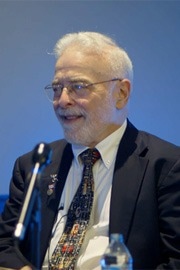 molecular electronics. At Cornell, he leads the Abruña Group, which develops and characterizes new materials using electrochemical, X-ray, spectroscopic, and microscopy techniques.
His work has contributed to studies of electrocatalysis, batteries, supercapacitors, and graphene-based electrochemical platforms, and he is widely recognized for publications spanning energy materials and molecular-scale devices.

This information has been sourced, reviewed, and adapted from materials provided by Pittcon.
For more information on this source, please visit Pittcon.
Disclaimer: The views expressed here are those of the interviewee and do not necessarily represent the views of AZoM.com Limited (T/A) AZoNetwork, the owner and operator of this website. This disclaimer forms part of the Terms and Conditions of use of this website.