Fenella France, Chief of the Preservation Research and Testing Division at the Library of Congress, joins AZoM to discuss heritage preservation and reference materials. She explains the CHARM (Cultural Heritage Analytical Reference Material) collection and the related CHARM-D dataset, which track natural and accelerated aging to help predict material degradation. France also outlines how the Library of Congress uses non-invasive tools, including spectral imaging, XRF, FORS, FTIR, and Raman spectroscopy, to study and protect collection items, from historic manuscripts to modern media.
What first drew you into science, and what ultimately pulled you toward chemistry rather than medicine?
I’ve always been very interested in textiles and never realized there was a whole area of science around them, from geotextiles to space exploration. It’s the ubiquity of materials and how little changes in the environment can change them. That’s what really intrigued me: there was a whole other area for exploring all sorts of materials.
You’re Chief of the Preservation Research and Testing Division at the Library of Congress. How did you first get into cultural heritage work, and what were some of the early projects that shaped your path?
I’m going to step back a little bit, because there are a lot of phone calls in my past. That sounds weird, but my PhD, I’m from New Zealand originally, was in the photodegradation of proteins.
After I’d finished, it was like, that’s a very specific topic. Then I got a call saying, “There’s this really big flag in America made entirely of wool, and they want someone to do single-fiber studies.” That was the Star-Spangled Banner.
So I came out for a one-year contract that turned into three years at the Smithsonian, and they gave me 17 milligrams and said, “Tell us how to preserve it and keep it forever.”
From there, I moved up to New York City not long before 9/11. I was working at a number of museums and got involved with the World Trade Center Archive.
Then there was yet another phone call in my life: the Library of Congress has all of these materials, and we have a really big map. I was brought in for the Waldseemüller, which is the 1507 world map, the first map that refers to America, and it’s about six meters by four meters. I’m going to have to do this in feet, and I can’t actually do the translation in my head.
So that’s two iconic American artifacts important to this country’s history.
Image Credit: Shampanskiy/Shutterstock.com
When you’re working with one-of-a-kind objects that carry so much history, what does that responsibility feel like day to day?
It’s one of the things people always want: for me to choose my favorite document or item. The challenge is that, usually, it’s only one of a kind, so there really isn’t much chance of making a mistake. You just can’t.
That’s where it really hit me that preserving the original item is so critical, even as we use these new technologies. It’s trying to be innovative and incredibly careful, while also being aware of the intense beauty and significance of these items.
At Pittcon, you’re speaking about your work and you also organized a symposium. What’s the theme of the session, and what do the different talks contribute?
One of the things I realized with the spectral imaging is that we could map what was happening on a document or an object, but we had to do the point-source analysis to understand: what was that pigment? Was it a mixture of something? To do that, we needed a way to characterize materials without taking a sample, because we just can’t sample the original materials.
So, in about 2009, I started building up a reference collection of anything that you would find in the library. And believe me, we have everything from glass flutes to ceramics. We made up glass samples, and that’s actually how Lizzo got to play the glass flute that came out of our lab.
I’ve been working with colleagues from various three-letter agencies and forensics, and many colleagues in Europe and in the U.S. A number of my colleagues were also very interested in building up their own reference collections, or they have original ones. We recreate a lot of materials for recreation, and then we can do some predictive testing on those.
For the talks: Lucia will talk about some of the work she’s been doing in Spain, trying to extend more into the non-invasive techniques of different inks, and inks that have been redacted. That, of course, crosses over into forensics.
Joseph will be talking about how they can use more destructive testing, because there’s not so much significance to the item they are working with. Narayan from Harvard will be talking about some of the collections, particularly the pigment collection that they’ve built up there, and how it helps us understand and characterize what is happening on a collection item without actually having to take any samples or make any guesses.
My talk focuses on CHARM, which is the reference collection. It came out of all my colleagues in Europe having the best ideas for acronyms. One night I suddenly went, “CHARM”: the Cultural Heritage Analytical Reference Material. As I see it, it has just ballooned as we’ve been collecting different types of samples and materials.
When people hear “reference collection,” they may picture a drawer of samples. Beyond the objects themselves, what makes CHARM useful?
It is really interesting because, as people go along in their careers, reference collections usually end up in drawers and are never cataloged, since the person using them knows exactly what they are. Then, when they retire, they disappear.
A lot of this has been going against my better nature: actually cataloging and cross-referencing the materials.
The other part of CHARM that we’re still working on, and maybe you were going to ask this later but I’ll keep going with the flow, is CHARM-D, which is the data that relates to CHARM. If you have a reference sample, you need to characterize it when it first comes in, because after that, it just keeps aging. We have both naturally aged samples and we can do accelerated aging.
That is a key part of what we are trying to do: make that information available to other people who might not have the luxury of the materials we’ve been able to collect. We’re trying to preserve the past, but also predict the future, by predicting the aging of the material.
We do a lot of work with conservators, too, to look at questions like: Is this adhesive (the one they used to use, that we’d already approved) still going to work? Or if this is going to be in a particular environment, how can we slow down the loss or degradation?
You’ve touched on non-destructive versus destructive testing. In practice, what does the non-invasive workflow look like, and which techniques matter most for your team?
It makes a huge difference. I do have to thank the pandemic, because we came up with a really good workflow that we’ve kept since then.
We start with spectral imaging. You sometimes hear it called hyperspectral or multispectral imaging. With the false-color image, we can map all the different chemicals across an object.
From there, we can do point-source analysis. The other non-invasive techniques we use are X-ray fluorescence (XRF), of course, for trace metals; fiber-optic reflectance spectroscopy (FORS) for more organics; Fourier-transform infrared (FTIR) for organics, sizings, and other components; and Raman spectroscopy and microscopy as well.
They are really important because we can use this suite of techniques at the same location and build up a sort of deep learning picture: what are the different materials in that collection item, are they in good condition, are they degrading, are they mixtures, what’s going on?
The Library of Congress also holds “modern media,” like sound recordings. What’s it been like applying preservation science to those formats?
That’s really interesting, because we still tend to refer to sound recordings as modern media, but when we have children through the lab, honestly, they have never seen a wax cylinder: they don’t know what it is.
I had one group looking at big shellac discs from around the World War I to World War II period, and one of them said to me, “I know exactly what this is.” I was so excited. “It’s an early CD!” and I went, “Not quite.”
What was fascinating, and also challenging, was that they weren’t created with preservation in mind. They were created for mass production. So those early years of preservation are the most challenging for us, because different manufacturers were rushing to get something to market. It was, “We’ll just get it out there."
So we have things like shellac discs, or acetate that is actually on cardboard as its underlying. Imagine if that splits: it’s very difficult to use a cleaning component to remove it without destroying the disc.
Part of what we’ve also done is deal with the fact that many of those types of materials no longer have a playback machine. So we have an instrument in my lab called IRENE (Image, Reconstruct, Erase Noise, Etc.), because the first sound recording that it captured was called “Goodnight Irene.”
We can use an optical laser, or just a confocal probe on the surface, without touching the surface, to image the grooves, capture that file, and turn that into a WAV file for the sound.
Your work spans conservation, chemistry, imaging, and data. How central has collaboration been across your career, and are there projects that really show that?
It’s critically important because, unlike some other disciplines, we’re inherently transdisciplinary. We can’t know everything. We have to work with curators who are experts in cartography, for example.
On the science side, we have all these different techniques, and being able to work together, have a symbiotic relationship, and follow an iterative process really matters.
I’ve had some wonderful projects. One was called Collections Demography. I was working with colleagues across Europe and the UK, looking at the long-term effects of large collections when we couldn’t measure every single one. So how could we start to measure those?
A more recent one in Ireland was looking at medieval Irish manuscripts called Inks and Skins. We’ve been doing spectral imaging of the entire object, including a couple of Magna Cartas, which has been delightful.
Another defining project for me was leading the spectral imaging research on Thomas Jefferson's rough draft of the Declaration of Independence, where I discovered the original wording had been changed from "subjects" to "citizens." Being able to reveal that hidden revision non-invasively showed how spectral imaging can uncover new historical insights while preserving these irreplaceable documents.
In terms of some of the techniques, you might want to know that trying to do the image processing through various stains, particularly rodent stains, is very challenging.
Pittcon has such a big expo floor. As someone working in heritage preservation, what’s it like to walk around and see all that instrumentation?
It’s really great fun. I think it’s sometimes a little disconcerting for the manufacturers, because they’re used to medicine or pharmacy. I'll say, “I want to put a document or a disc into your machine and do this”: they’re like, “You want to do what?” So it’s really interesting.
It’s also very thought-provoking when you’re looking at a different technique: you’re thinking, “How could I actually use this?” Recently, we were just about to get a thermal imaging camera. Normally, they would pulse light to heat it up, but you wouldn’t do that to a cultural heritage item.
So the idea is: if we slowly lower the temperature, just below room temperature, we can do the opposite and still get the same result. When I talk to someone about that, they’re like, “Oh, yeah.” It sparks conversations they’ve never had, because they’ve never worked in our setting, but it also makes them think about their own instrumentation in a completely different way.
Finally, what’s your own history with Pittcon, and what keeps you coming back?
I would say about 10 years. I was very honored to be asked to be a keynote speaker, and that was my first Pittcon in Philadelphia. The organizers were amazing. They were so wonderful, and just having the ability to share what I do meant a lot.
A lot of teachers have reached out to me because they’re really interested in using original sources and looking at STEM through a really interesting perspective by using cultural heritage.
It’s a highlight to come here and meet up with old friends. I just hugged, I think, five people in the hallway as I was coming over. It’s a really great community, with opportunities for connection and collaboration, for sure. And it’s an amazing place to catch up with people, as you said.
Preserving History with Science: Inside the Library of Congress with Fenella France
About Fenella France
Fenella France is Chief of the Preservation Research and Testing Division at the Library of Congress. She leads work on preservation science, with a focus on research, testing, and the long-term care of cultural heritage collections. France has served at the Library of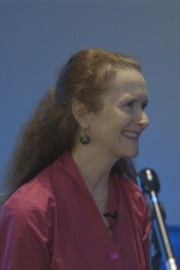 Congress since 2011 and has also held roles, including Acting Preservation Director. She is active in cross-sector advisory work, including the CLIR Board and the Scientific Advisory Group for the Library and Museum COVID-19 Materials Working Group. France holds a PhD in photodegradation of protein materials from the University of Otago and an MBA from Deakin University.
This information has been sourced, reviewed, and adapted from materials provided by Pittcon.
For more information on this source, please visit Pittcon.
Disclaimer: The views expressed here are those of the interviewee and do not necessarily represent the views of AZoM.com Limited (T/A) AZoNetwork, the owner and operator of this website. This disclaimer forms part of the Terms and Conditions of use of this website.