Following initial challenges with user adoption, the nutrition, health, and beauty company dsm-firmenich discovered that a collaborative agile implementation strategy was necessary to achieve broad participation across its research and development workflow.
- Empowered ownership to each lab
- Cut costs with easier system maintenance
- Enable new integrations for innovation
About the Company
dsm-firmenich is one of Europe's leading scientific innovation companies, employing more than 29,300 people across 340 locations in 60 countries.
Its operations span four business divisions: perfumery and beauty; taste, texture, and health; health, nutrition, and care; and animal nutrition and health. In 2023, the company generated sales exceeding €10 billion.
Learning from an Experiment That Fails
Transformation and adaptability have long been part of dsm-firmenich's history. Firmenich built its reputation in fragrances and flavors, while dsm originated in the Dutch mining and specialty chemicals industries.
Together, dsm-firmenich has become a global biotechnology leader with substantial investments in research and development across multiple scientific disciplines.
When dsm-firmenich first selected Revvity Signals as its enterprise platform for research collaboration, the implementation appeared relatively straightforward. The project was launched using the well-established waterfall methodology.
Sylvana Suisse, Digital Project Lead within the science research and innovation unit, explains that the team quickly encountered an unexpected challenge.
“Typically, waterfall methodologies follow a linear approach. So, you do development, and after numerous lengthy iterations you may end up with a final product. For us, with our different units, that method meant eight workstreams at minimum, and each workstream needed multiple workshops [to] get the user requirements defined and agreed.” - Sylvana Suisse
The limitations of the waterfall approach soon became evident.
Sylvana explains that the team produced user requirements that were generally suitable for implementation but ultimately too generic to satisfy the needs of individual business units. This resulted in considerable additional development effort.
Although Sylvana believes the implementation process itself was well structured, the final product failed to meet users' expectations. The outcome was diminished confidence in the project, reduced motivation, and ultimately very little interest in continuing with the implementation.
Instead of continuing with a centrally directed rollout, Sylvana recognized that an agile methodology would be a better fit for an organization built around scientific research.
The objective shifted toward creating a common global implementation framework while allowing each of the four primary business units to contribute its own specialized requirements.
I enjoy the interface between the application of biotech on the lab and help shaping and implementing digital technologies that accelerate value creation from the lab experiments.
Sylvana Suisse, Digital Project Lead, Science Research & Innovation, dsm-firmenich
Ultimately, as Sylvana puts it, “We serve our researchers in what they do best; performing magic in the labs. We are driven to make life in the lab easier, and that is what we set out, once again, to do.”
Reorganizing Along Agile Lines
The team restructured the project by asking each laboratory to appoint its own Product Owner, who would represent the laboratory's interests.
Sylvana, for example, became Product Owner of the analytics lab, and was responsible for gathering ideas, requirements, and requested enhancements. These were translated into user stories, which provided non-technical descriptions that guided the development work.
The agile methodology relies on short development cycles designed to deliver functional product configurations that users can evaluate and approve, rather than attempting to create a perfect solution from the outset.
For dsm-firmenich, implementation began with the analytics laboratory, focusing on a standardized core deployment of Revvity Signals Notebook. Responsibility for the Product Owner role rotated during each development phase or sprint, with clearly defined timelines to prevent unnecessary project expansion.
Unlike the previous waterfall implementation, which was mandated centrally, additional laboratories joined the project voluntarily after seeing tangible progress. While the overall development, design, and implementation activities were funded centrally, each participating laboratory selected and financed its own Product Owner.
After only a limited number of sprints, the team had a functional product that could move into technical delivery based on a shared global core that future participants would adopt. As additional business units recognized the benefits, they chose to participate, appointing their own Product Owners to guide each sprint from design through implementation.
Using this agile approach, dsm-firmenich established Revvity Signals Notebook as a standardized platform that supports laboratory activities across the organization while allowing each business unit to configure the system according to its own operational preferences.
As the fourth business unit completed onboarding, the project naturally evolved from implementation into an ongoing program focused on maintenance and continuous enhancement. Even in this phase, Product Owners continued to lead communication efforts and manage future development sprints.
Sylvana explains that agile emphasizes delivering a working product rather than striving for perfection because perfection is rarely achievable. Although agile was initially unfamiliar, she trusted the process. As a laboratory researcher, she wanted confidence that decisions were based on reliable data, yet the team embraced the iterative approach.
She describes how laboratory ideas were translated into user stories, providing reassurance that researchers' perspectives were being considered. Those stories then progressed into development sprints, planning activities, ultimately becoming part of the finished product through configuration and design.
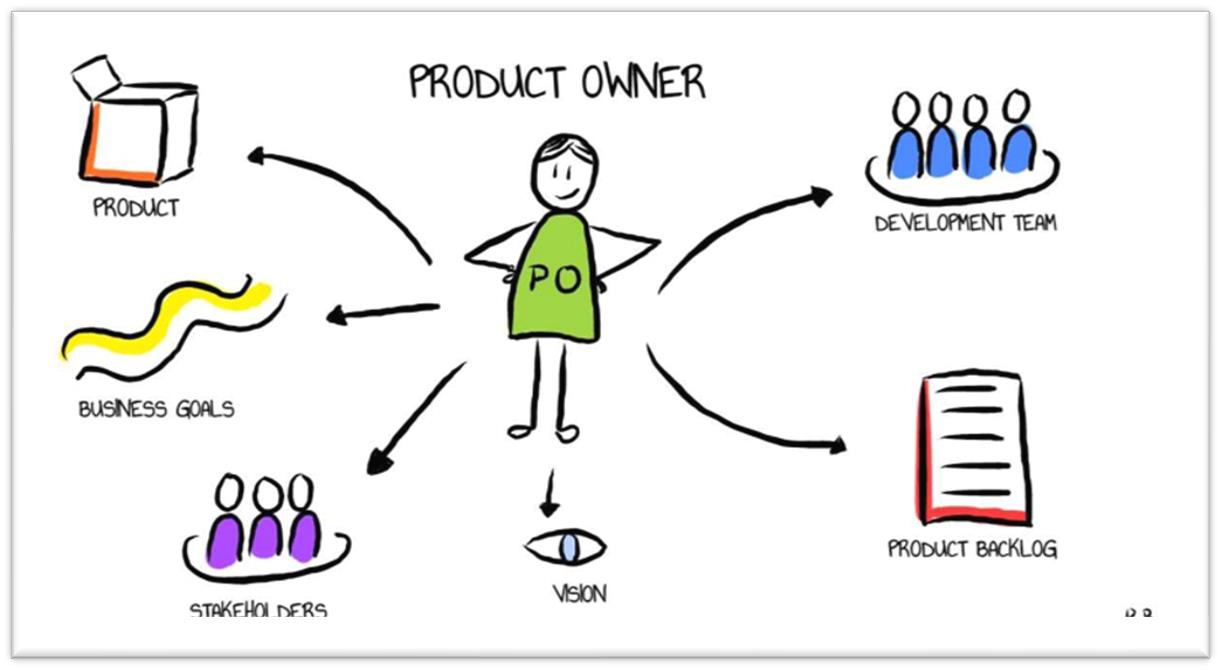
Figure 1. Establishing an Agile approach was critical to the success of implementation at dsm-firmenich. Image Credit: Revvity Signals Software Inc.
Making Life Easier for Researchers
Today, Revvity Signals Notebook serves as the shared research platform across dsm-firmenich while remaining closely aligned with the operational needs of each business unit.
The company is also expanding the platform by incorporating additional data sources and intelligent dashboards powered by embedded Spotfire functionality, helping researchers identify patterns and guide innovation more effectively.
By assigning a dedicated Product Owner within each business unit, dsm-firmenich has fostered a strong sense of ownership throughout its laboratories. Researchers now play an active role in shaping future improvements rather than simply adopting centrally defined changes.
Sylvana concludes, “With Signals Notebook, everybody knows and follows the same standardized approach, but they also have the freedom to design their own local templates. Of course, there is always room for improvement and Revvity Signals makes it much easier for us to share ideas and discuss how we can move forward.”
“Most of all, adopting an agile approach has helped us to build an even stronger sense of community, which empowers our researchers to work more productively.”
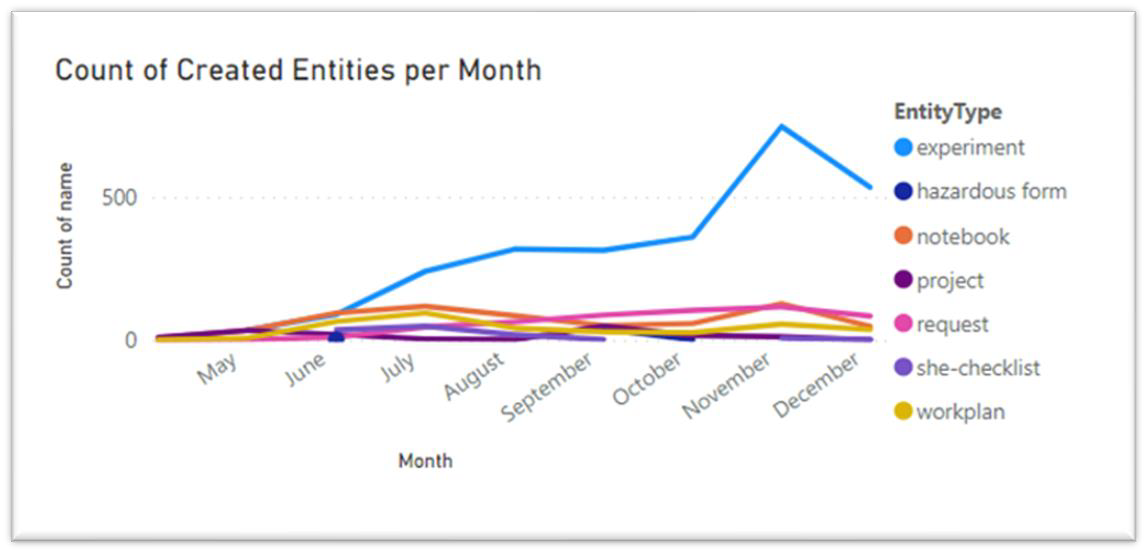
Figure 2. Graph showing adoption over time at dsm-firmenich. Image Credit: Revvity Signals Software Inc.
Signals Notebook is heavily used in our science and research labs, and we're building out further database integrations, because that's something that our scientists love.
Sylvana Suisse, Digital Project Lead, Science Research & Innovation, dsm-firmenich

This information has been sourced, reviewed, and adapted from materials provided by Revvity Signals Software Inc.
For more information on this source, please visit Revvity Signals Software Inc.