Natural gas-fired turbine engines emit formaldehyde, a compound recognized as a known human carcinogen by both the International Agency for Research on Cancer and the US Department of Health and Human Services. As a result, regulations require emissions from gas-fired turbine engines to be monitored periodically by emissions-testing organizations.
Image Credit: Aleksandr Grechanyuk/Shutterstock.com
The US Environmental Protection Agency (EPA) Stationary Combustion Turbine Regulation (40 CFR Part 63 Subpart YYYY) establishes a formaldehyde emission limit of 91 ppbvd or less at 15% O2 for these turbines.
Gas turbine manufacturers invest significant effort in designing the combustion "hot section" to minimize formaldehyde emissions, and the concentrations continuously emitted from these systems are generally low, typically around 0.1 ppmv.
Because gas turbines produce very large volumes of exhaust, the total mass of formaldehyde released can still be substantial enough to present a potential risk to human health.
Measurement Challenge
Source-testing professionals need an analytical technology capable of accurately measuring formaldehyde concentrations below 91 ppbv from natural gas-fired turbines in real time.
FTIR gas analyzers operating in accordance with EPA Method 320 can achieve these low detection levels in certain configurations. However, they often lack the precision required for accurate formaldehyde emission measurements.
EPA Method 0011 is also commonly used. This method requires collection impingers, a derivatization reagent [2,4-dinitrophenylhydrazine (DNPH)], followed by high-performance liquid chromatography (HPLC) with UV-Vis detection. In addition to lacking sufficient precision, this approach does not provide real-time measurements.
To improve efficiency, this application requires a real-time analytical method capable of achieving single-digit ppb detection limits.
Solution
The Thermo Scientific™ MAX-iR™ FTIR Gas Analyzer, equipped with the Thermo Scientific™ StarBoost™ Technology optical enhancement, addresses this challenge. StarBoost technology significantly improves the FTIR gas analyzer's sensitivity, detector linearity, and dynamic range.
This technology enables real-time detection of hazardous air pollutants (HAPs), including formaldehyde, at single-digit ppbv concentrations.
A MAX-iR analyzer equipped with StarBoost technology uses a long-pass optical filter that measures compounds across the 1900–3300 cm-1 spectral range.
The filter system simultaneously measures hydrocarbons and other oxygenated compounds, including CO, CO2, CH4, and H2O. Along with the MAX-iR analyzer featuring StarBoost technology, a novel analyzer-zeroing technique uses stack emissions.
The Thermo Scientific™ MAX-OXT Thermal Oxidizer Module selectively removes the target analyte from the sample matrix without reducing atmospheric interferents such as H2O, CH4, and CO2. This enables real-time collection of an interference spectrum that can be incorporated into the regression, improving both the infrared residual and overall formaldehyde data quality. Even when the interference spectrum is not included in the regression, the MAX-OXT module remains a valuable tool for validating the data.
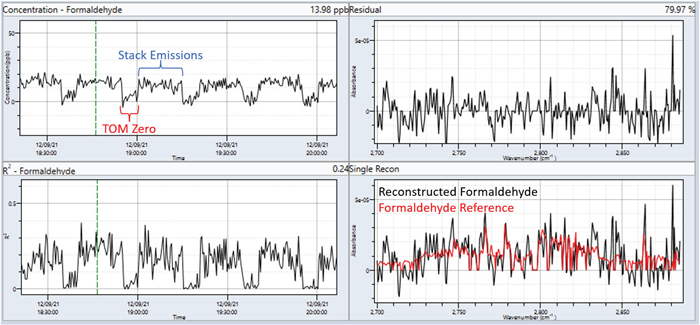
Figure 1. Formaldehyde measurements collected in the field from a natural-gas fire. Image Credit: Thermo Fisher Scientific – Environmental and Process Monitoring Instruments
Experimental
To demonstrate the capability of the MAX-iR analyzer with StarBoost technology for measuring formaldehyde emissions, data was collected from a natural gas-fired turbine. The analyzer was periodically zeroed using the MAX-OXT module.
When switching between MAX-OXT oxidation mode and the sample gas, the response time was less than 15 seconds at a sample flow rate of 5 LPM, enabling rapid formaldehyde detection. The field test results are presented in Figure 1.
The plot in the upper-left panel illustrates the formaldehyde concentration (ppb) recorded during the data collection period. For the selected sample spectrum, identified by the green dashed line, the measured formaldehyde concentration was 13.98 ppb.
During this application, the MAX-OXT module was used periodically to remove formaldehyde from the sample while collecting interference spectra, as illustrated in the concentration plot.
When these spectra are incorporated into the regression matrix, formaldehyde concentrations can be reliably validated down to 10 ppb. This approach reduces measurement bias caused by spectral interference, which is essential for accurately quantifying compounds at approximately the 10 ppb level.
The standard deviation of the formaldehyde measurement was 1.37 ppb, resulting in a minimum detection limit of 4.11 ppb for this test. At the measured concentration of 13.98 ppb, the presence of formaldehyde is clearly visible in the regression reconstruction.
Conclusion
The MAX-iR analyzer with optional StarBoost technology can accurately measure formaldehyde emissions from gas-fired turbine engines at low ppb concentrations. Compared with EPA Method 0011, the simplified sampling process and streamlined data workflow significantly improve testing efficiency.
Rather than waiting hours for results, source-testing professionals can obtain measurements within minutes, reducing both testing time and overall operational costs. In addition, the enhanced analyzer's improved precision provides greater confidence that the reported results accurately represent the formaldehyde concentrations present during testing.

This information has been sourced, reviewed, and adapted from materials provided by Thermo Fisher Scientific – Environmental and Process Monitoring Instruments.
For more information on this source, please visit Thermo Fisher Scientific – Environmental and Process Monitoring Instruments.