Sponsored by ServomexReviewed by Olivia FrostNov 3 2026
The SERVOTOUGH Laser 3 Plus Environmental is a low-maintenance, cost-effective platform that provides tunable diode laser sensing precision for ammonia monitoring applications.
Image Credit: hermanthos/Shutterstock.com
DeNOx Processes and the Importance of Measuring Ammonia Slip
Reducing NOx emissions from combustion processes is a critical goal for meeting environmental regulations and is becoming increasingly important in the power generation and hydrocarbon processing markets.
‘NOx’ refers to the nitric oxide (NO) and nitrogen dioxide (NO2) produced when excess nitrogen and oxygen react during combustion, particularly at high temperatures.
Proper NOx control is key to meeting statutory requirements and avoiding fines; it also improves the effectiveness and efficiency of a combustion process.
In power plants and other combustion processes, the removal of waste NOx, known as a DeNOx process, is commonly accomplished using selective catalytic reduction (SCR) or selective non-catalytic reduction. The SCR process injects ammonia (NH3) or urea into the flue gas stream of the combustion process.
This interacts with NOx in flue gas on a catalyst surface, producing water (H2O) and nitrogen (N2). The SNCR process requires a higher temperature and a longer pathway for NH3 or urea to react with NOx in the flue gas, with optimal temperatures of 1472–1742 °F (800–950 °C).
Temperature management is critical in the process, since low temperatures can lead to excess unreacted NH3, known as ammonia slip.
Accurate measurement of ammonia slip, typically taken downstream of the SCR catalyst unit or of the NH3 injection point in SNCR, is critical to the operation of DeNOx equipment for several reasons.
For starters, high quantities of unreacted NH3 are inefficient and costly for the plant operator. Ammonia slip may also have a substantial impact on deposition and catalyst plugging, as well as the corrosion of downstream equipment such as the air pre-heater used in power plants.
Excessive slip in a coal-fired power station can create fly ash with high amounts of NH3, rendering it inappropriate for use as a mineral filler in asphalt or cement plants.
The level of ammonia slip also offers diagnostic information on the appropriate operation of the SCR/SNCR system and the NOx reduction process, allowing workers to precisely estimate when the catalyst needs to be replaced.
To optimize the process, ammonia slip is normally controlled at less than two parts per million (ppm). However, it is difficult to control without direct measurement, as several parameters influence slip, including inlet NOx concentration, fuel composition, catalyst performance, and nozzle plugging.
However, despite the major operational, cost, and safety benefits of quantifying ammonia slip, measuring it has been challenging using extractive techniques.
Because NH3 is relatively reactive, wetted components play an important role in analyzer measurements and must be kept hot and non-adsorbing. They are also subjected to a variety of interferences, including sulfur dioxide (SO2) and water (H2O) produced during the process, as well as high dust levels.
While extractive systems have traditionally measured ammonia slip, measurement uncertainty meant that these systems were increasingly unable to meet the process’ demands. This uncertainty is due to NH3 adsorption on wetted materials, combined with the increasing demand for ultralow measurements that require higher sensitivity and faster response times.
TDL Sensing: A Superior Solution for NH3 Measurement
Advanced tunable diode laser (TDL) technology provides a comprehensive and efficient solution for precise ammonia slip control.
TDL technology consists of a tunable diode laser light source, transmitting optics, receiving optics, and a detector, making it suitable for in situ, cross-duct measurements. A typical system consists of the laser-transmitting module and the receiver module mounted across the process duct or flue stack.
The shape of the gas absorption line, obtained by scanning the laser wavelength across the specific NH3 absorption line, is used to determine the gas concentration. If NH3 is detected in the beam path, it reduces the measured signal intensity, which is detected by a photodiode and converted to the NH3 gas concentration.
TDL, as a spectroscopic absorption-measurement technique, effectively counts molecules (or their number density) that fall within the beam. Because the analyzer is mounted across a duct or stack, it produces a mean concentration reading rather than a point reading obtained from an extracted sample.
This means that NH3 concentrations can be evaluated with significantly greater accuracy using TDL measurements.
The NH3 sample also never leaves the process, eliminating the challenges associated with sample transit in extractive procedures and the contamination concerns caused by dust, heat, and water.
This means that not only is the measurement far more accurate, but plant workers save a lot of time cleaning extractive systems.
Servomex’s Next-Generation Solution for NH3 Measurements
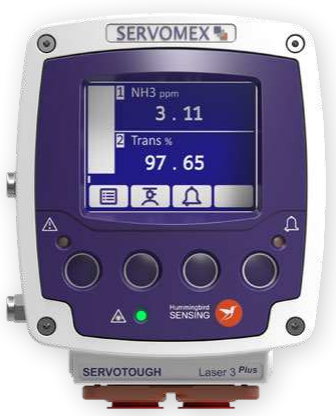
Image Credit: Servomex
The SERVOTOUGH Laser 3 Plus Environmental uses TDL absorption spectroscopy to help operators control combustion emissions by providing reliable NH3 measurements during DeNOx operations.
This gas monitor is compact, can be installed directly into process ducts, and is optimal for monitoring ammonia slip during NOx reduction procedures such as selective catalytic reduction (SCR) or selective non-catalytic reduction (SNCR), with the goal of keeping ammonia slip below two to three parts per million.
It eliminates stratification issues and provides precise readings by averaging NH3 measurements across the duct, even as flow conditions change.
With auto-validation software to ensure ongoing QA/QC and accuracy, the Laser 3 Plus Environmental offers industry-leading installation flexibility while saving money and improving performance.
In addition to the immediate benefits of TDL technology, its non-depleting nature and no need for a sample conditioning system, the Laser 3 Plus Environmental's compact design significantly reduces installation time, with intuitive alignment for simple set-up and maintenance, lowering costs at all stages.
It also supports complete Ethernet connectivity for commissioning, diagnostics, and troubleshooting.
The analyzer's hardware developments are matched by advanced wavelength-modulated spectroscopy processing software, and drift over long operational periods is eliminated by line-lock technology, which automatically monitors the NH3 absorption line from a sealed reference cuvette.
This robust tracking system ensures long-term reliability and accuracy, with calibration intervals exceeding 12 months in many applications.
The result is a strong, general-purpose design tailored for hazardous places that ensures the Laser 3 Plus Environmental can tackle the toughest locales, including particulate-rich environments. It has ATEX, IECEx, and North American hazardous-area clearances and is IP66-rated.
Measuring NH3 in CEMS Applications
In addition to ammonia slip measurements, there is an increasing desire, notably in the United States, to continually monitor the amount of NH3 discharged at a plant stack.
Currently, the US EPA does not regulate NH3 as a dangerous air pollutant under the Clean Air Act, although some states consider it a precursor to 2.5 millimeter particulate matter (PM2.5). They also discovered that 5 ppm of NH3 in the emission gas stream can cause ocular and respiratory irritations.
In the absence of US EPA standards, states have set their own performance requirements, with the noteworthy exception of California, which has established limits that are quite easy to meet.
California has evaluated the impact of implementing lower NOx emission limits of 2.0 to 2.5 ppm and has included a 5 or 10 ppm NH3 limit in new regulations for large stationary and area-source facilities that require the use of SCR or SNCR equipment.
The US EPA now strongly advises regions to follow the guidance of performance specification 18 (PS18), which was written for hydrogen chloride (HCl) but is intended to serve as the template for all future regulations for optical-based analyzers and continuous emissions monitoring systems (CEMS).
PS18 requires equipment manufacturers to produce in-house test data that guarantees the device is fit for purpose before it is deployed in the field. Once deployed, the equipment must pass all field-based PS18 performance tests as part of an approved RATA test conducted by a third-party stack-testing company.
All CEMS equipment must also be capable of performing the daily QA/QC tests specified in Procedure 6 (40 CFR Part 60, Appendix F). Any significant alterations to the equipment may need a full RATA test if the unit is not returned to the location within 30 days.
While this regulatory requirement governs the equipment, the facilities are also subject to severe data collection and reporting regulations; thus, any unreported data may result in significant fines.
This necessitates the continued availability of the CEMS equipment. Depending on the industry and the site permits, the facility may have as little as 24 hours, while others are given three to five days to install temporary equipment while the analyzer or system is being repaired.
If the analyzer cannot be repaired in the field, a temporary analyzer must be installed and operational within 48 hours. In all CEMS applications in the United States, the original repaired analyzer must be returned and installed within 30 days, preferably fewer, of the last date it supplied data.
Advantages of the Laser 3 Plus Environmental in CEMS Applications
The stability of the Laser 3 Plus Environmental’s performance, supported by its auto-validation software, is important for maintaining the uptime required to meet regulatory hurdles in CEMS applications.
The analyzer offers low maintenance and operational costs, resulting in a low total cost of ownership and an uptime of more than 90%. It fulfills or exceeds all PS18 and Procedure 6 specifications and will pass field verification testing.
Daily QA/QC validations can be performed manually or automatically, with onboard alarms notifying when the analyzer is out of calibration or exceeds the appropriate limit.
Servomex's skilled service assistance is critical, with rapid-response service experts prepared to attend the site and perform repairs. In situations where the analyzer cannot be serviced on-site, Servomex offers a hot-swap program, which gives clients a quick replacement while their device is being repaired.
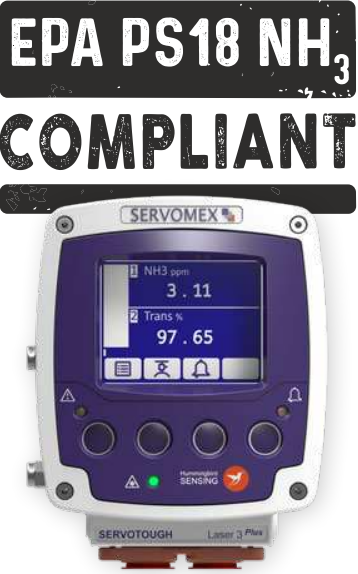
Image Credit: Servomex
Acknowledgments
Produced using materials originally authored by Rhys Jenkins, IP&E Spectroscopic Product Manager.

This information has been sourced, reviewed, and adapted from materials provided by Servomex.
For more information on this source, please visit Servomex.