Nitrogen/protein determination is a fundamental analytical requirement across the food, feed, and fertilizer industries. In food production, accurate nitrogen measurement is needed to calculate protein content, which is needed for nutrition labels and to verify suppliers' claims. In animal feed manufacturing, nitrogen/protein content directly influences nutritional value, feed formulation, and production consistency. For fertilizer producers, nitrogen analysis is critical to verify product performance, ensure compliance with specifications, and optimize nutrient delivery to crops.
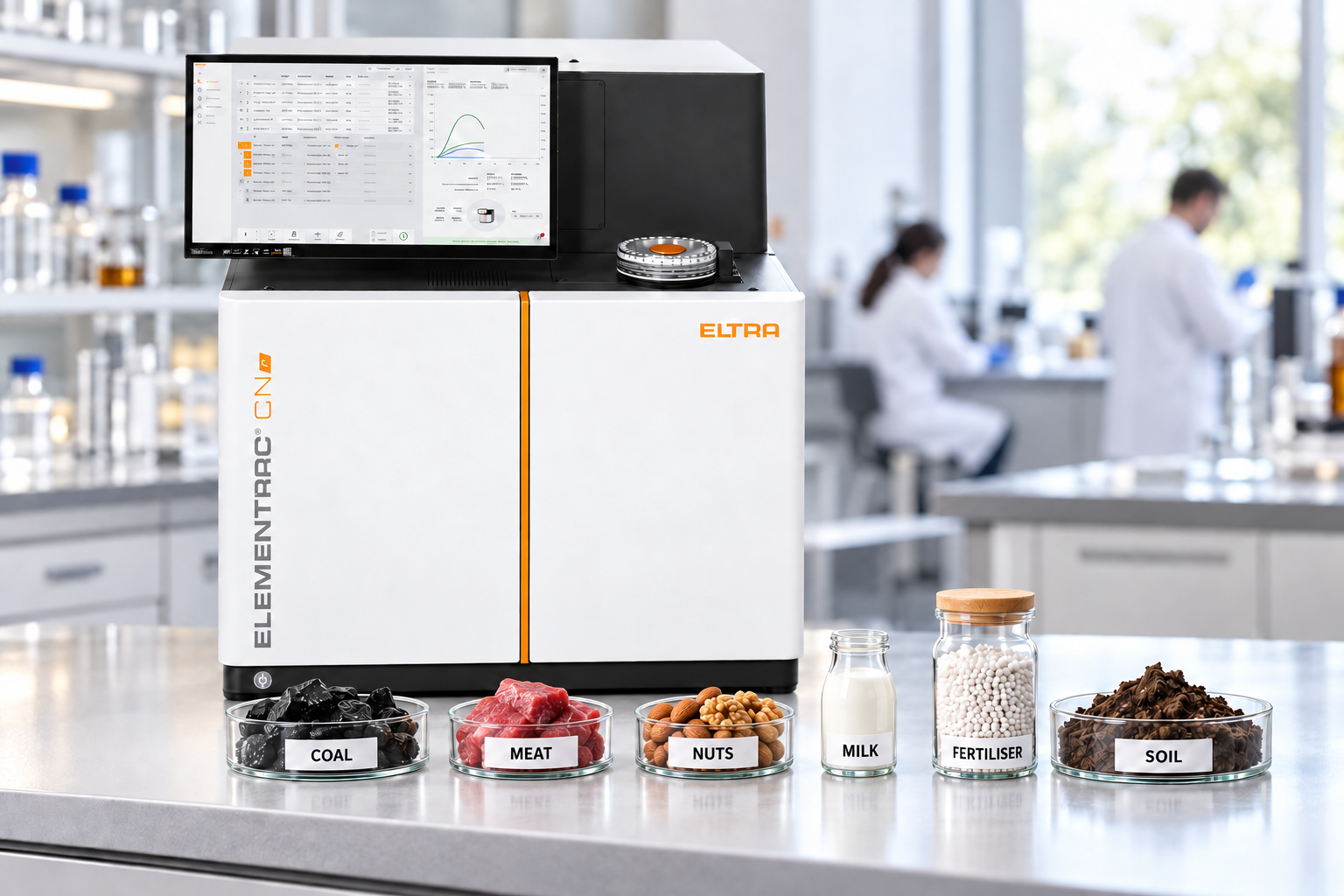
Image Credit: ELTRA GmbH
Labs are under pressure to process more samples. Manual methods such as Kjeldahl titration slow throughput and make result tracking harder. Many laboratories continue to rely on Kjeldahl analysis, the industry standard for nitrogen analysis. However, growing demand for faster turnaround times, improved laboratory safety, and lower operating costs has driven laboratories to adopt combustion-based methods.
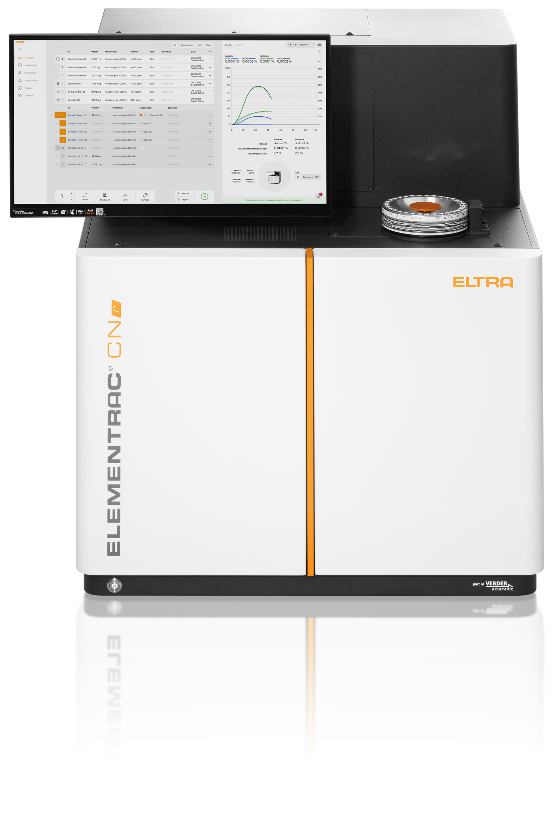
For laboratories considering replacing aging analytical equipment or expanding methods, instrument renewal offers an opportunity to address more than analytical performance alone. Modern automation, rapid analysis, straightforward maintenance, and integrated data handling can help streamline day-to-day workflows, while preventive service and maintenance can reduce the risk of unexpected downtime and support long-term instrument reliability. Modern systems such as the ELEMENTRAC CN-r from ELTRA GmbH combine automated operation, rapid analysis, and integrated data handling in a platform designed for high-throughput laboratory workflows.
The Growing Adoption of the Dumas combustion method
The Dumas combustion method has gained widespread acceptance as a reliable alternative to Kjeldahl analysis for nitrogen/protein determination. Unlike Kjeldahl analysis, which requires acid digestion, distillation, and titration, the Dumas method uses high-temperature combustion in an oxygen atmosphere to convert nitrogen present in a sample into measurable nitrogen gas which is then detected using a thermal conductivity cell.
Studies show that Dumas and Kjeldahl methods provide comparable analytical results while offering significant operational advantages. Studies comparing the two techniques have reported equivalent accuracy across numerous food matrices, with the Dumas method delivering superior repeatability and reproducibility.1,2 As a result, the Dumas method is now recognized by major international organizations and incorporated into many analytical standards used throughout the food, feed, and agricultural sectors.
A Modern Solution with the ELEMENTRAC CN-r
The ELEMENTRAC CN-r provides a modern and robust solution for laboratories looking to increase analytical efficiency while maintaining reliable results. Designed for high-throughput operation, the system combines rapid Dumas analysis with automated workflows and user-friendly operation in a compact analytical platform. The integrated PC and touchscreen make setup easy and operating the analyzer intuitive and easy.
Based on the Dumas combustion principle, the analyzer combines nitrogen/protein and carbon determination within a single device, reducing the need for separate analytical systems.
While conventional Kjeldahl analysis often requires several hours, the ELEMENTRAC CN-r delivers accurate results in just 2 minutes and 30 seconds per sample, enabling laboratories to significantly improve productivity and sample throughput. This makes analysis more than 70 times faster than the Kjeldahl method, helping laboratories reduce bottlenecks and process more samples within the working day.
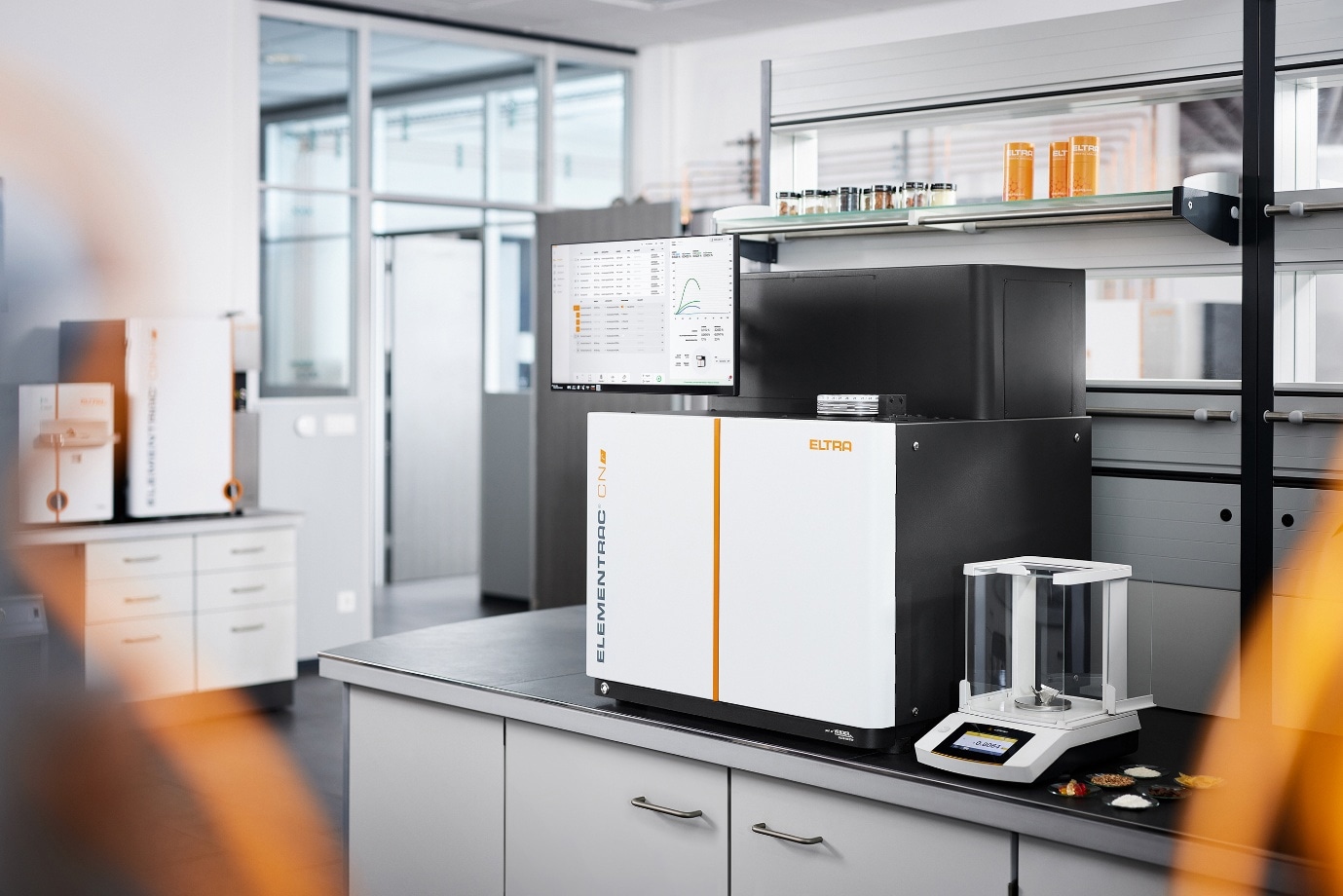
Image Credit: ELTRA GmbH
The instrument also eliminates the need for aggressive chemical reagents typically associated with wet chemistry analysis. Removing hazardous acid digestion steps improve operator safety, reduces chemical use, and lowers waste disposal costs.
Versatility Across Multiple Sample Types
Modern analytical laboratories often process a wide variety of matrices on the same day. These can include cereals, flours, seeds, dairy, meat products, rice, processed foods, animal feeds, soils, or fertilizers. Hence, analytical flexibility is essential.
The ELEMENTRAC CN-r accommodates solid, liquid, powdered and paste-like samples, making it suitable for a wide range industrial applications. This flexibility streamlines analytical procedures by reducing the need for multiple specialized instruments.
The analyzer supports matrix-specific nitrogen-to-protein conversion factors (milk 6.38, rice 5.95, wheat flour 5.70, and soybeans 5.71) and calculating the ratio of carbon and nitrogen helping laboratories generate accurate values for different product categories. Using appropriate measurement parameters like the correct conversion factor is vital because protein composition varies significantly across biological materials, so a single universal factor may not always provide the most accurate result.4
Consistent and Reliable Performance
Analytical reliability remains a top priority in quality control environments. The ELEMENTRAC CN-r has demonstrated excellent reproducibility across diverse sample types. For example, wheat samples (n =10) have shown a mean nitrogen content of 1.70 % with a relative standard deviation (RSD) of 1.01 % and a standard deviation (SD) of 0.017 %. Minced meat samples (n = 10), for example, have demonstrated a mean nitrogen content of 3.59 % with a RSD of 0.9 % and a SD of 0.032 %.
Wheat samples
WEIGHT
[mg] |
NITROGEN
N [%] |
PROTEIN
[%] |
| 400.69 |
1.69 |
9.65 |
| 400.28 |
1.70 |
9.67 |
| 400.87 |
1.72 |
9.78 |
| 400.04 |
1.72 |
9.80 |
| 400.29 |
1.67 |
9.50 |
| 400.54 |
1.69 |
9.65 |
| 400.42 |
1.70 |
9.67 |
| 400.82 |
1.70 |
9.69 |
| 400.76 |
1.73 |
9.86 |
| 400.64 |
1.70 |
9.68 |
| Mean value |
1.70 |
9.70 |
| Standard deviation [%] |
0.017 |
0.098 |
| Relative standard deviation [%] |
1.012 |
1.012 |
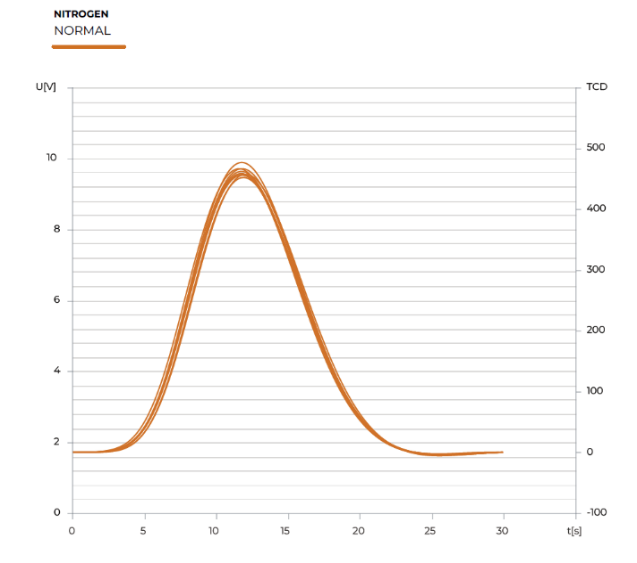
Figure 1: Nitrogen levels and peaks obtained using the ELEMTRAC CN-r for grinded wheat samples. Protein factor of 5.7 was used.
Minced meat samples
WEIGHT
[mg] |
NITROGEN
N [%] |
PROTEIN
[%] |
| 362.42 |
3.60 |
22.48 |
| 381.03 |
3.55 |
22.21 |
| 346.53 |
3.66 |
22.89 |
| 374.59 |
3.59 |
22.46 |
| 340.80 |
3.56 |
22.26 |
| 362.60 |
3.56 |
22.28 |
| 350.58 |
3.57 |
22.28 |
| 343.73 |
3.57 |
22.30 |
| 381.51 |
3.60 |
22.52 |
| 350.21 |
3.60 |
22.50 |
| Mean value |
3.587 |
22.418 |
| Deviation [%] |
0.032 |
0.202 |
| Relative Deviation [%] |
0.902 |
0.902 |
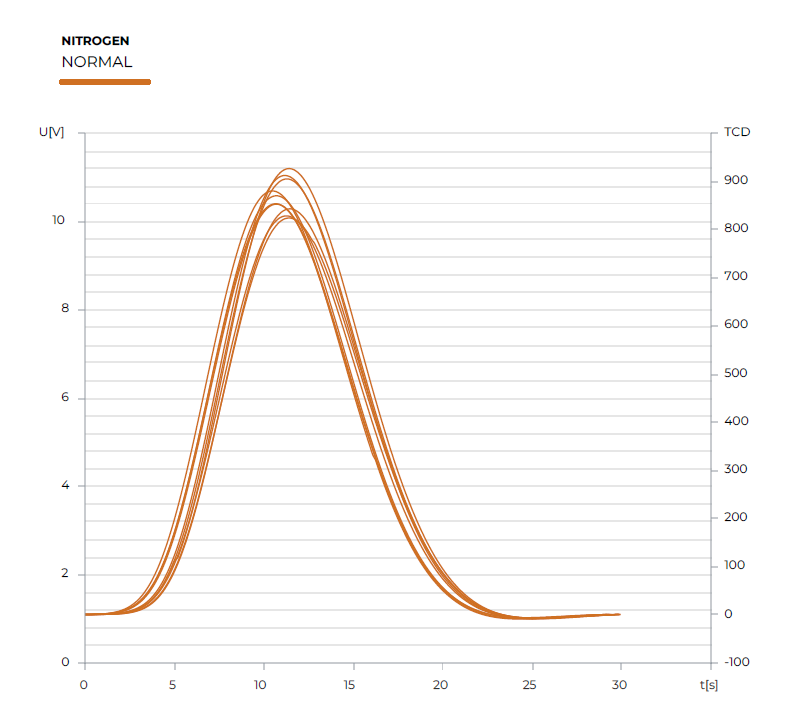
Figure 2: Nitrogen levels and peaks obtained using the ELEMTRAC CN-r for minced meat samples. Protein factor of 6.25 was used.
Laboratories need reliable and reproducible results to release batches, verify suppliers, and prepare regulatory reports. The analyzer meets ISO, AOAC, AACC, AOCS and DIN standards, enabling consistent testing across industries and regions.
ELTRA offers a free sample analysis service - click here to find out more
Automation, Connectivity and Future-Proof Laboratory Operations
Laboratory digitalization continues to drive productivity and data integrity. The ELEMENTRAC CN-r incorporates software tools designed to streamline routine operation and improve traceability. Features such as automated sample handling and clear sample identification reduce operator intervention while supporting high-throughput workflows. LIMS integration transfers analytical data directly, reducing transcription errors and speeding report generation. IoT connectivity also enables remote monitoring and maintenance planning.
Easy maintenance further contributes to uptime, with key consumables designed to be replaced in less than 15 minutes, all while the analyzer remains in a ready state. Also the combustion tube can be exchanged within this time frame, keeping the laboratory down-time low.
Long-term instrument reliability is also supported by ELTRA's technical service offering. Laboratories can access individual technical services as needed or choose a comprehensive service plan that includes proactive support and preventive maintenance. Service plan benefits include pre-scheduled annual maintenance, prioritized treatment, and swift access to expert support, helping laboratories reduce the risk of unexpected downtime and maintain consistent instrument performance.
Key benefits of the ELEMENTRAC CN-r for food, feed and fertilizer laboratories
- Fast Dumas combustion analysis in 2 minutes and 30 seconds per sample
- Nitrogen/protein and carbon determination in one analytical platform
- Suitable for solid, liquid, powdered and paste-like samples
- Reproducible: reliable data for QA/QC, labelling, and supplier qualification
- Automated workflow for high-throughput QA/QC laboratories
- No aggressive wet chemistry, supporting safer routine operation
- Clear sample identification with autosampler
- Easy maintenance, within 15 minutes all consumables are exchangeable
Conclusion
As analytical laboratories face increasing demands for speed, efficiency, and regulatory compliance, combustion-based nitrogen analysis is becoming a preferred solution across the food, feed, and fertilizer sectors.
The ELEMENTRAC CN-r from ELTRA combines rapid analysis, high reproducibility, broad matrix compatibility, and advanced connectivity features in a single platform. Replacing conventional wet chemistry workflows with fast combustion-based analysis allows laboratories to increase sample throughput, reduce safety risks, and prepare for future demands without compromising analytical results.
Speak abour your application with ELTRA's expert team
References and Further Reading
- Wiles, P. G., et al. (1998). Routine Analysis of Proteins by Kjeldahl and Dumas Methods: Review and Interlaboratory Study Using Dairy Products. Journal of AOAC International, 81(3), 620-632. https://doi.org/10.1093/jaoac/81.3.620
- Bellomonte, G., Costantini, A., & Giammarioli, S. (1987). Comparison of Modified Automatic Dumas Method and the Traditional Kjeldahl Method for Nitrogen Determination in Infant Food. Journal of AOAC International, 70(2), 227-229. https://doi.org/10.1093/jaoac/70.2.227
- Jung, S., et al. (2003). Comparison of Kjeldahl and Dumas Methods for Determining Protein Contents of Soybean Products. Journal of the American Oil Chemists' Society, 80(12), 1169-1173. https://doi.org/10.1007/s11746-003-0837-3
- Mariotti, F., Tomé, D., & Mirand, P. P. (2008). Converting Nitrogen into Protein: Beyond 6.25 and Jones' Factors. Critical Reviews in Food Science and Nutrition, 48(2), 177-184. https://doi.org/10.1080/10408390701279749
This information has been sourced, reviewed, and adapted from materials provided by ELTRA.
For more information on this source, please visit ELTRA.