In this interview, industry experts Paul Dewsbury and Daniel Kutscher discuss how ICP-MS technology has evolved to meet the growing demands of modern laboratories, from improved matrix robustness and sensitivity to more effective interference removal. They also explore how automation and software advances are helping laboratories streamline workflows, reduce operator workload, and increase productivity.
To get started, how has ICP-MS technology evolved over the past decade?
Paul Dewsbury: Over the last 10 years, the biggest shift has been toward making ICP-MS more robust, faster, easier to use, and easier to maintain. Earlier developments focused heavily on sensitivity, dynamic range, and reducing instrument size, but laboratories increasingly began asking for systems that could handle more demanding samples while reducing day-to-day operator burden.
Daniel Kutscher: Laboratory workflows have changed at the same time. Ten to 15 years ago, it was common to see ICP-OES handling dirtier samples such as wastewater or soil digests, while ICP-MS was reserved for cleaner or more heavily diluted samples where lower detection limits were needed.
Over time, many laboratories wanted to consolidate those workflows onto a single instrument. That meant ICP-MS had to become capable of handling higher matrix loads while still maintaining the detection power required for parts-per-billion (ppb), parts-per-trillion (ppt), and even lower-level measurements.
Why has matrix robustness become so important in modern ICP-MS workflows?
Daniel Kutscher: One reason is that laboratories increasingly want to analyze more complex samples directly without relying on extensive offline dilution.
Modern ICP-MS systems can use argon (Ar) gas dilution to dilute the sample on the fly within the sample introduction system. With the Thermo ScientificTM iCAPTM MX Series ICP-MS, this has been modernized so laboratories can work with higher-matrix samples at equivalent or lower dilution factors.
Improved matrix robustness reduces matrix suppression, helps internal standards remain within accepted ranges, improves the reliability of QC checks, and reduces drift over longer sequences. It also means samples can often be placed directly into the autosampler without requiring manual dilution beforehand.
These benefits reduce operator workload while allowing longer, more stable analytical sequences.
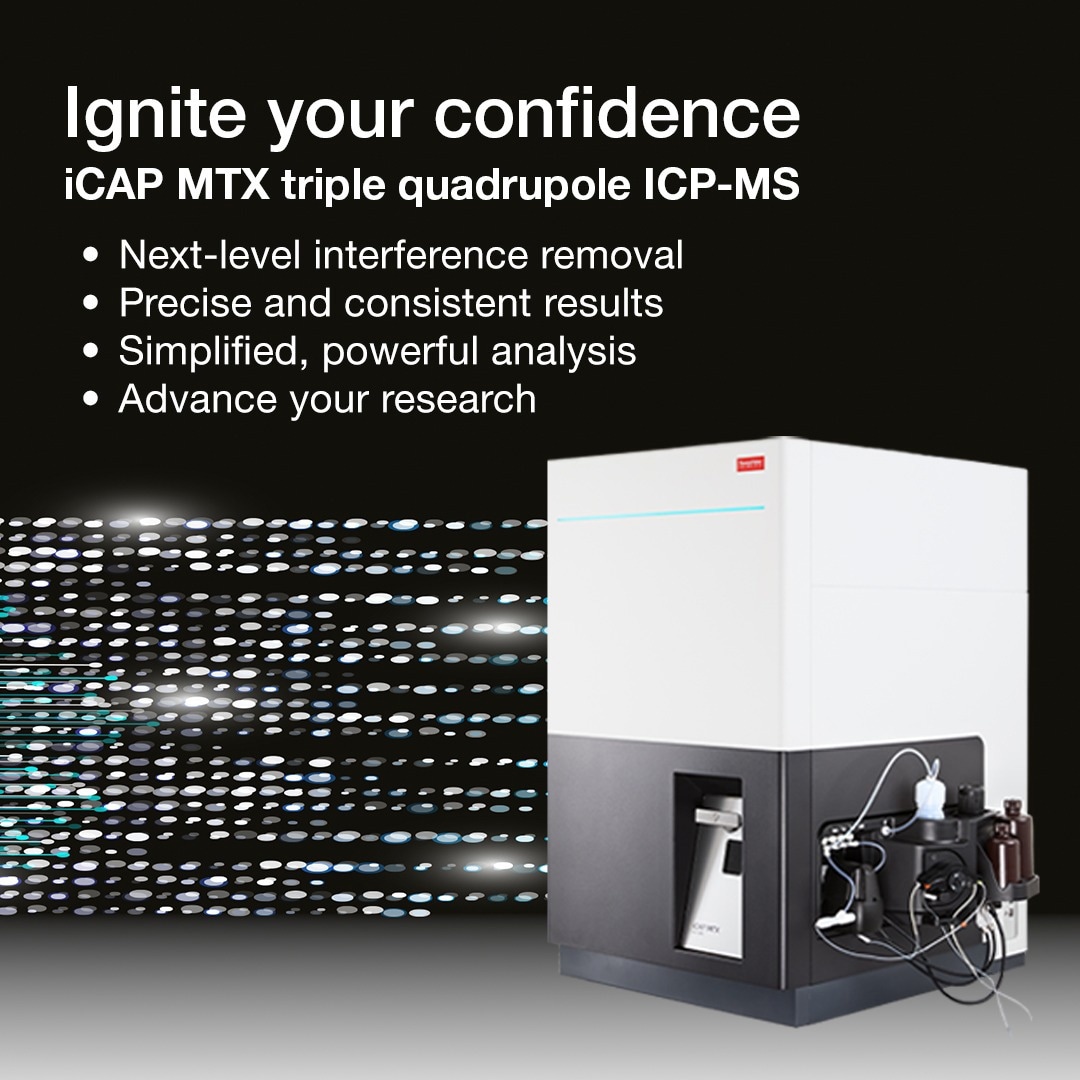
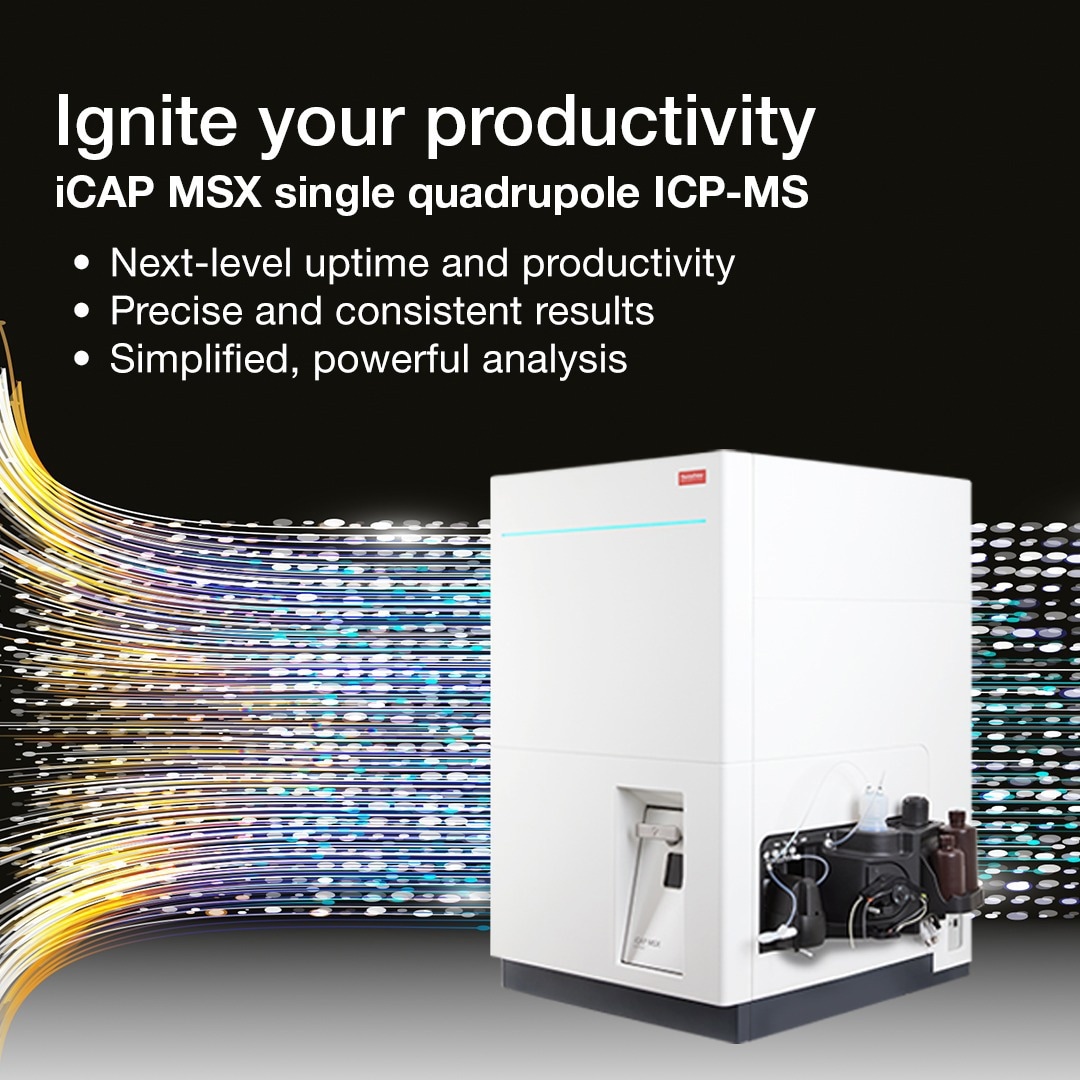
Image Credit: Thermo Fisher Scientific Pte Ltd
How can improved robustness also reduce maintenance requirements?
Daniel Kutscher: Robustness does not only concern what happens within a single measurement sequence; rather, it also affects how the instrument performs over days and weeks of operation.
Matrix exposure can lead to maintenance requirements around the nebulizer, sample introduction system, and cones. By reducing the amount of matrix reaching critical parts of the instrument, you can extend the interval between maintenance events and increase productive uptime.
One example is intelligent matrix handling, which reduces matrix exposure during non-productive periods such as sample uptake and washing. In testing, we have been able to run several thousand samples without needing to inspect the cones because the system remains much more stable than previous generations.
This makes a significant difference in high-throughput laboratories where every maintenance intervention means lost analytical time.
How has sensitivity improved as ICP-MS technology has developed?
Daniel Kutscher: Sensitivity remains critical, particularly for research applications where laboratories are trying to measure extremely low concentrations.
Sensitivity has significantly improved over time. Part of this improvement is thanks to updated control electronics and ion-path optimization.
With modern electronics, dedicated ion lens voltages can be applied according to the mass-dependent behavior of individual analytes. Therefore, we no longer have to make the same compromises associated with tuning based on elements located in the middle of the mass range.
Instead, optimized settings can be applied across the entire range, from low-mass analytes such as lithium (Li) and beryllium (Be) through to heavier elements such as bismuth (Bi) and lead (Pb) and beyond. This helps maintain sensitivity across a much broader analytical range.
How has interference removal changed in modern ICP-MS?
Daniel Kutscher: Interference removal has evolved significantly.
Single quadrupole ICP-MS saw an important change with the introduction of the QCell collision/reaction cell, where helium (He) and kinetic energy discrimination (KED) were complemented by an automatic low mass cut off. This helped remove precursor ions and allowed laboratories to address a wide range of analytes within a single measurement mode.
Triple quadrupole ICP-MS added another level of capability by making reactive gases much more practical for interference removal. This is particularly valuable for more difficult interferences, such as doubly charged ions affecting elements including arsenic (As) and selenium (Se).
With a reactive gas such as oxygen (O2), arsenic can be converted into arsenic oxide and measured at an interference-free mass. The additional quadrupole positioned before the collision reaction cell filters the ion beam beforehand, helping prevent unwanted ions from creating additional reaction products.
These developments help researchers working with complex matrices feel more confident in their results.
How can modern ICP-MS systems balance advanced capabilities with ease of use?
Daniel Kutscher: Greater analytical capability can sometimes bring greater complexity, so one of our key goals has been to deliver flexibility for experienced users without making routine operation unnecessarily difficult.
One example is the Reaction Finder method development assistant, which suggests a suitable element, isotope, reactive gas, and product ion for an analysis, helping guide less experienced users through method development. At the same time, experienced users still retain the freedom to select alternative product ions or operating modes when they want to develop a more customized method.
The aim is to simplify routine operation without removing the analytical flexibility that advanced users need.
What software features can help laboratories improve day-to-day productivity?
Paul Dewsbury: The Get Ready function can automatically schedule startup and instrument setup procedures so that the system is ready when the laboratory needs it. This function allows operators to prepare standards or perform other laboratory tasks while the instrument independently completes its startup procedures.
Daniel Kutscher: Qtegra ISDS software has also developed considerably. Features such as the new Media Center provide direct access from within Qtegra software to instrument documentation, manuals, consumables information, and maintenance guidance.
The Qtegra Noticeboard can be used to store relevant metadata such as consumable details, lot numbers for standards, and sample information alongside the analytical data. This information can also be managed in environments that require regulatory compliance, including 21 CFR Part 11.
How can predictive maintenance tools reduce operator workload?
Daniel Kutscher: Predictive tools have made maintenance efforts less frequent and more predictable.
The HAWK Consumables and Maintenance Assistant can provide alerts when maintenance is due, such as replacing peristaltic pump tubing, inspecting the cones, or replacing the torch. It can also be customized to monitor parameters such as the number of samples analyzed, plasma runtime, or overall system time. Laboratories can even create alerts for tasks outside the instrument itself, such as checking whether enough vials or digestion vessels are available or scheduling preventive maintenance.
The key benefit of such tools is that laboratories can plan maintenance rather than be unexpectedly interrupted.
What role does automation play in improving ICP-MS throughput?
Daniel Kutscher: Automation can remove a significant amount of repetitive operator work while also reducing the potential for human error.
With the Thermo ScientificTM iSC-65 autosampler, for example, users can customize rack layouts, sample reading directions, and even sampling depth on a per-sample basis. That can help avoid drawing residue from a digestion vessel into the nebulizer.
The Step Ahead feature improves productivity by overlapping probe rinsing with the acquisition of the current sample. Once that acquisition finishes, uptake of the next sample can begin immediately. Depending on the acquisition time, this can improve productivity by approximately 25 to 30%.
There is also increasing interest in intelligent autodilution. Systems such as the prepFAST3 from Elemental Scientific, Inc., can perform predictive autodilution using predefined factors or reactive dilution based on an internal standard response or calibration range. Samples that fall outside acceptable limits can then be diluted and reanalyzed automatically without operator intervention.
Overall, what should laboratories consider when deciding whether to modernize their ICP-MS workflows?
Paul Dewsbury: The most important point is that modern ICP-MS has developed around the challenges laboratories face every day: robustness, speed, interference removal, usability, and maintenance. The technology no longer simply improves sensitivity; modern systems are designed to handle more demanding matrices, reduce manual sample preparation, and make routine operation more efficient.
Daniel Kutscher: I think laboratories should look at the entire workflow rather than just one specification. Improvements in matrix tolerance, sensitivity, interference removal, automation, software, and maintenance all affect how productive the laboratory can be.
Even instruments that are only 10 years old can be fundamentally different from current-generation ICP-MS systems in the way they handle samples and support the operator. Modernizing this technology has ultimately simplified laboratory practice, increased uptime, reduced manual tasks, and given users greater confidence in the quality of their results.
Discover your trade-up options: Your next step in ICP-MS innovation starts here
Looking to get more from your ICP-MS laboratory? Explore the latest Thermo Scientific™ iCAP™ MX Series ICP-MS, designed to deliver greater efficiency, simplified workflows, and reliable performance. For existing iCAP Q ICP-MS users, discover Thermo Fisher's trade-up program and take the next step toward upgrading your laboratory capabilities.
About Paul Dewsbury 
Paul Dewsbury holds a BSc (Hons) in Applied Chemistry from Sheffield Hallam University. With over 20 years of experience at Thermo Fisher Scientific, he has held various technical, sales, and marketing leadership positions. He currently serves as Product Marketing Manager for Trace Elemental Analysis.
About Daniel Kutscher 
Daniel Kutscher holds a Ph.D. in Analytical Chemistry from the University of Oviedo and a Diploma in Chemistry from Johannes Gutenberg University Mainz. With over 15 years at Thermo Fisher Scientific, he has held roles as Product Specialist and Marketing Specialist and currently serves as Application Manager, developing novel applications in applied analytics.

This information has been sourced, reviewed, and adapted from materials provided by Thermo Fisher Scientific Pte Ltd.
For more information on this source, please visit Thermo Fisher Scientific Pte Ltd.
Disclaimer: The views expressed here are those of the interviewee and do not necessarily represent the views of AZoM.com Limited (T/A) AZoNetwork, the owner and operator of this website. This disclaimer forms part of the Terms and Conditions of use of this website.