When one of Genesis Automation's single acrylic lenses started wearing out under millions of weld cycles, the fix wasn't a redesign; it was a material change, delivered by INSACO.
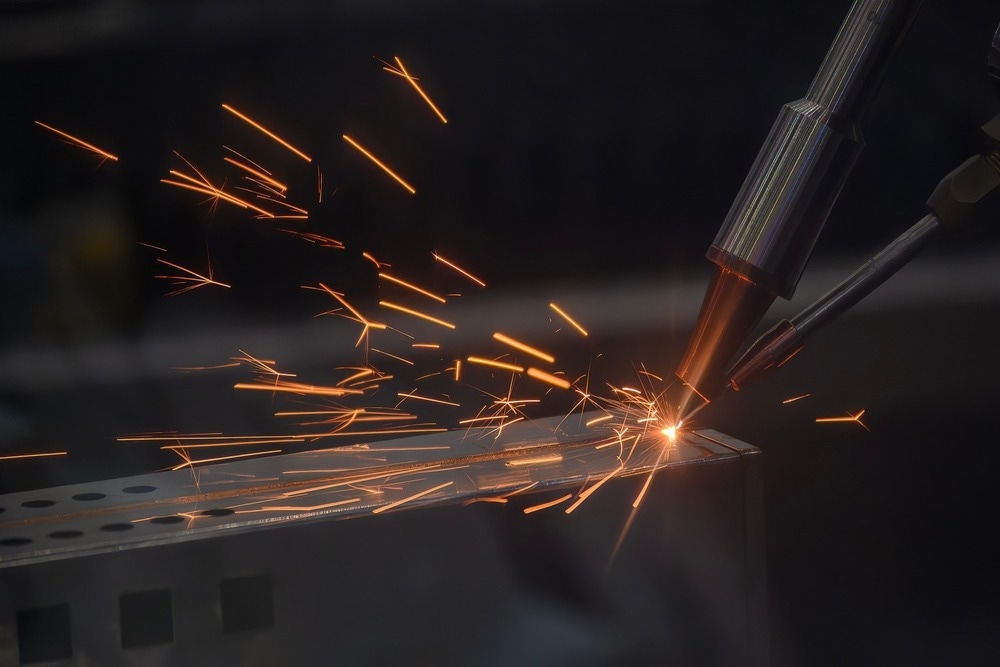
Image Credit: Pixel B/Shutterstock.com
INSACO's fused quartz components are helping Genesis keep a fully automated plastic-welding line running at production scale without the recurring cost of tooling replacement.
Automated assembly lines built around laser plastic welding depend on precise, repeatable clamping to produce consistent, void-free welds; but "precise and repeatable" becomes harder to achieve when the parts being welded are not all the same size.
The Challenge
Genesis Automation faced a clamping and welding problem with an unusual geometric wrinkle: eight different plastic components, each sitting at a different assembled height, needed to be welded onto a common plastic base part.
A successful weld depends on applying an optimal clamping force, enough to create a void-free bond, but not so much that it expels molten plastic from the joint. With seven different height variations across the assembly, a single flat clamping plate set to one height could not accomplish this across all eight parts.
Adding to the complexity, the clamping components themselves needed to be optically clear. The welding process uses a 1070 nm laser beam that must pass through the clamp and the transparent loose upper part before being absorbed into the black plastic base piece. That absorption is what creates the molten seam bonding the two parts together, any clamping lens in the beam path has to transmit the laser cleanly, at every one of the eight required heights.
The team's solution during prototyping was to machine eight different lenses, each shaped to match its corresponding part height, with spring-loaded support beneath the base piece to accommodate part-thickness tolerances at each weld position.
Why the Original Material Fell Short
Clear acrylic worked well during prototyping; it is easy to machine, optically transparent at the working wavelength, and inexpensive. However, the prototype phase and full production have very different demands. This line is designed to run continuously, producing millions of welded assemblies over its service life, with the clamping lenses subjected to repeated direct contact, clamping force, and repeated laser exposure at every cycle.
Under that kind of duty cycle, acrylic's limitations become a production problem. Two failure mechanisms in particular limit its usable life: abrasive wear at the contact surface from repeated clamping cycles, and pitting caused by direct, repeated laser exposure. Each mechanism degrades the lens's clamping surface and optical clarity over time, eventually requiring replacement and unplanned maintenance events on a line built for high-throughput, low-touch operation.
The Fused Quartz Solution
To address the durability issue without altering the validated clamping geometry or optical path, INSACO's team switched from acrylic to fused quartz for the lens components.
Fused quartz is a natural fit for this kind of application. It offers substantially higher hardness and wear resistance than acrylic, meaning the repeated mechanical contact at each clamping cycle causes far less surface degradation over time.
It also resists the pitting that acrylic develops under sustained laser exposure, an important property for a component that sits in the beam path during every weld cycle. The material maintains its transmission and surface quality far longer, which translates directly into a longer usable tool life before replacement is necessary.
Conclusion
This project is a good example of how substituting a material without changing part geometry or process design can solve a durability problem that would otherwise require a redesign. By switching from acrylic to fused quartz, Genesis Automation gained a clamping lens engineered to withstand the wear and laser exposure of continuous, high-volume production, keeping a validated eight-lens clamping design intact while extending its working life.
This information has been sourced, reviewed, and adapted from materials provided by INSACO Inc. - Machining of Hard Materials.
For more information on this source, please visit INSACO Inc. - Machining of Hard Materials.