A reusable photocatalyst and mild organic acids offer a new way to tackle the chemical and energy demands of battery recycling.
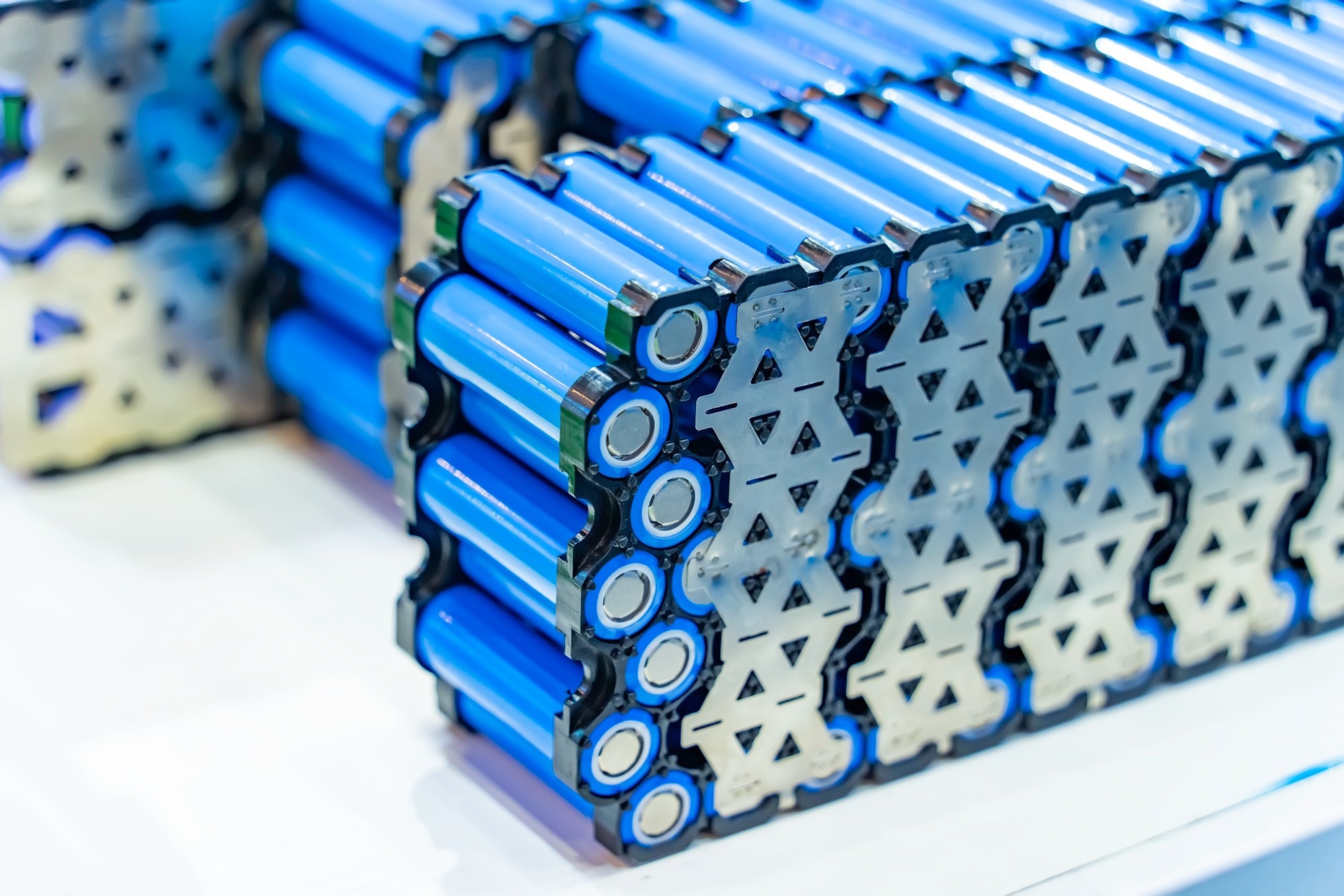
Paper: Full-sunlight-driven photocatalytic recovery of critical metals from spent lithium-ion batteries via organic acid leaching. Image Credit: Asharkyu / Shutterstock
*Important notice: This news reports on an unedited version of an accepted paper and is awaiting final editing. Therefore, the paper should not be regarded as conclusive or treated as established information.
In a recent article in the journal Nature Communications, researchers developed a solar-spectrum-driven photocatalytic system, tested under simulated sunlight, that combines mild organic acids and a reusable photocatalyst to extract critical metals from spent lithium-ion battery cathodes with high leaching efficiency and lower modeled environmental impacts than conventional recycling routes.
Battery Recycling Challenges & Opportunities
The growing use of lithium-ion batteries (LIBs) in electric vehicles, consumer electronics, and energy storage has intensified concerns about resource availability and waste management.
With global LIB production expected to reach 2.4 TWh by 2030, a massive amount of spent batteries will arise, necessitating effective recycling methods. Conventional recycling technologies often demand high energy input and harsh chemicals, limiting economic and environmental sustainability.
Addressing these challenges requires new approaches that can handle various cathode chemistries while minimizing environmental impact. This study examines a sunlight-driven photocatalytic system that combines mild organic acids with a reusable photocatalyst to leach critical metals from spent LIB cathodes under mild conditions.
Sunlight-Driven Photocatalytic Leaching
The method combines citric acid, a mild organic acid, with a specially synthesized, reusable photocatalyst (r-PC) designed to use the full solar spectrum.
The r-PC catalyst was prepared through a modified synthesis using melamine and sodium hexafluoroantimonate precursors, followed by high-temperature nitrogen treatment. The paper also examines protonation in citric acid during leaching, a gradual change that improves catalyst dispersion and photocatalytic activity.
Spent cathode materials from various commercial LIB types, including lithium cobalt oxide (LCO), lithium nickel manganese cobalt oxide (NCM), and lithium nickel cobalt aluminum oxide (NCA), were collected by dismantling used batteries, discharging them, and physically separating the cathode powders.
The photocatalytic leaching conditions were studied by varying reaction time, acid concentration, photocatalyst dosage, light intensity, and cathode loading. Reactive species generated during the process, including electrons, hydroxyl radicals (·OH), and superoxide radicals (·O2−), were studied through radical scavenger experiments and electron paramagnetic resonance (EPR) spectroscopy using specific spin traps.
The leachates were analyzed for critical metal content via inductively coupled plasma optical emission spectrometry (ICP-OES). The catalyst was recovered and reused through centrifugation and vacuum filtration, solvent washing, and vacuum drying, with its stability and activity assessed over multiple cycles.
Metal Leaching Mechanism & Efficiency
The photocatalytic system showed much higher metal-leaching efficiencies than control experiments without light or a photocatalyst; oxygen depletion also reduced performance.
Under one-sun-equivalent illumination, the system achieved high leaching efficiencies for lithium, cobalt, nickel, manganese, and aluminum across the tested cathode materials. In a defined NCM:NCA mixture (78:12:10 wt.%), leaching exceeded 85% for all constituent metals without chemistry-specific presorting of the cathode powders.
The r-PC catalyst generated reactive species under illumination that contributed to leaching. Radical scavenger tests showed that photogenerated electrons helped convert Co³+ into the more readily dissolved Co²+ form.
Hydroxyl radicals cleaved metal-oxygen bonds in the cathode structure, while superoxide radicals contributed directly to reduction processes and in situ hydrogen peroxide production, which acts as a reducing agent in this leaching chemistry.
EPR spectroscopy using DMPO and TEMPO confirmed superoxide formation and electron participation, while molecular probes confirmed hydroxyl and superoxide production. These signals depended on both light and catalyst.
Enzymatic assays verified continuous hydrogen peroxide formation. Under one-sun-equivalent illumination, the reported formation rate exceeded the decomposition rate, so hydrogen peroxide accumulated without adding external peroxide.
Protonating the photocatalyst with citric acid improved its dispersion and photocatalytic properties, increasing hydrogen peroxide generation. The recycled catalyst retained about 95% to 97% of its original leaching performance, while about 90% of the catalyst itself was recovered per cycle. The process model assumed replacement of the lost 10% fraction.
The process model for LCO leaching used the shrinking core kinetic model, which treats the reaction as progressing inward from the particle surface, and identified the surface chemical reaction as the rate-determining step. The process simulation used experimentally derived kinetic parameters for Li and Co.
Techno-economic analysis projected a positive net present value over 15 years. The process was less expensive than the peroxide-assisted organic-acid route but did not outperform the inorganic-acid route on cost alone.
Life cycle assessment used the EverBatt 2023 model and lactic acid inventory data. The modeled results showed lower greenhouse gas emissions and energy use than the conventional pyrometallurgical and hydrometallurgical cases used for comparison.
Conventional recycling methods often use mineral acids and externally supplied hydrogen peroxide, generating acidic wastewater and requiring energy-intensive processing.
Compared with those routes, the described photocatalytic system couples organic-acid leaching with light-driven reactive species generation and avoids externally supplied hydrogen peroxide. Its performance across several cathode chemistries and repeated catalyst use provides an experimental basis for the economic and environmental modeling used to examine possible scale-up.
Techno-Economic & Environmental Impact
This study reports an efficient photocatalytic approach to leach valuable metals from spent lithium-ion battery cathodes under mild conditions.
The experimental results and simulation-based assessments support further scale-up testing, but the paper does not report pilot or commercial operation. The modeled industrial advantages still require validation at a larger scale.
Source:
- Ko S., Jang J., et al. (2026). Full-sunlight-driven photocatalytic recovery of critical metals from spent lithium-ion batteries via organic acid leaching. Nature Communications. DOI: 10.1038/s41467-026-78307-0, https://www.nature.com/articles/s41467-026-78307-0