Structural Reinforcements
Structural reinforcements are vital for improving the overall strength and lifetime of concrete-based structural applications, including bridge decks, parking garages, drainage systems, and other infrastructure projects.
Reinforcements are essential for retrofitting existing structures and are more economical than completely rebuilding them, especially when increasing the load-bearing capacity of the original structure. The structural industry has conventionally relied on steel for reinforcement applications.
This article highlights the drawbacks of steel-based reinforcements and why fiberglass has become an increasingly attractive alternative for modern structural reinforcement.
Steel Rebars
Steel rebars, which are reinforcement bars, are conventional structural reinforcements generally used for reinforcing cement concrete. Under compressive loads, concrete is strong, but it can be weak under tensile loads.
Steel rebars keep the concrete together and improve the tensile strength of concrete-based structures while reducing cracking under tensile loading. Steel has traditionally been used because its coefficient of thermal expansion closely matches that of concrete.
Unfortunately, steel is susceptible to corrosion. As concrete is exposed to oxygen, chlorides, and moisture, corrosion gradually attacks the reinforcing steel.
As corrosion progresses, the steel loses strength while rust expansion creates internal pressure within the concrete. This often leads to cracking, delamination, and ultimately concrete spalling.
These failures can result in costly repairs, ongoing maintenance, and shortened service life. Steel reinforcement is also heavy, labor intensive to install, electrically conductive, and vulnerable to deterioration in aggressive environments.
Fiberglass - The Future of Structural Reinforcements
Fiberglass reinforced polymer (FRP) composites consist of high-strength glass fibers embedded within a thermoset resin matrix and are commonly manufactured using the pultrusion process.
FRP overcomes many of the limitations associated with traditional steel reinforcement. Depending on the application, FRP products can replace conventional reinforcing bars or provide supplemental structural strengthening while delivering exceptional corrosion resistance and long-term durability.
Fiberglass is approximately 75 to 80% lighter than steel while providing an outstanding strength-to-weight ratio, high flexural strength, and excellent stiffness. The lighter weight simplifies transportation, handling, and installation, reducing labor requirements while placing less dead load on the structure.
Unlike steel, fiberglass will not rust and offers excellent resistance to moisture, chlorides, chemicals, and alkaline environments. FRP is also electrically non-conductive, electromagnetically transparent, and requires minimal maintenance, resulting in significantly lower lifecycle costs.
Fiberglass Reinforcement Solutions from Strongwell
With more than 65 years of pultrusion experience, Strongwell has become the industry leader in developing engineered FRP solutions for structural reinforcement applications. Strongwell offers several innovative reinforcement products designed to improve durability, reduce maintenance, and extend service life.
COMPOSIBAR®
Strongwell's COMPOSIBAR® composite fiberglass rebar is specifically engineered for reinforcing concrete in flatwork and masonry applications. Manufactured using a patented pultrusion process, COMPOSIBAR® weighs approximately 74% less than comparable steel rebar while providing exceptional corrosion resistance. It meets ASTM D7957 requirements and is ideal for slabs-on-grade, parking lots, sidewalks, curbs, pools, agricultural structures, and CMU walls where long-term durability and ease of installation are priorities.
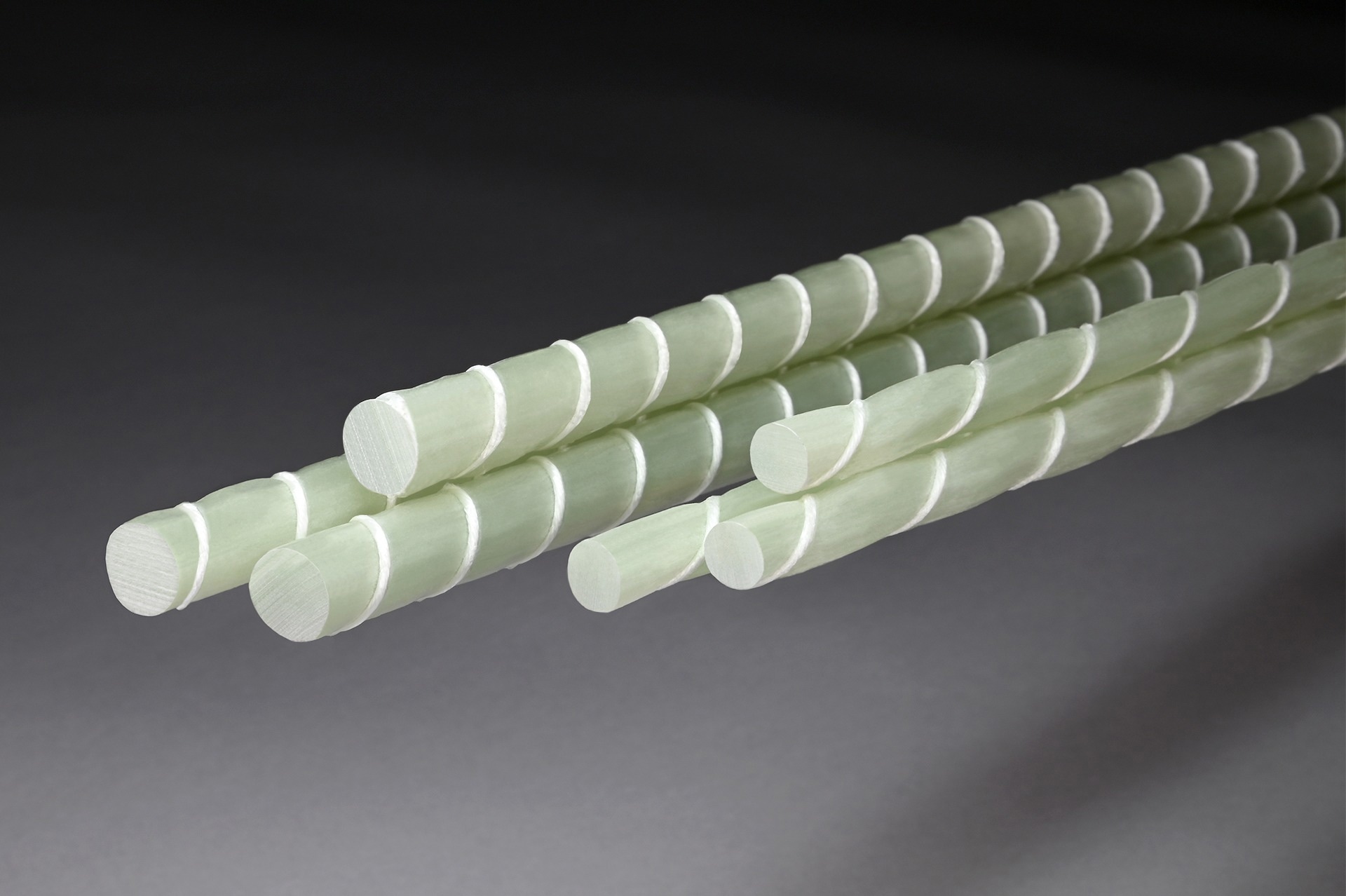 Image Credit: Strongwell
GRIDFORM™
A prefabricated fiberglass bridge deck reinforcement system featuring double-layer grating with an integral stay-in-place form. Developed to replace traditional steel reinforcement in concrete bridge decks, GRIDFORM™ provides outstanding corrosion resistance while significantly reducing long-term maintenance requirements.
Its innovative double-layer construction creates a lightweight, bidirectional reinforcement panel weighing only 4.7 pounds per square foot. It attaches easily to bridge girders and simplifies concrete placement during construction.
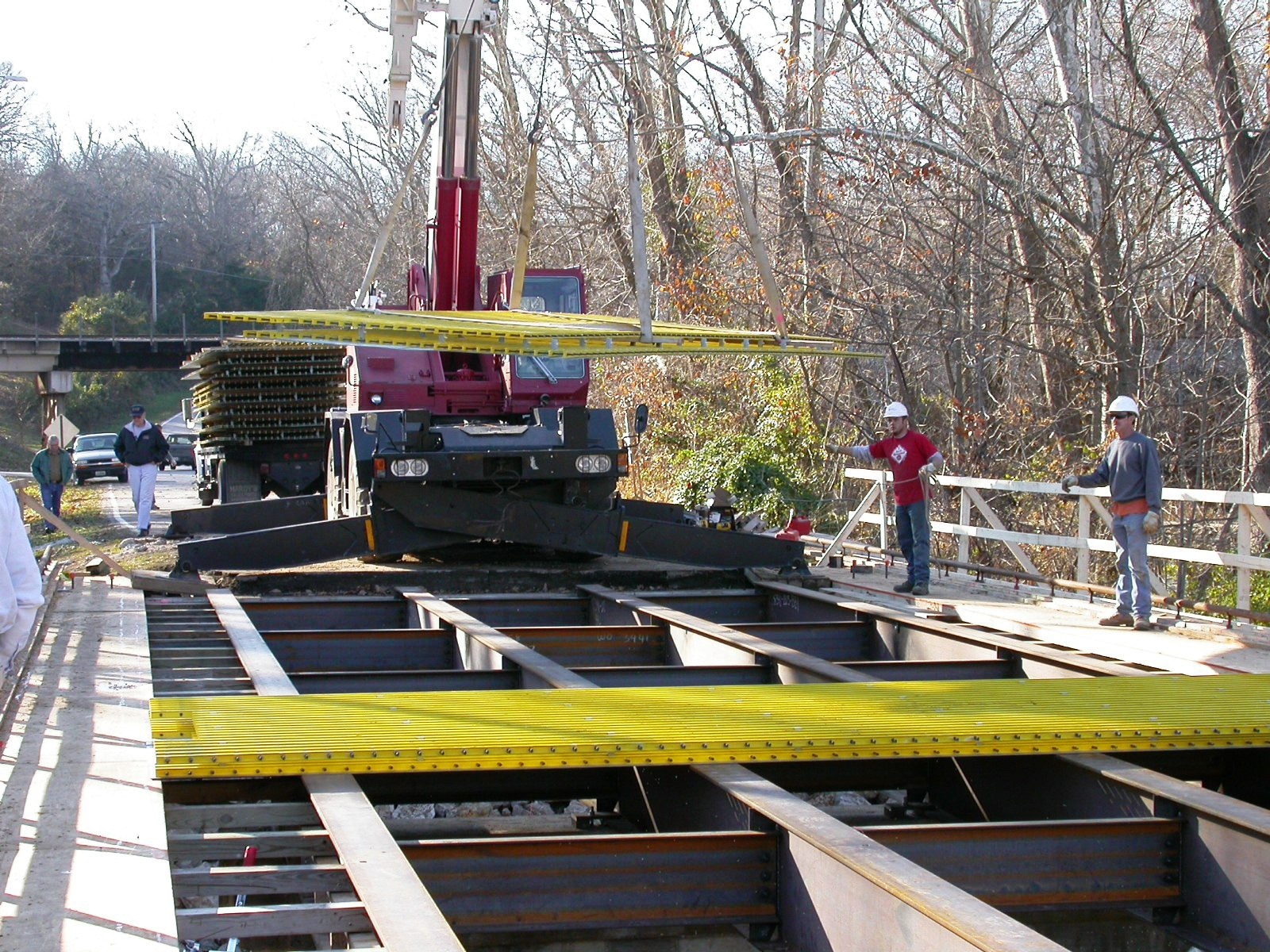 Image Credit: Strongwell
SAFSTRIP®
An economical composite strengthening strip comprised of carbon tows sandwiched between fiberglass mats and rovings. SAFSTRIP® significantly improves the flexural and load-bearing capacity of concrete decks, girders, and slabs.
The strips are mechanically fastened with minimal surface preparation and can be drilled without delamination or splitting.
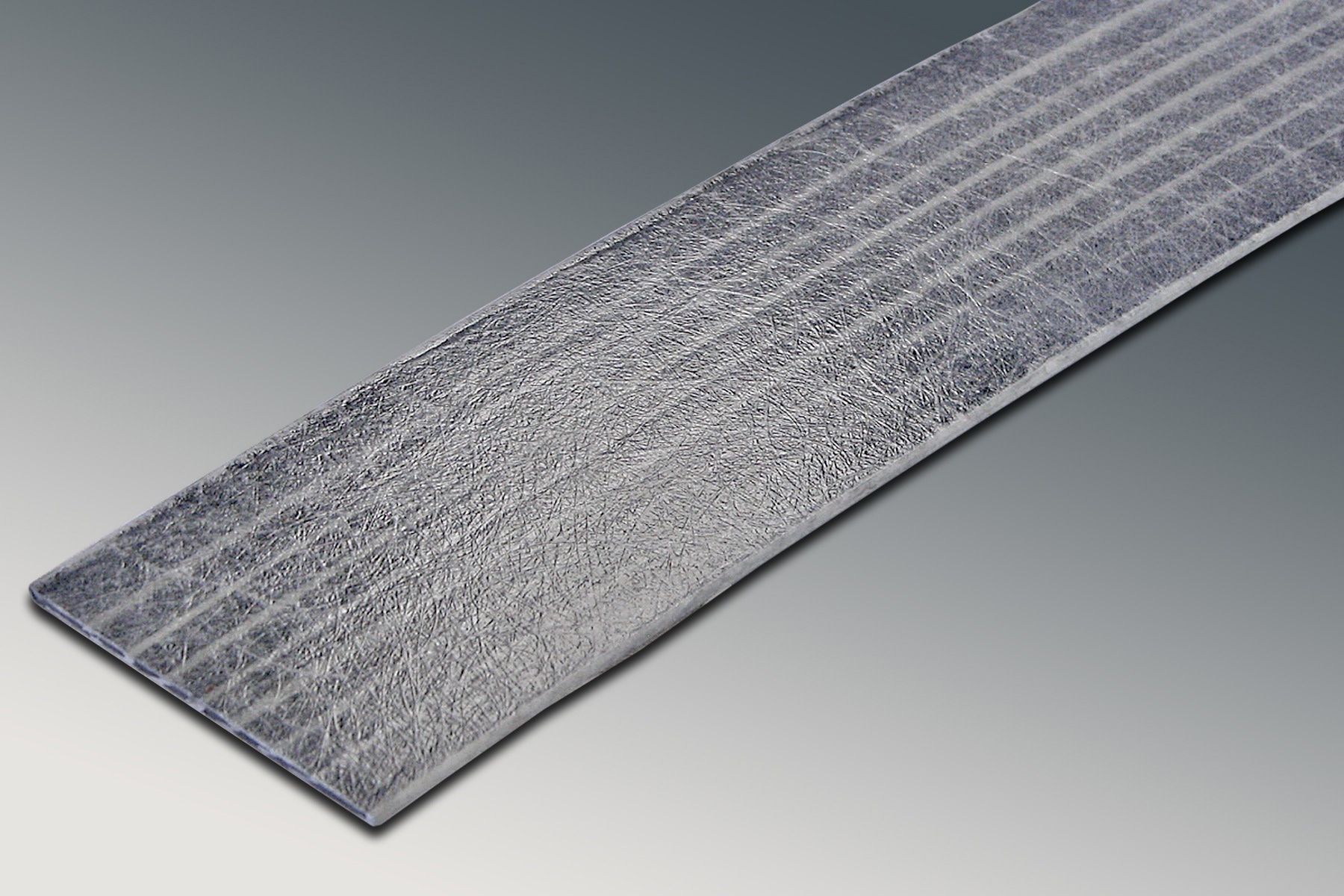 Image Credit: Strongwell
From COMPOSIBAR® fiberglass rebar for concrete reinforcement to GRIDFORM™ bridge deck systems and SAFSTRIP® structural strengthening products, Strongwell provides engineered FRP reinforcement solutions that improve durability, reduce maintenance, and extend the service life of concrete infrastructure. For more information about Strongwell's complete line of FRP reinforcement products, visit www.strongwell.com.

This information has been sourced, reviewed and adapted from materials provided by Strongwell Corporation.
For more information on this source, please visit Strongwell Corporation.