Even the most cutting-edge XRF spectrometer cannot compensate for poorly prepared samples. To ensure great results, XRF labs must standardize their crushing and pulverizing workflows.
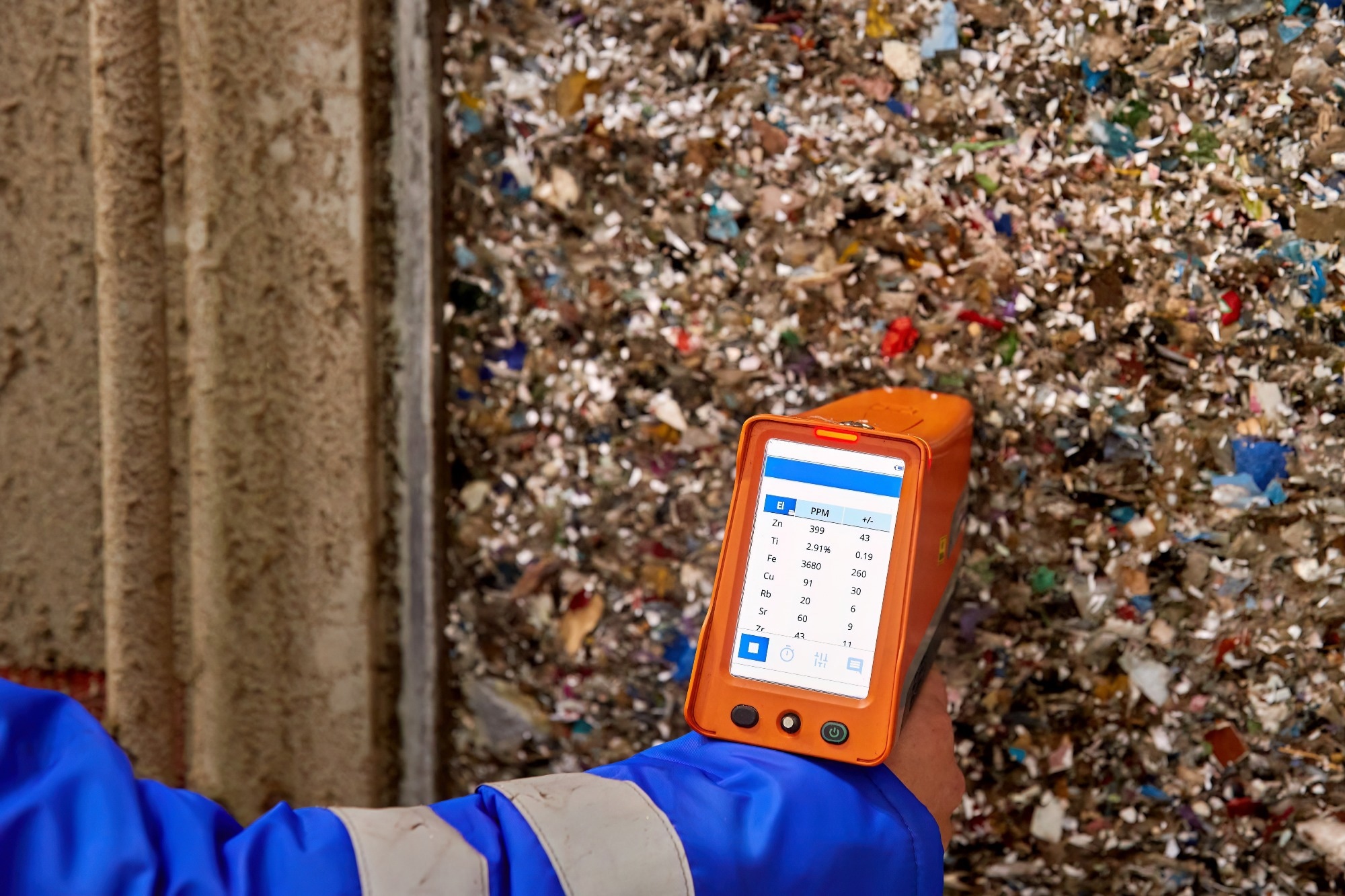
Image Credit: Martin Mecnarowski/Shutterstock.com
Crushing and pulverizing are key stages in XRF analysis. These steps see raw materials converted into the fine powders required for precise, reproducible measurement. Inconsistency in these integral steps will lead to data reflecting preparation errors rather than a sample’s true composition.
An efficient crushing and pulverizing protocol helps ensure that XRF labs can control contamination, minimize errors, maintain throughput, and deliver reliable results for each individual analysis.
The Importance of Crushing and Pulverizing Matter in XRF Analysis
XRF analysis uses X-rays to determine a material’s elemental composition. This analytical technique relies on the interaction between X-rays and a sample’s surface, making it extremely sensitive to particle homogeneity, size, and surface condition.
There is a risk that large or uneven fragments do not represent the material’s bulk composition; inhomogeneous powders can adversely affect repeatability and make XRF analysis results less reliable.
XRF labs must also address contamination during crushing and pulverizing. Residues left in crushers or mills may introduce unwanted elements into the next sample, while wear resulting from grinding media could also contribute to unwanted signals.
There is also a risk of over-grinding at the pulverizing stage, changing oxidation states, generating heat, or producing ultrafine dust, which can complicate fusion or pressing.
It is possible to minimize all of these risks via efficient crushing and pulverizing protocols. Carefully designed and consistently applied crushing and pulverizing procedures produce powders that truly reflect the sample, with no contamination and a uniform texture.
These samples help ensure that XRF analysis achieves the consistency necessary for accurate, reproducible data.
Implementing a Crushing Protocol for XRF Labs
Coarse size reduction is the first stage of XRF sample preparation. This stage sees crushing used to transform bulk material into 2 mm to 12 mm fragments suitable for precise pulverization.
XRF labs can implement a robust crushing protocol via:
- The implementation of standardized crusher settings, including feed rate, gap width, and number of passes. This helps to ensure reproducibility.
- The use of limited dwell time in the crusher to prevent mechanical alteration or heat generation.
- Thorough crusher cleaning after each sample. This can be done with brushes, compressed air, or a dummy flush to remove residues.
- The implementation of a Standard Operating Procedure (SOP) that records all parameters, ensuring that sample preparation methods remain consistent across operators.
- Close monitoring of crusher parts’ wear, including jaws and liners. These parts should be rotated or replaced before they pose a contamination risk.
Implementing these measures will ensure that each sample passing through the crushing stage and into the pulverizer is prepared under controlled, repeatable conditions.
Implementing a Pulverizing Protocol for XRF Labs
The sample must be pulverized after crushing to produce the fine, homogeneous powder required for accurate XRF analysis.
The majority of protocols aim to ensure particle sizes are below 75 µm, but it is often advisable to use finer particle-size targets when analyzing light elements such as magnesium, sodium, or aluminium.
XRF labs can implement an excellent crushing protocol via:
- The use of a high-performance pulverizing mill for the application. For example, vibratory disc mills offer rapid, uniform grinding, while planetary or ring-and-bowl mills are typically used for harder or specialist materials.
- The careful control of operating parameters like grinding time, jar load, rotational speed, and cycle design. This is important because reproducibility relies on consistently maintaining these values.
- The use of segmented cycles with auto-reverse during pulverizing reduces heating and improves uniformity.
- The implementation of jar and media materials suitable for the analytes of interest. For example, tungsten carbide should be avoided if tungsten or cobalt is being measured; alternatives like zirconia, agate, or hardened steel should be used instead.
- Verifying pulverizing results via sieving or replicating measurements to confirm that powders consistently meet fineness requirements.
These steps combine to form an efficient pulverizing protocol. This protocol can generate powders that reduce particle size effects and improve precision in XRF analysis, thanks to the inclusion of carefully set and validated parameters.
Contamination Control in XRF Sample Preparation
It is important that efficient crushing and pulverizing protocols also include measures to prevent contamination. This is necessary because XRF results can be distorted by even trace carryover from crushers, pulverizing mills, or grinding media.
Several steps should be implemented to maintain contamination-free conditions, including:
- Using methods like brushing, compressed air, or ultrasonic baths to clean crushing and pulverizing equipment thoroughly between sample runs.
- Applying flush samples or blanks to verify that no residues are present in crushers or pulverizing mills before preparing the following sample.
- Tracking the wear of media and grinding jars, replacing these before they can contribute significant background signals.
- Using dust extraction, sealed containers, and clean handling tools to protect samples from environmental contamination.
XRF labs can implement these protocols to minimize preparation artifacts and feel confident that the collected data reflects a sample’s true composition.
Improve XRF Analysis Results with Effective Protocols
Careful sample preparation is key to maintaining the accuracy of XRF analysis. It is, therefore, imperative that XRF labs establish efficient crushing and pulverizing protocols to produce precise, homogenous, and contamination-free powders suitable for analysis.
XRF Scientific can help XRF labs to implement these key protocols and ensure consistent, high-quality XRF analysis via its range of crushers, pulverizers, and sample preparation equipment.
Acknowledgments
Produced from materials originally authored by XRF Scientific.

This information has been sourced, reviewed, and adapted from materials provided by XRF Scientific.
For more information on this source, please visit XRF Scientific.