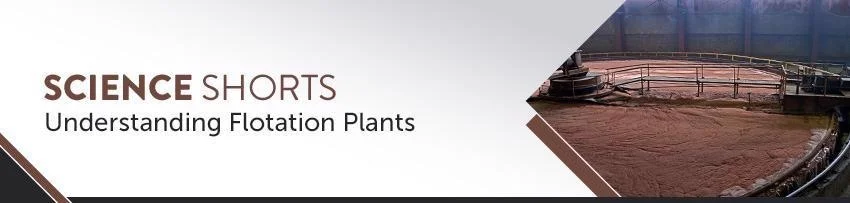
The CIM Convention in Vancouver, British Columbia, is one of Canada’s leading mining trade shows. Each event attracts more than 5500 attendees, with hundreds of companies showcasing a wide range of mining technologies, tools, services, products, and equipment.
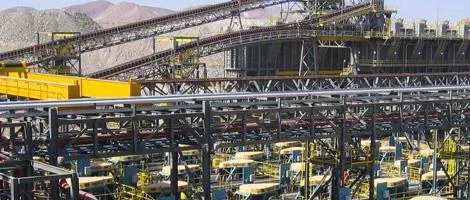
Image Credit: Thermo Fisher Scientific – Analytical Instruments & Solutions
The convention focuses on addressing industry challenges, sharing best practices, and presenting new insights in mining. Many attendees are also drawn to the event’s workshops, activities, and educational presentations.
At a recent CIM event, a Thermo Fisher Scientific representative presented “Application of Continuous Elemental Analysis and Sampling Zones for Flotation Plants.”
With declining head grades and increasing pressure to optimize operating costs and metallurgical performance, more attention is being given to high-quality online elemental analyzers and representative slurry samplers, particularly in flotation operations.
The presentation explored how flotation plants can use carefully selected slurry sampling zones combined with online analysis to support reliable metal accounting and flotation control. This approach helps ensure the expected return on investment from these systems.
These solutions can be scaled from smaller installations to handle the large flows found in modern, large-scale concentrators. Regardless of scale, they maintain reliability and accuracy while reducing maintenance requirements and minimizing head loss in the primary process flow.
In recent years, dedicated continuous analysis and sampling stations installed on key process streams have become more common. One reason is their ability to eliminate complex and often unreliable small-bore pumped sample transport systems.
Many flotation plant designs now take advantage of low-head-loss integrated sampling and analysis stations. Some of these systems also use EDXRF immersion probes to maintain strong analytical performance in base metal beneficiation processes.
Implementing dedicated sample analyzers offers several advantages, including the ability to combine metallurgical accounting and process control sampling functions within large base metal concentrators. Eliminating sample transport systems can simplify engineering, reduce costs, and support lower operating costs throughout the life of the mine.
High assay data rates also allow process issues to be identified quickly, while feedback from process control systems can help improve recovery.
Over the past decade, flotation plant designs have advanced to the point where more than 40 samplers and analyzers can operate within a single plant, without requiring a single sample pump.
Acknowledgments
Produced from materials originally authored by Thermo Fisher Scientific.

This information has been sourced, reviewed and adapted from materials provided by Thermo Fisher Scientific – Analytical Instruments & Solutions.
For more information on this source, please visit Thermo Fisher Scientific – Analytical Instruments & Solutions.