What if a single measurement could save your plant millions of dollars annually? For many process industries, this is not just a pipe dream; it is a real possibility.
Recovery boilers are key assets in thermal and chemical processes, contributing to energy efficiency and operational stability. Nonetheless, many facilities continue to rely on periodic lab sampling to check ash or liquor density, leaving considerable gaps in control.
These gaps cost money: efficiency degrades, combustion conditions fluctuate, and operators make decisions based on out-of-date information.
The result? Lost energy, increased chemical prices, and the looming threat of unforeseen outages.
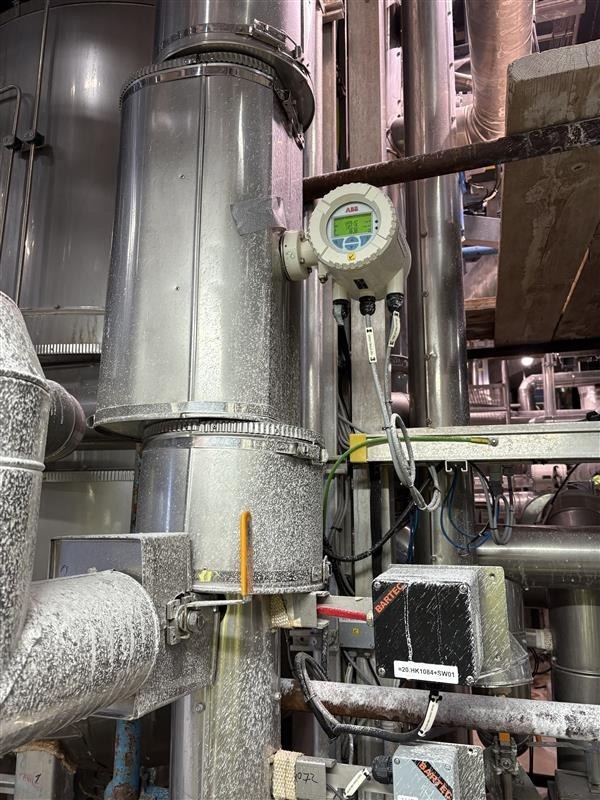
Image Credit: ABB
The Case for Continuous Measurement
Ash density is more than simply a statistic; it is an important characteristic that affects combustion, heat transmission, and chemical recovery. Each percentage point of solids content affects fuel efficiency and steam stability.
Real-time measurement enables operators to continuously optimize rather than react, reducing auxiliary fuel use, increasing power generation, and stabilizing the entire process.
The Economics Behind the Shift
Consider the cost of inefficiency: a 1 % improvement in recovery performance can result in significant savings on chemicals and energy.
When you factor in the hidden cost of downtime, which ranges between $50,000 and $200,000 per day when a recovery boiler fails, the case grows stronger. Online density measurement helps to avoid typical failure spots such as clogged burners, smelt bed disturbances, and tube fouling.
Avoiding just one or two accidental shutdowns each year can save hundreds of thousands of dollars, making it one of the best ROI investments in process instrumentation.
Ash Density After the Centrifuge: The Critical Control Point
In separation processes, post-centrifuge measurements are the most important data points. This is where operators get the most accurate view of performance, and tiny changes can result in significant savings.
At this stage, real-time density readings provide four significant advantages:
- Separation Efficiency Monitoring: Monitor separation efficiency to detect performance drifts and equipment faults before they increase.
- Dregs Handling Optimization: Reduce processing expenses by optimizing dregs handling.
- Chemical Loss Prevention: Optimize washing procedures to reduce chemical loss.
- Environmental Compliance: Ensure correct waste categorization for disposal and regulatory reporting.
Turning Data into Action
The true benefit comes when plants put this data into action. Real-time assessment after the centrifuge enables proactive control, helping optimize separation, reduce chemical losses, and maintain compliance before minor deviations become costly issues.
By linking density readings to precise operational actions, facilities can transition from reactive troubleshooting to predictive, data-driven improvement.
Here is how smart plants translate observations into action:
- If the dregs density is below the target, alter the bowl speed, feed rate, or differential speed.
- If the dregs density after washing exceeds the target, increase the wash water flow or evaluate the washing machine performance.
- If the clean liquor density is too low, optimize it to prevent chemical loss through separation or increased washing.
These preventive measures address inefficiencies before they become costly problems.
Conclusion
Optimizing centrifuge performance and avoiding chemical losses is not just excellent practice; it is also good economics.
At this point, real-time ash density measurement transforms routine monitoring into measurable results: reduced auxiliary fuel use from more consistent combustion, fewer makeup chemicals from tighter recovery, and less unplanned downtime due to early detection of separation drifts.
Plants experience smoother steam and power generation, cleaner operations with fewer disruptions, and easier compliance due to accurate waste categorization and reporting.
With payback in months rather than years, this is one of the most cost-effective instrumentation expenditures a plant can make to improve reliability, reduce operating costs, stabilize quality, and maintain profits.
In short: more control, fewer surprises, and a faster, clearer path to ROI.

This information has been sourced, reviewed, and adapted from materials provided by ABB Measurement & Analytics.
For more information on this source, please visit ABB Measurement & Analytics.