Analyzer systems are essential to petroleum production. Analyzers that monitor processes or provide feedback for environmental protection must have accurate flow/pressure control to ensure measured results are meaningful and reliable.
Designers of analysis systems operating in explosive zones must address safety, dependability, and analysis accuracy. Intrinsically safe instruments that integrate metering with flow and pressure control can improve analyzer data dependability, eliminate failure spots, and increase analyzer design flexibility.
Considerations for Analyzers in Explosive Environments
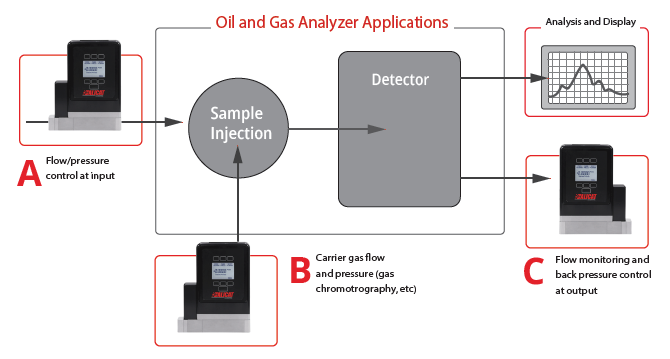
Figure 1. Image Credit: Alicat Scientific, Inc.
While analyzer systems vary by design, Figure 1 shows the usual positions within analyzers where flow and pressure control can be applied. Analyzer systems rely on the well-controlled flow and pressure of the sample gases or liquids passing through them to produce accurate results.
Flow metering and control have typically been performed by separate, independent components on analyzers used in explosive settings. A rotameter in an armored housing can be used for metering, with control via manual or binary pneumatic valves.
There are some important downsides to this system. A rotameter's mechanical sensor tends to drift over time, leading to inaccuracies that skew data or require human adjustment within hazardous zones.
A system like this can often output only a single process variable, such as volumetric flow or pressure, providing only the most basic information about the system and its environment.
This level of process, with its manual adjustments for drift and lack of feedback on conditions, can be improved. A digital device that functions as a valve, actuator, flowmeter, pressure device, and temperature sensor all in one delivers greater insight while requiring less user engagement.
Improving Metering for Explosive Zones
Electronic metering can significantly enhance flow and pressure measurement accuracy, both upstream and downstream of the analyzer (positions A and C in Figure 1). Most meters, however, are not designed or certified for use in hazardous environments.
The lack of options can limit system designers, as powering a valve or altering its setpoint adds complexity. Obtaining crucial flow data beyond volume, such as relative pressures, temperatures, humidity, and so on, needs additional sensors, components, and power supply.
Intrinsically safe meters, such as Alicat's IS-Pro pressure meters and IS-Max mass flow meters, were designed expressly for use in locations where there is a constant risk of explosive gas levels.
Unlike a rotameter's mechanical ball float, electronic sensors account for variations in temperature, pressure, and humidity over time. This ensures precise, reproducible readings and results.
An IS-Pro device can measure absolute, gauge, barometer, or differential pressure, whilst the IS-Max can measure mass flow, volumetric flow, temperature, barometric, gauge, and absolute pressure. With all parameters enabled, the devices can report dew point and relative humidity.
These extra variables, when captured simultaneously, provide a more complete picture of the process and environment, which can be used to confirm analyzer data and diagnose system faults.
A monitoring station located outside the hazard zone can log the data using a variety of digital protocols or an analog output.
Consolidating Control and Metering
When designing analyzers for explosive situations, system engineers minimize equipment within the hazard zone to decrease risk and cost. Any reduction in components, connections, cable harnesses, or electrical barriers reduces the number of possible failure sites and lowers overall system costs.
Alicat IS-Max controllers are the first instruments designed for use in Class 1 Division 1 (Zone 0 or Zone 1) environments that combine flow metering and control in a single intrinsically safe component.
By combining the metering and control tasks into a single device, these instruments reduce component count, system complexity, physical space requirements, and overall system costs.
IS-Max includes a built-in PID control loop, which eliminates the need to create one from scratch. Its autotune capability helps keep your operation under control even as operating conditions vary.
In addition to the metering benefits mentioned above, IS instruments provide a variety of design options for new analyzer systems and retrofits. An IS-Max equipment at the system input can meter flow and supply the analyzer with exact sample batches.
At the outlet, an IS-Max instrument may measure mass flow while controlling backpressure and recording humidity, barometric pressure, and other parameters.
In a gas chromatography system, an IS instrument may adjust the carrier gas flow (position B in Figure 1) with an accuracy of ±0.5 % of the reading or ±0.1 % of full scale (whichever is greater) to improve analyzer accuracy.
An automated meter/controller can be monitored and controlled remotely via the MODBUS RTU digital protocol, Alicat ASCII serial commands, a keypad display, or analog signals. The capacity to remotely monitor and maintain flow eliminates the need for humans to come into direct contact with equipment in the hazard zone.
Conclusion
As production prices rise and environmental restrictions tighten, the requirement to validate analysis results and regulate emissions increases.
Alicat IS instruments enable intrinsically safe flow metering and simultaneous pressure/flow control, enhancing the breadth, depth, and precision of analyzer data while also boosting the analyzer system's safety and reliability.
IS Intrinsically Safe Instruments
In the oil and gas industry, GC sample collection and analysis may involve explosive samples and carrier gases, and may take place in hazardous environments.
Alicat Intrinsically Safe (IS) instruments offer rapid, precise, and repeatable flow and pressure metering and control for use in Class 1 Division 1 (Zone 0 or Zone 1) settings. Its IS rating allows you to save on both weight and cost compared to an Ex Proof enclosure.
Because they generate laminar flow internally, they do not necessitate straight runs before or after, conserving space. The IS-Max flow and IS-Pro pressure instruments enable remote monitoring and control via analog or digital I/O without entering a hazardous area.
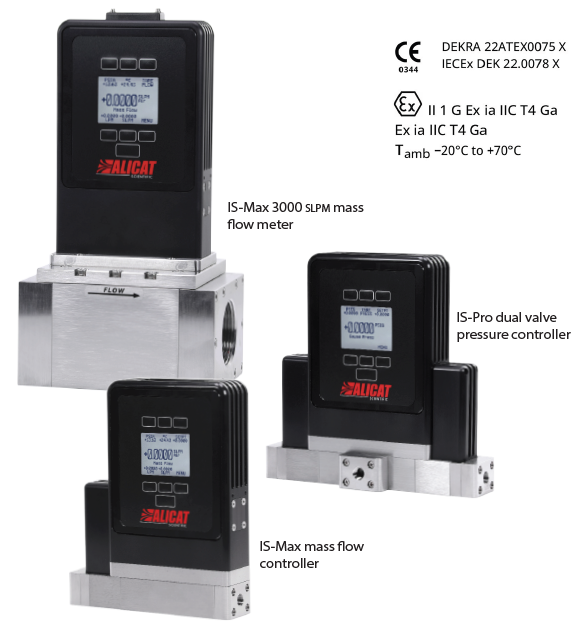
Image Credit: Alicat Scientific, Inc.

This information has been sourced, reviewed, and adapted from materials provided by Alicat Scientific.
For more information on this source, please visit Alicat Scientific.