To meet current market demand, battery production is rapidly increasing for use across a range of applications, from portable electronics to electric vehicles. Given that raw materials are limited in both reserves and distribution, significant attention is placed on ensuring battery production is sustainable.
Image Credit: IM Imagery/Shutterstock.com
Lithium and cobalt are among the most important critical raw materials due to their relative scarcity and their strategic utility. They are vital to the energy transition, yet only 5 % of lithium is currently recycled globally.
Extracting just one ton of lithium from the Earth requires 250 tons of minerals or 750 tons of brine, which damages the natural environment. What’s more, the current technologies available for recycling these metals are also costly, both economically and environmentally.
The increased demand for lithium-ion batteries is driven by the rapid expansion of electric mobility, which, in turn, intensifies the challenge of ensuring sustainable access to critical raw materials worldwide. Lithium sits front and center of modern energy storage solutions.
As battery production ramps-up, so does the need to efficiently recover lithium from end-of-life cells. However, responsible, long-term scalability is hindered by conventional recycling processes, which require the use of strong mineral acids and high-temperature pyrometallurgy, placing stress on the environment and posing safety and economic risks.
Against this context, a team of researchers at the University of Brescia, supervised by Professor Elza Bontempi, has developed a groundbreaking and environmentally responsible method for recovering lithium from black mass (BM), the powdered residue captured during the mechanical treatment of spent lithium-ion batteries.
The research team, known as Tech4Lib, was awarded a dedicated ministerial grant named “Caramel”. This research represents a paradigm shift: rather than becoming dependent on harsh chemical treatments to activate and transform the material, the team propose leveraging microwave energy as the core technology, which in turn makes the selective recovery of lithium a much greener approach.
Figure 1. Only 5 % of lithium is recycled globally. Image Credit: Milestone S.r.l.
Microwave Processing At The Core
The use of Milestone’s PYRO Advanced Microwave Muffle Furnace was fundamental to the researchers' work. Thanks to PYRO’s ability to deliver rapid, homogeneous, and precisely controlled heating, the system enabled the team to induce a targeted transformation within the black mass (BM).
The BM’s active agent is naturally occurring graphite, which is triggered when exposed to microwaves. PYRO’s microwave irradiation process activates a carbothermic reduction in the graphite, which transforms the lithium-containing compounds into lithium carbonate (Li2 CO3).
This microwave-enabled shift in phase composition was the decisive moment during the team’s methodology. It demonstrated a more sustainable alternative to aggressive chemical leaching through state-of-the-art microwave heating and precision temperature control, while ensuring high operator safety.
With PYRO, the University of Brescia researchers were able to circumvent the traditional limitations of hydrometallurgy and pyrometallurgy and achieve an exceptionally clean extraction step.
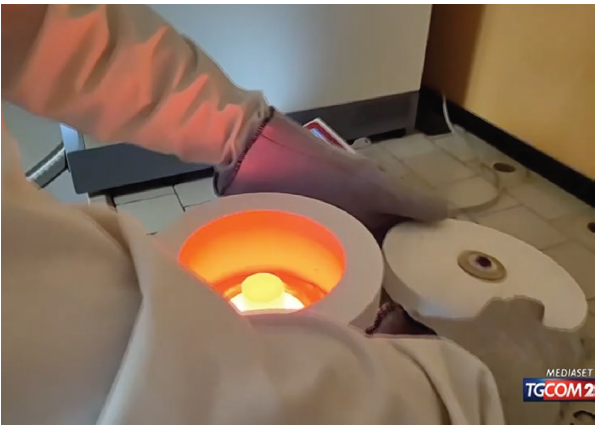
Figure 2. Microwave processing to activate BM. Image Credit: Milestone S.r.l.
Leaching Strategy
A Low-Impact, High-Selectivity Leaching Strategy
After the microwave treatment, the team performed basic aqueous leaching using deionized water under controlled conditions. During this step, the black mass was selectively dissolved, revealing the transition metals (Co, Ni, Mn) and the carbon matrix. The results were remarkable:
- Up to 85 % lithium recovery, considerably higher than untreated BM
- Performance that exceeds the requirement of 80 % efficiency as determined by the EU Battery Regulation for 2031
- Zero use of strong mineral acids
- Low operational risk with minimal waste generation
By substituting aggressive reagents for water, the researchers were able to propose one of the most sustainable lithium recovery routes reported in the academic literature today.
To complete the separation process, a second leaching phase was analyzed using a Deep Eutectic Solvent (DES) composed of betaine and levulinic acid. This biodegradable solvent selectively solubilizes cobalt, nickel, and manganese. Although the DES step showed lower efficiency than lithium extraction, it supports the general concept of moving towards a fully sustainable, multi-metal recovery workflow.
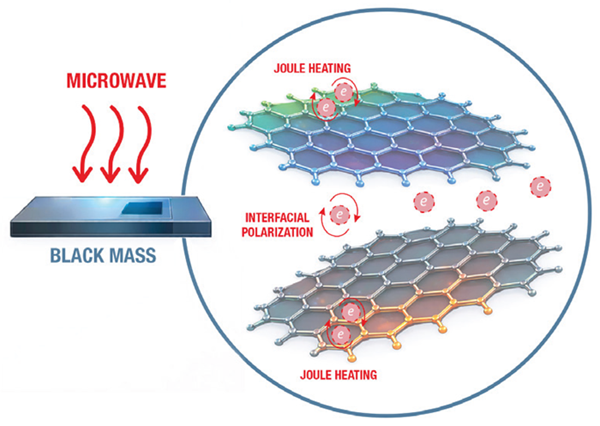
Image Credit: Milestone S.r.l.
Certain materials, such as carbon, are suitable for microwave-heating due to the delocalized pi electrons from sp2-hybridized carbon networks.
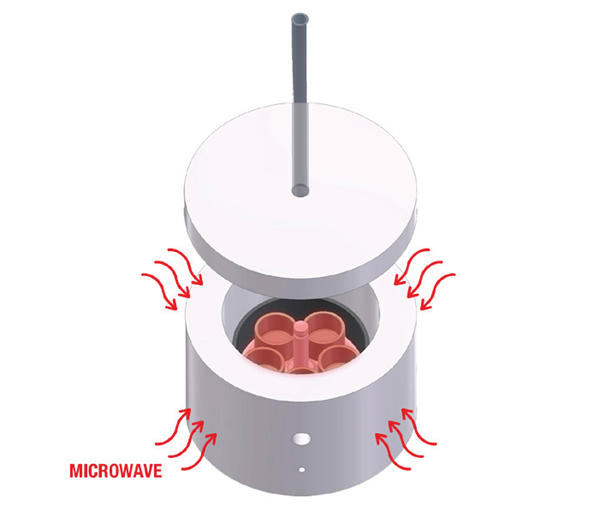
Hybrid MW heating with susceptor. Image Credit: Milestone S.r.l.
Key benefits:
- Saves time and energy
- Easy-to-use and lab-scale
- Enhanced energy transfer
- Selective treatment
- Improved process sustainability
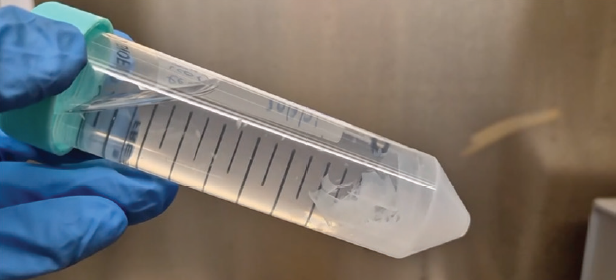
Figure 3. Microwave (MW)-based heating technology. Image Credit: Milestone S.r.l.
Sustainability At The Center
Energy, Chemistry, and Environmental Metrics
The University of Brescia team made a point of using the ESCAPE index to further examine the environmental profile of the process. ESCAPE is a trusted metric for the evaluation of chemical sustainability.
The results underscore the key advantages of using the microwave-enabled route:
- Reduced chemical consumption
- Lower generation of hazardous waste
- Controlled and efficient energy inputs
- Potential for safer, decentralized recycling operations
By integrating microwave technology into the recycling workflow, the team demonstrated the ability to dramatically reduce potential environmental stressors, enabling a more compact, efficient process. This aligns with the University of Brescia’s overall vision of promoting circular economy approaches and sustainable materials management. The university has since taken the steps to patent this technology and this particular application.
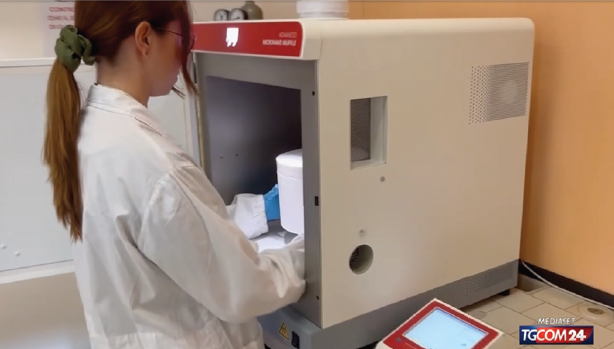
Figure 4. Minimal waste generation and low operational risk. Image Credit: Milestone S.r.l.
A Feasible Industrial Concept
A Scientific Breakthrough with Real-World Relevance
This study goes well beyond laboratory innovation; it presents a practical industrial concept. Through a combination of simple solid–solid microwave activation and water-based leaching and benign solvents, the process is easily scalable and compatible with current industrial circular-economy models.
Equally significant is the proof that microwaves can act as a selective, tunable tool for transforming complex waste matrices into useful products.
Next Steps
The laboratory findings demonstrated such promise that the method is now being prepared for use at the industrial scale. Pilot trials have commenced to validate the process using larger equipment specifically designed for industrial throughput. These trials aim to support the research claims of robust, economically viable, and scalable microwave-enabled lithium recovery.
Conclusion
The University of Brescia’s researchers have made a significant advance toward sustainable lithium recovery from battery waste. The use of PYRO microwave technology was the key to unlocking a simple, selective, and environmentally compatible extraction route. Through a combination of scientific rigor and a clear focus on sustainability, this project underscores the importance of academic research in driving meaningful innovation toward a circular energy economy.
References
Mannu, A., et al. (2026). Selective and sustainable recovery of lithium from black mass via microwave and green leaching techniques. Materials Science and Engineering: B, 323, p.118734. DOI: 10.1016/j.mseb.2025.118734. https://www.sciencedirect.com/science/article/pii/S0921510725007585.

This information has been sourced, reviewed and adapted from materials provided by Milestone S.r.l.
For more information on this source, please visit Milestone S.r.l.