Waste-to-energy (WtE) facilities are crucial components of contemporary waste management strategies, helping reduce reliance on landfills and transforming non-recyclable materials into valuable energy. These installations advance circular economy principles by generating electricity and heat for communal networks from domestic and industrial waste, in addition to recovering metals from ash.
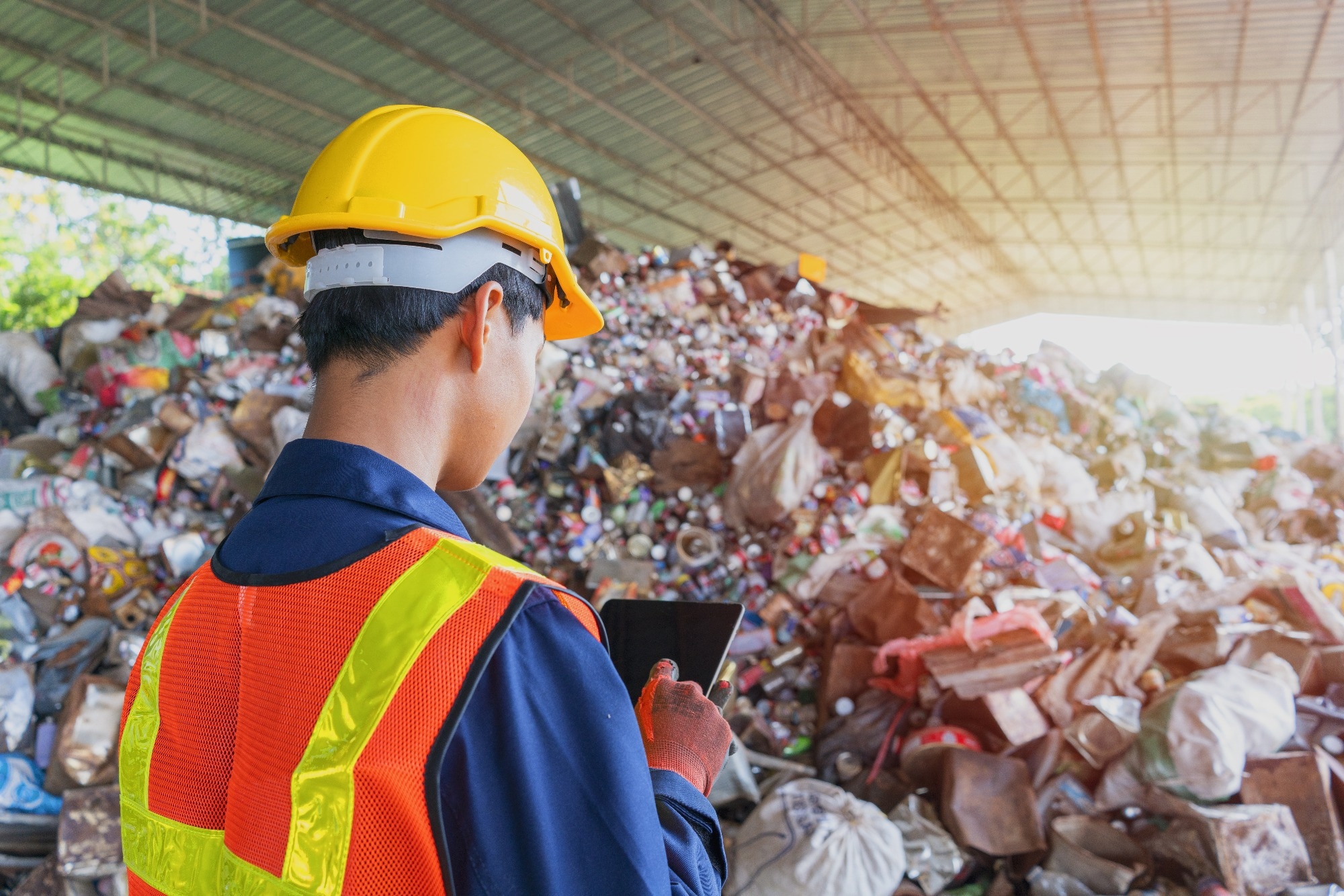
Image Credit: venusvi/Shutterstock.com
In Switzerland, WtE holds particular significance as the nation prohibited the landfilling of combustible municipal waste on January 1, 2000.1
However, the varied composition of waste raises concerns about the potential release of hazardous compounds during thermal processing, especially per- and polyfluoroalkyl substances (PFAS). These highly persistent chemicals, many of which are toxic and bioaccumulative, are used in many consumer products and are frequently present in WtE facilities at the end of their product life.
While incineration in WtE plants is generally expected to completely break down PFAS, the precise degradation mechanisms remain poorly understood. In fact, multiple studies have indicated that PFAS are not entirely destroyed during incineration.
Furthermore, PFAS decomposition can generate products of incomplete combustion (PICs), including volatile fluorinated compounds (VFCs), which are a concern due to their exceptionally long atmospheric lifespans and very high global warming potentials.2–4
Consequently, regulatory bodies are intensifying restrictions and mandating enhanced monitoring of fluorinated emissions from industrial sites. Measuring these compounds in flue gas, however, presents a significant technical hurdle owing to high temperatures, humidity, and the low concentrations of the targeted species.
This article details how a high-resolution mass spectrometer facilitates real-time, sensitive detection of PFAS directly from the flue gas of a Swiss WtE facility, yielding crucial data for emission control, regulatory compliance, and environmental stewardship.
References
- Fedlex. Ordinance on the Avoidance and the Disposal of Waste (Waste Ordinance, ADWO), SR 814.600. Switzerland, 4 Dec. 2015. Fedlex. (online) Available at: https://www.fedlex.admin.ch/eli/cc/2015/891/en.
- Wang, J., et al. (2022). Critical Review of Thermal Decomposition of Per- and Polyfluoroalkyl Substances: Mechanisms and Implications for Thermal Treatment Processes. Environmental Science & Technology, 56(9), pp.5355–5370. DOI: 10.1021/acs.est.2c02251. https://pubs.acs.org/doi/10.1021/acs.est.2c02251.
- Sofie Björklund, Weidemann, E., and Jansson, S. (2023). Emission of Per- and Polyfluoroalkyl Substances from a Waste-to-Energy Plant-Occurrence in Ashes, Treated Process Water, and First Observation in Flue Gas. DOI: 10.1021/acs.est.2c08960. https://pubs.acs.org/doi/10.1021/acs.est.2c08960.
- Shields, E.P., et al. (2023). Pilot-Scale Thermal Destruction of Per- and Polyfluoroalkyl Substances in a Legacy Aqueous Film Forming Foam. DOI: 10.1021/acsestengg.3c00098. https://pubs.acs.org/doi/10.1021/acsestengg.3c00098.
- Jorga, S. and Pospisilova, V. (2024) Revolutionizing PFAS Detection in Air: High Sensitivity and Versatility with the Vocus Aim Reactor, TOFWERK White Paper. (online) Available at: https://www.tofwerk.com/pfas-detection-air-vocus-aim/.
- Mattila, J.M., et al. (2024). Characterizing Volatile Emissions and Combustion Byproducts from Aqueous Film-Forming Foams Using Online Chemical Ionization Mass Spectrometry. Environmental Science & Technology. DOI: 10.1021/acs.est.3c09255. https://pubs.acs.org/doi/10.1021/acs.est.3c09255.
- Henne, S., et al. (2025). Trifluoroacetate (TFA) in Precipitation and Surface Waters in Switzerland: Trends, Source Attribution, and Budget. DOI: 10.5194/egusphere-2025-2861. https://egusphere.copernicus.org/preprints/2025/egusphere-2025-2861/.
- Hofman, J., et al. (2025). Quantifying per- and polyfluoroalkyl substances (PFAS) in air emissions: Lab & field experiences from a hazardous waste incinerator. Environment International, 200, p.109541. DOI: 10.1016/j.envint.2025.109541. https://www.sciencedirect.com/science/article/pii/S0160412025002922?via%3Dihub.
- Cui, J., et al. (2019). The contribution of fluoropolymer thermolysis to trifluoroacetic acid (TFA) in environmental media. Chemosphere, 222, pp.637–644. DOI: 10.1016/j.chemosphere.2019.01.174. https://www.sciencedirect.com/science/article/abs/pii/S0045653519301936.
Acknowledgments
Produced using materials originally authored by Spiro Vorga and Veronika Pospisilova from TOFWERK, in collaboration with Stefan Ringmann from KVA Linth.

This information has been sourced, reviewed, and adapted from materials provided by TOFWERK.
For more information on this source, please visit TOFWERK.