One of the main goals of pharmaceutical regulatory rules is to keep environmental contamination at a minimum. According to the EU GMP Annex 1 regulatory standard for sterile drug products, a Contamination Control Strategy (CCS) is a process for identifying and analyzing risk, reviewing mitigating opportunities and innovations, and defining corrective and preventive action plans.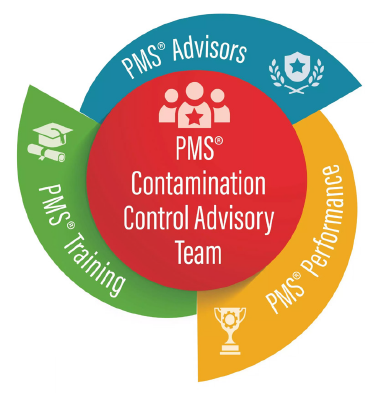
Implementing a CCS aims to address the various sources of contamination and impaired sterility.
The EU GMP Annex 1 regulatory standard defines contamination control strategy as follows:
Contamination Control Strategy (CCS): A planned set of controls for microorganisms, pyrogens and particulates, derived from current product and process understanding that assures process performance and product quality. The controls can include parameters and attributes related to active substance, excipient and drug product materials and components, facility and equipment operating conditions, inprocess controls, finished product specifications, and the associated methods and frequency of monitoring and control.
Annex 1, 2022
A strong Contamination Control Strategy requires the assistance of subject matter experts from Manufacturing, Regulatory, Quality Control, Quality Assurance, and supporting departments.
Particle Measuring Systems (PMS) recently conducted a webinar titled Contamination Control Strategies for Innovation and Regulatory Compliance, which explained how implementing a CCS addresses the various causes of contamination and impaired sterility.
This easy-to-read compendium for quick consultation includes questions from the webinar as well as questions from years of assisting customers with their compliance journey. Experts from Particle Measuring Systems’ Advisory Services Team answered a variety of questions, grouped into the following categories:
- Facility Questions (CCS)
- Specific Applications
- Miscellaneous
- Regulations
Regulation FAQs
Where can you find information on cleanroom guidelines & procedures for particle measurement?
Particle Measuring Systems’ Advisory Services provides excellent resources for learning how to apply standards and laws to specific situations.
The PMS Advisory Services team includes a wide range of subject matter specialists who can help with comprehension of cleanroom rules, particularly pharmaceutical and medical device standards and practices.
The procedures are based on ISO standards, particularly ISO 14644, the FDA’s Guidance for Industry: Sterile Drug Products Produced via Aseptic Processing, Annex 1, and peer-reviewed sources.
What are the guidelines for non-sterile manufacturing areas?
While there are no specific standards for non-sterile production, the general regulatory criteria for current Good Manufacturing Practices (cGMP) are applicable. GMP laws provide standards for product safety and quality.
Specific restrictions and guidelines may vary by industry and facility location. The FDA typically regulates non-sterile production sites in industries such as pharmaceuticals, biotechnology, and food.
Is a Contamination Control Strategy (CCS) required for compounding facilities under USP 797 and USP 795?
Yes, both USP Chapter 797 (Pharmaceutical Compounding - Sterile Preparations) and USP Chapter 795 (Pharmaceutical Compounding - Nonsterile Preparations) outline rules for compounding facilities and emphasize the importance of contamination control techniques.
What are the best practices for contamination control of viable and nonviable particles? What equipment is recommended for monitoring?
To learn more, consider reviewing regulatory agencies’ best-practice recommendations, such as Annex 1, FDA, EMA, and ISO, particularly ISO 14644. In addition to webinars and white papers, PMS Advisory Services provides remote and on-site training (group and one-on-one).
A risk assessment should be used to determine the specific environmental monitoring required. It is necessary to have a verified approach for both viable and non-viable monitoring. Explore the Industries section of the Particle Measuring Systems website or contact the PMS Advisory Team.
Is the CCS included in ISO 13408-1 the same as the one in Annex 1?
There are common principles for contamination control techniques, but the specifics, terminology, and recommendations for CCS differ between the current and previous iterations of ISO 13408-1 and Annex 1.
To ensure and maintain compliance, manufacturers should research the applicable regulatory standards for their region and the recipient markets. When relevant, it will be important to develop and implement a contamination control strategy that incorporates the specific criteria specified in both papers.
Can you explain more about CEN TC 216 for Europe and its work on sporocides?
PMS Advisory Services is currently assessing revisions to CEN/TC 216’s standards, notably those pertaining to sporicides.
It would most likely include discussions of efficacy testing, labeling and claims, toxicity, and quality control. While the standards help to harmonize practices across Europe, adherence to the regulatory bodies stated in the webinar should be used to remain compliant.
Specific Application FAQs
What is the difference in conversion for microbial slit and pore types of active air samplers?
The difference in conversion cannot be quantified to a specific quantity or rate. The conversion factor for microbial slits is determined by variables such as air velocity through the slit and sampler calibration.
The conversion factor for microbial pore samplers accounts for variables such as air flow rate and membrane properties. Both are commonly reported as CFU/ m3.
Is it mandatory to have an online particle counter in a vial sterilization tunnel? If so, what guideline should be referenced? Also, can you suggest an instrument or an online particle sensor for a sterilizing tunnel (able to withstand high temperatures)?
The use of an online particle counter in a vial sterilization tunnel is not always required. It depends on the specific procedure, industry norms, regulatory regulations, and whether the tunnel is in operation.
A facility can determine the required monitoring to be compliant by referring to the standards established by recognized agencies such as the FDA, ISO, and Annex 1, as well as conducting a risk assessment and reviewing quality systems.
That risk assessment would be the greatest tool for determining which device is most suited for a sterilizing tunnel and whether monitoring should be performed before and after tunnel entry and departure.
What is the best method for continuously monitoring viable and non-viable particles for powder injection?
Although active air sampling is often preferred for viable particulate monitoring, settle plates can also be employed. Depending on the procedure, fixed particle counters (real-time probes or lasers) can be used for non-viable continuous monitoring.
Ultimately, to determine the most appropriate monitoring measures (depending on the amount of risk associated with viable and non-viable particle contamination), conduct a risk assessment for the powder injection process to identify crucial points.
Is active sampling a requirement in biological safety cabinets (BSC)?
Active sampling is not required in BSC or Grade A regions during operation. Settling plates can be used in conjunction with non-viable samplers. However, to get a complete picture of what is necessary for your specific process, conduct a risk or gap assessment to ensure your CCS is current and compliant.
Flow rates for continuous non-viable particulate monitoring vary depending on the equipment, monitoring system, room certification, and trend history. The rates for continuous monitoring are varied. M. Hallworth’s white paper ‘Cleanroom Classification for Pharmaceutical Applications’ can serve as a guide.
Facility Questions (CCS)
What approach do you recommend for a new facility? When and how should CCS be started in such a case?
A comprehensive approach is vital. As discussed in the webinar, there is no typical place to start because each step builds on the previous one. You can start by performing a detailed risk assessment to identify potential contamination sources and evaluate their influence on product quality.
The facility should be planned with contamination control in mind, including cleanroom classifications, strategic HVAC systems, and material and human flows. Effective worker training, cleaning and disinfection processes, and environmental monitoring programs should also be implemented.
Validation and qualification activities for equipment and procedures are critical. It is also important to keep documentation and records.
If a company has three facilities at one site, do they only perform one CCS for all three facilities if all the facilities are under one quality system?
It is advised that each facility has its own independent CCS because no two facilities are identical. Each facility has distinct characteristics, operations, and environmental variables that can dramatically influence contamination hazards.
Individually examining these facilities allows us to customize contamination control methods to their specific demands, providing an effective strategy that takes into account the inherent variances in structure, equipment, and operational procedures.
Does a risk assessment or CCS impact the existing viable monitoring program?
Yes, a risk assessment could have a major impact on an already viable monitoring program. It may result in the discovery or elimination of monitoring points, a change in monitoring frequency, and/ or a change in action and alert levels.
Miscellaneous FAQs
Are centralized or in-built samplers best in Grade-A?
The choice between implementing in-built (integrated) or centralized air samplers is determined by a number of parameters, including the nature of the manufacturing process, installation access points, monitoring kinds (real-time or comprehensive), and the routine maintenance of the sampler.
When making this selection, keep in mind immediate feedback, nimble placement, and the complexity of installing and maintaining an in-built sampler. Furthermore, centralized samplers typically contain a thorough map of the area, and accessible locations are distributed over larger areas.
With complicated systems and sample networks, you may encounter lag times and difficulties. In addition, it may not be either/ or. Some institutions may combine the two types of samplers to meet their specific demands. As always, doing a risk assessment would help with making an informed conclusion.
How could the problem of getting high counts on the plates be solved? (In Reference to Company C in the Webinar Case Studies)
To handle a high bacteria count on plates, a systematic method is required. To address this, users should begin by identifying the microorganisms present, the likely source, and the historical trend of microbial contamination.
Following this, users should check for adequate sample processes, maintain equipment calibration, and evaluate ambient factors such as temperature and ventilation. Cleaning and disinfection techniques should be assessed to determine their effectiveness, as should the protocols for adequate personnel gowning and hygiene.
Raw materials and equipment should be examined for possible contamination sources: quick corrective action can then be taken based on the results (which should also be documented), and trend analyses conducted using previous data.
A final risk assessment can then be conducted, and, if necessary, professionals such as PMS - Advisory Services can provide guidance.
Under what circumstances can an alarm be ignored?
There are a few cases in which an alarm can be ignored. Ignoring a particle alarm should be done with caution and only in specified circumstances.
Potentially bothersome alarm events include recent recalibration, system servicing, cleaning, or prolonged open doors. It is crucial to remember that when alarms are momentarily disregarded or explored, proper recording, reporting, and corrective steps must be followed.
Acknowledgments
Produced using materials originally authored by Ugo Omeronye from Particle Measuring Systems.

This information has been sourced, reviewed, and adapted from materials provided by Particle Measuring Systems.
For more information on this source, please visit Particle Measuring Systems.