Understanding airflow and how patterns of air influence environmental conditions is crucial where there is a desire and need to control the immediate environment to ensure standards and appropriate regulations are met. Scientific rigor and study are the foundation of pharmaceutical GMP regulatory compliance; airflow visualization studies (also known as smoke studies) are considered the best method for observing air patterns.
When using unidirectional airflow (UDAF) to reduce the risk of contamination, a company must back up its capabilities by providing evidence supported by scientific studies. Considered a critical feature of the quality by design (QbD) of a filling line for many years, airflow visualization studies are important reviews that enable a company to demonstrate its contamination control strategy, as these studies serve as pivotal reference points in the revised Annex from 2022.
Due to their broad range of application, airflow visualization studies have played a key role in the revisions of Annex 1 (2022) as they affect several areas such as:
- Cleanroom and clean air equipment qualification
- Environmental monitoring program
- Training and qualification of personnel
- Contamination Control Strategy (CCS)
Cleanroom and Clean Air Equipment Qualification
It is outlined in Section 4.25 of Annex 1 that airflow visualization is among the major qualification requirements stated in Annex 15.
4.25 Cleanroom and clean air equipment qualification is the overall process of assessing the level of compliance of a classified cleanroom or clean air equipment with its intended use. As part of the qualification requirements of Annex 15, the qualification of cleanrooms and clean air equipment should include (where relevant to the design/operation of the installation): i. Installed filter system leakage and integrity testing. ii. Airflow tests - volume and velocity. iii. Air pressure difference test. iv. Airflow direction test and visualization. v. Microbial airborne and surface contamination. vi. Temperature measurement test. vii. Relative humidity test.
Annex 1, 2022
The recommendation is that studies should be performed both in operation and at rest. Due to the varying results between these studies, they should be applied in different ways:
- The aim of the studies conducted at rest is to prove the presence of unidirectional airflow in the Grade A/ISO 5 areas and that the air consistently flows to the areas with a lower level of cleanliness. They are key for validating how airflow properly invests critical surfaces without risky backflows (traveling on less clean surfaces and going back). They are also useful for monitoring the absence of ingress from lower-grade to higher-grade areas. Therefore, these studies produce results to evaluate important design considerations of the cleanroom or filling line.
- Studies in operation are geared toward ensuring that any equipment or personnel running and/or present during operations do not disrupt the ISO 5/Grade A unidirectional airflow as directed; this is especially important in critical areas where critical surfaces, critical materials, and/or product are exposed. These studies are useful for assessing the impact of process operations.
The role airflow visualization plays in these studies is detailed further in the Annex 1 2022 revision, Section 4.15:
4.15 Airflow patterns within cleanrooms and zones should be visualized to demonstrate that there is no ingress from lower grade to higher grade areas and that air does not travel from less clean areas (such as the floor) or over operators or equipment that may transfer contamination to the higher-grade areas. Where unidirectional airflow is required, visualization studies should be performed to determine compliance, (see paragraphs 4.4 & 4.19). When filled, closed products are transferred to an adjacent cleanroom of a lower grade via a small egress point, airflow visualization studies should demonstrate that air does not ingress from the lower grade cleanrooms to the grade B area. Where air movement is shown to be a contamination risk to the clean area or critical zone, corrective actions, such as design improvement, should be implemented. Airflow pattern studies should be performed both at rest and in operation (e.g. simulating operator interventions).
Annex 1, 2022
For timely interventions to modify the design of the cleanroom or clean air equipment, airflow patterns can be predicted using Computational Fluid Dynamic (CFD) studies. The aim of CFD studies is to gain comprehensive results with respect to times and space data in the flow, and thus precise information about the flow fields.
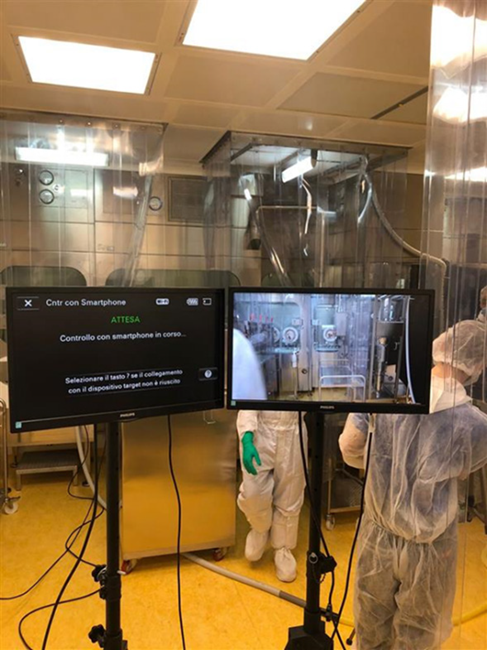
Figure 1. Smoke study recording. Image Credit: Particle Measuring Systems
These tests make it easy to determine the air speed and pressure distribution in the work area and confirm flows during the QbD phase. This enables modification of the design of the filling lines . While CFD studies provide crucial information early on in the design process, pharmaceutical companies typically use smoke studies tests to conduct airflow visualization studies.
Smoke studies are performed during the initial qualification of the cleanroom/ filling line, and must be repeated if there are variations in validated/qualified conditions that could have an influence on the airflow (such as changes in process, operations/interventions, equipment design, or if relevant regulations change). A risk-based approach also enables implementation of a routine retesting timetable.
There are certain requirements that must be met when conducting smoke studies. Any smoke feeders that have been installed must be able to provide clear visualizations of how the air flows. Consequently, smoke feeders must be positioned perpendicular to the UDAF as a non-negotiable. Using a combination of flexible hoses with extensions enables coverage across larger areas when directly starting the smoke release from the point where the air flows out of the filter.
It is crucial to know that any smoke produced should be enough to clearly visualize air turbulence while displaying the direction of the air. Yet, it is also important, and common sense, to not impair visibility in any given area by producing too much smoke.
All activities performed throughout the study must be appropriately documented and video recordings should display all of the activity which must be readily available in addition to the protocol and the study execution report as outlined in Section 4.15:
4.15 Video recordings of the airflow patterns should be retained.
Annex 1, 2022
Recordings should be conducted with an HD camera and, if necessary, with multiple cameras from different perspectives. The videos should clearly show the activities conducted by the operators as well as the impact of these activities on airflow; the positioning of the camera(s) should be at the right angle to capture the activities being conducted. To successfully record smoke studies, it is often necessary to use black backgrounds to create the appropriate contrast and additional light sources. If there are areas divided by curtains or barrier systems (Isolator or RABS doors), it may be necessary to film from inside those areas as well as from outside. Note that a good cameraman is not enough; the video director(s) must have strong knowledge of the process and expertise in sterility assurance. The presence of an experienced team during the execution of the recording can lead to great time (and cost) savings, preventing the videos from having to be repeated in the future. One of the most common mistakes is to film only part of the activities related to the process. Filming should take as long as necessary to fully record the simulated activities including set-up, monitoring, material transfer, and personnel flows. Airflow visualization is part of the justification needed in a CCS as outlined in Section 9.22 below.
9.22 Where aseptic operations are performed, microbial monitoring should be frequent using a combination of methods such as settle plates, volumetric air sampling, glove, gown and surface sampling (e.g. swabs and contact plates). The method of sampling used should be justified within the CCS and should be demonstrated not to have a detrimental impact on grade A and B airflow patterns.
Annex 1, 2022
When validating VHP cycles within confined spaces, such as isolators, the output of an airflow visualization study becomes crucial. In fact, when verifying the positions of the chemical indicators (CIs) and biological indicators (BIs) to confirm the bio-decontamination cycle, one of the core elements that must be considered is airflow.
Carefully visualizing airflow correctly enables the identification of which areas might be considered most critical. Combined with the analysis of the process, these two phases can determine the criticality of the area and the impact of any turbulent motions or the presence of hard-to-reach areas for the bio-decontaminating agent. Also, regarding validations, it should be noted that there is a string correlation between air visualization studies and aseptic process simulation (APS).
The results of air visualization studies is one factor to be accounted for in the risk assessment of the various interventions to be simulated. As stated previously, the activities related to the study should be detailed according to a protocol, while accurately recording all relevant responsibilities scheduled for execution and review. All required materials, equipment, and acceptance criteria must also be reported and documented.
The documentation must include a master list of the operations to be simulated, as well as logging which processes and areas have been directly impacted by the study. Study results must be documented in a report that discusses the outcome. If there is a failure to meet or adhere to acceptance criteria, an investigation must be launched to identify the root cause and formulate a corrective action preventative action (CAPA) plan. Low-impact CAPAs mean making revisions to operating procedures or the addition of tools during aseptic manipulations. In more critical cases, it may be necessary to make changes to the cleanroom or filling line design.
Environmental Monitoring Program
It is specified in the new Annex 1 revision that monitoring systems must be verified and mitigations should be made to ensure any related activities do not negatively impact air flows when conducting air visualization studies. This effectively means performing all studies with the systems already installed and ensuring all monitoring activities are simulated and recorded. The results of air visualization studies should be evaluated when determining monitoring positions:
4.15 … The outcome of the air visualization studies should be documented and considered when establishing the facility's environmental monitoring programme.
Annex 1, 2022
The results of air visualization studies must be carefully analyzed before identifying monitoring locations, while simultaneously assessing the impact that any systems present may have on air flows.
Should studies be repeated before and after the installation of monitoring systems? The practical and most obvious answer is yes, but it can be a difficult choice to implement. One possible solution, as described in the previous section, is CFDs; they can be a very powerful tool for predicting air flows and performing an early analysis before physically installing the systems.
Airflow visualization studies are extremely important, and when implementing a monitoring plan there are a number of considerations to be made regarding the outcomes as such. When air turbulence occurs, it can lead to the transference of contaminants in the area; even the minimal presence of contaminants during the process can lead to them being transported to critical areas. Moreover, a comprehensive analysis of air visualization studies (particularly in operation) can spotlight high risk scenarios such as a possible entry of air from dirtier to cleaner areas or situations where the same air flows over the operator's clothing and personnel protective equipment (PPE) then subsequentially over other sterile surfaces. Appropriate action must be taken when these outcomes are observed during a study of the airflow.
Where it is not possible to take action or modify the design of the cleanroom (or clean air equipment), or where operational procedures are fixed, adopting a monitoring protocol can be one of the appropriate risk mitigation tools. Therefore, in risk assessments for the formulation of the monitoring plan, air visualization studies become an important parameter. Consider an example where operators are actively positioned withing or around critical areas: air visualization studies can assist in determining which parts of the PPE, or sterile gown should be checked following each intervention.
Training and Qualification of Personnel
As previously outlined, one of the major advantages that air visualization studies provide is making visible how production activities influence airflow. The visualization of this influence, and of one’s behavior, is what legitimizes training of any kind. Within the field of sterility assurance, it can be challenging to increase the awareness of all operators involved in the processes, especially if they have limited levels of knowledge on the subject. Consequently, the revised Annex 1 takes into account the review of the air visualization studies as part of personnel training and qualification as shown in Section 7.18 below:
7.18 Activities in clean areas that are not critical to the production processes should be kept to a minimum, especially when aseptic operations are in progress. Movement of personnel should be slow, controlled and methodical to avoid excessive shedding of particles and organisms due to over-vigorous activity. Operators performing aseptic operations should adhere to aseptic technique at all times to prevent changes in air currents that may introduce air of lower quality into the critical zone. Movement adjacent to the critical zone should be restricted and the obstruction of the path of the unidirectional (first air) airflow should be avoided. A review of airflow visualization studies should be considered as part of the training programme.
Annex 1, 2022
Virtual reality (VR) is a powerful tool that can be used effectively for simulating risky operations. VR allows operators to visualize how the different production activities impact airflow without any real-world negative consequences on the process. This could also mean considerable savings are made in both in time and resources. Yet, the most commonly used training tool remains the review of smoke studies performed both in operation and at rest.
Reviewing smoke studies in at-rest conditions and in operation allows operators to recognize the resulting impact on airflow brough on by the various cleanroom activities. The videos that record a successful study, in combination with practical simulations, can be excellent training resources to demonstrate how to correctly execute aseptic techniques.
It is also advisable to simulate some of the most frequently encountered errors during the visualization studies purely for training purposes; for instance, the interruption of the “first air” (i.e., Grade A air exiting the HEPA filters in a unidirectional manner) directed towards critical areas where sterile material and products are exposed, the non-use of tools, or the prolonged opening of the doors of a filling machine.
All operators should be required to review smoke studies in the qualification process in order to enter and perform activities inside the cleanroom.
Contamination Control Strategy (CCS)
As covered in this article, conducting air visualization studies is one of the foundational steps in developing a contamination control strategy (CCS). This is because knowledge of the process is gained through performing the activity, but not only that, the new Annex 1 revision is absolutely clear in stating that the training and qualification of personnel are critical criteria to be assessed during the drafting of the CCS.
When preparing the CCS, any air visualization studies conducted should be recorded and then reviewed (along with other relevant materials) to spotlight any oversight in the process. Ensuring air visualization studies are performed correctly can be a key mitigation tool for some risks, particularly those risks related to activities that require operators handling (e.g., assembly of sterilizing filters or sterile machine components) and exposure to critical areas. It is considered good practice, therefore, to formulate internal guidelines for the correct execution of these studies and to repeat them as necessary at the end of the drafting of the CCS.
How Can PMS Help You With The Execution of Air Visualization Studies?
The PMS Advisory Team are global experts in sterility assurance, which means they are able to support companies in all phases of smoke studies worldwide. Remote support is available through training, documentation drafting for the study execution, and review of records.
As an alternative, onsite support is also available; a PMS advisor can be an active participant in study execution across all phases, offering a sterility assurance expert point of view during simulations and guiding the operators through the execution of appropriate aseptic techniques.
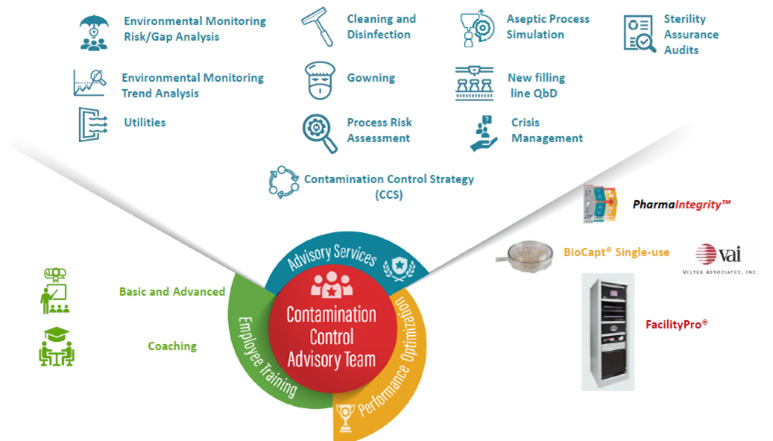
Image Credit: Particle Measuring Systems
What is the Advantage of Calling a PMS Advisor?
Smoke studies are usually considered time-intensive activities that demand a significant amount of resources from pharmaceutical companies; from the number of personnel involved to the prolonged shutdown of cleanrooms. The design and execution of these studies also demand specific sterility assurance skills that may not be available inhouse. The process can be made easier, faster, and less expensive with the help of a PMS advisor. The PMS team's field experience can help keep the company compliant with the appropriate authorities meaning they would not fall foul of standards and have to repeat studies, or worse.
Conclusion
Air visualization studies are a fundamental component of the revisions made in the new Annex 1 that reconcile with the scrutiny and comments coming from regulatory agencies in recent time. To be compliant with the regulatory requirements within the timeframe outlined in Annex 1, it is crucial to ensure all instructions for the execution of a given study is detailed within a standard operating procedure as well as reviewing existing recordings, repeating the studies when necessary, and updating the site contamination control strategy accordingly.
Inaccurate or erroneous air visualization studies can lead to the incorrect assessment of process-related risk, putting the entire qualification of cleanrooms/clean air equipment and monitoring plan at risk. Careful collaboration between different departments within the company such as engineering, manufacturing, QA, and sterility assurance is key during the design process of these studies. Given their effect on the site CCS, a sterility assurance expert must be present from the early stages of study development through to their execution in the field and analysis of results. Recorded video footage from these smoke studies is considered raw data and should be treated as such. This means that it is vital to pay close attention to data integrity.
In summary, the essential criteria to comply with an inspector’s expectations include a defined flow for the management of these studies (in which all relevant departments are actively involved), transparency in content, recordings that carefully follow the standards defined in this article, and appropriate use of the raw data for training and contamination control risk assessments.
References and Further Reading
- Annex 1, Manufacture of Sterile Medicinal Products -The Rules Governing Medicinal Products in the European Union Volume 4 EU Guidelines for Good Manufacturing Practice for Medicinal Products for Human and Veterinary Use - 22.8.2022 C(2022) 5938 final
- US CFR Title 21, Part 211.
- PIC/S PE 009-16, Annex 1 (2022)
- Center for Drug Evaluation and Research (2004). Sterile Drug Products Produced by Aseptic Processing - Current Good Manufacturing Practice. (online) U.S. Food and Drug Administration. Available at: https://www.fda.gov/regulatory-information/search-fda-guidance-documents/sterile-drug-products-produced-aseptic-processing-current-good-manufacturing-practice.

This information has been sourced, reviewed, and adapted from materials provided by Particle Measuring Systems.
For more information on this source, please visit Particle Measuring Systems.