Dynamic Vapor Sorption (DVS) has become an essential technique across many industries, such as pharmaceuticals, food science, polymers, energy materials, and advanced functional materials. However, laboratories often find it difficult to determine which instrument best aligns with their application.
The IGAsorp family has been developed to address this need directly, offering a coherent range of systems built on a shared engineering philosophy, with each model optimized to tackle different analytical challenges.
This article provides a structured, application-focused guide to help users identify the most appropriate model for their work.
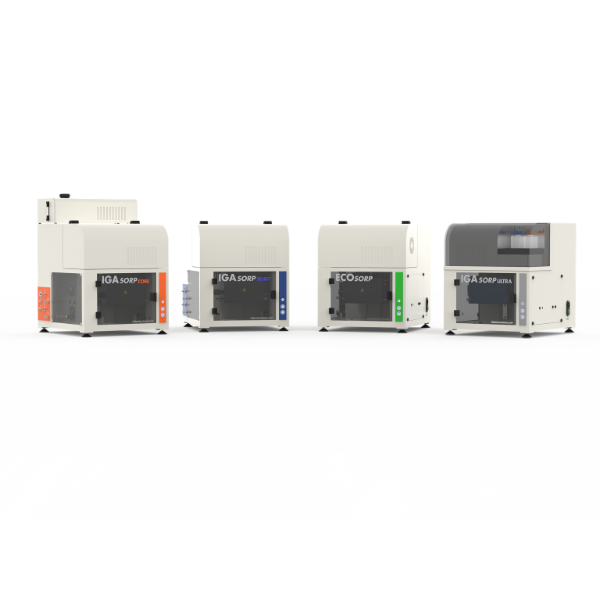
Image Credit: Hiden Isochema
A Shared Engineering Foundation
Although the various IGAsorp models differ in capability, they share the same underlying principles:
- Low-drift and high-stability microbalance performance
- True environmental accuracy with temperature and humidity at the sample
- Robust and stable construction for long-term reliability
- HIsorp software provides a unified operating environment across the family
This consistency ensures that users can select the model that suits their needs without compromising on data quality or workflow familiarity.
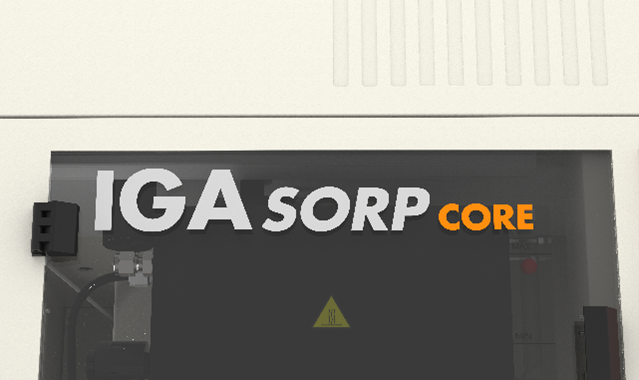
Image Credit: Hiden Isochema
IGAsorp Core: A Cost-Effective Entry Point for Routine DVS
Best for: Routine, Water-Only Sorption
The IGAsorp Core is designed for laboratories that require routine DVS under ambient conditions. It is a budget-friendly route into DVS without sacrificing measurement integrity.
The system has a temperature range of 15–40 °C, with class-leading temperature stability of ±0.05 °C, and a relative humidity range of 0–98 %. HIsorp is also intentionally streamlined on the IGAsorp Core, supporting routine workflows with clarity and efficiency.
Typical applications include:
- Hygroscopicity assessment of pharmaceutical active ingredients, excipients, and formulations
- Assessing the water activity of processed foods and raw ingredients, e.g., seeds
- Moisture sensitivity assessments of building materials, such as cement and wood
- Routine water sorption measurements
Image Credit: GarryKillian/Shutterstock.com
IGAsorp Select: Greater Versatility for Research and Development
Best for: Routine and Exploratory Sorption Work
The capabilities of the IGAsorp extend beyond ambient conditions, offering an extended temperature range of 5–50 °C.
The application range is broader too, with options for an integrated preheater and hyphenation options (video microscopy, IR/Raman spectroscopy, and mass spectrometry). An organics upgrade allows the system to be configured for use with water or organic vapor. HIsorp functionality is expanded into a full research environment, enabling advanced method development, modeling, and data analysis.
Typical applications include:
- Investigating phase changes (such as polymorphic and glass transitions) of pharmaceuticals
- Assessing water and organic uptake of porous materials, e.g., zeolites, MOFs
- Assessing barrier performance of polymers and packaging
- Determining the moisture sensitivity of battery materials, e.g., LFP, NMC.
- Academic and industrial research laboratories
IGAsorp Select with CT Temperature Range: High-Temperature Humidity Control for Advanced Materials
Best for: Advanced Water Sorption Research
For applications requiring elevated temperatures or more complex environmental conditions, the IGAsorp-CT provides a temperature range of 5–85 °C. It also offers superior high-temperature humidity control compared to other systems on the market, enabling 0–98 % RH runs up to 80 °C and 0 – 85 % RH up to 85 °C.
Typical applications include:
- Assessing the ability of fuel-cell-related membranes (e.g., Nafion) and electrocatalysts to absorb and desorb water, with results often correlating with conductivity measurements
- Climatic testing of electronics and semiconductors
- Stress testing of materials (e.g., polymers) at high temperature/high humidity
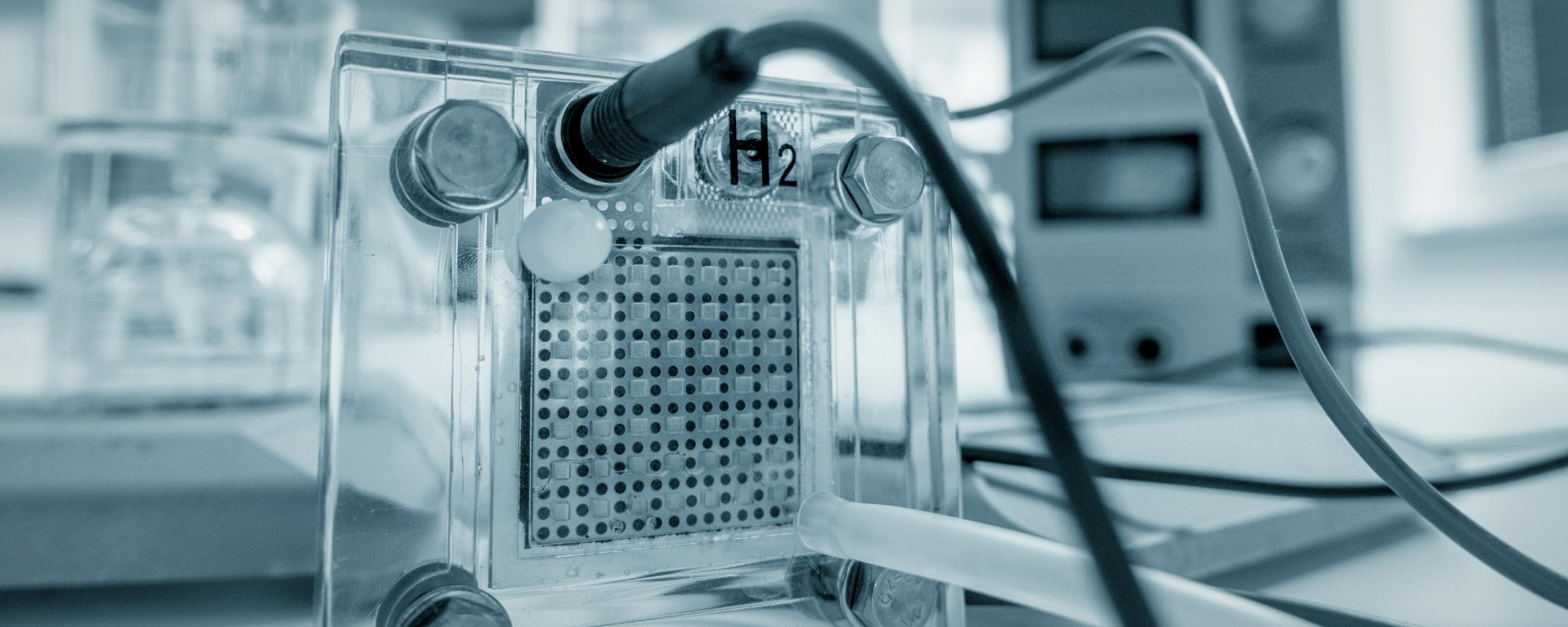
Image Credit: luchschenF/Shutterstock.com
IGAsorp Select with XT Temperature Range: Extreme-Temperature Water Sorption for Specialist Research
Best for: Extreme Conditions
The IGAsorp-XT is an advanced system for water sorption offering the widest temperature range of any DVS system, from 5–300 °C. Humidity can be controlled at these elevated temperatures, enabling high-temperature sorption experiments.
A preheater with a maximum temperature of 350 °C is included as standard for high-temperature pretreatment and sample regeneration. An external auto-filler is also supplied to minimize the need to manually refill water when operating at high temperatures, therefore extending uninterrupted operation.
Typical applications include:
- High-temperature sorption of porous materials
- Catalysts and catalyst supports
- Energy materials, such as solid-oxide systems
- Thermal stability and degradation studies
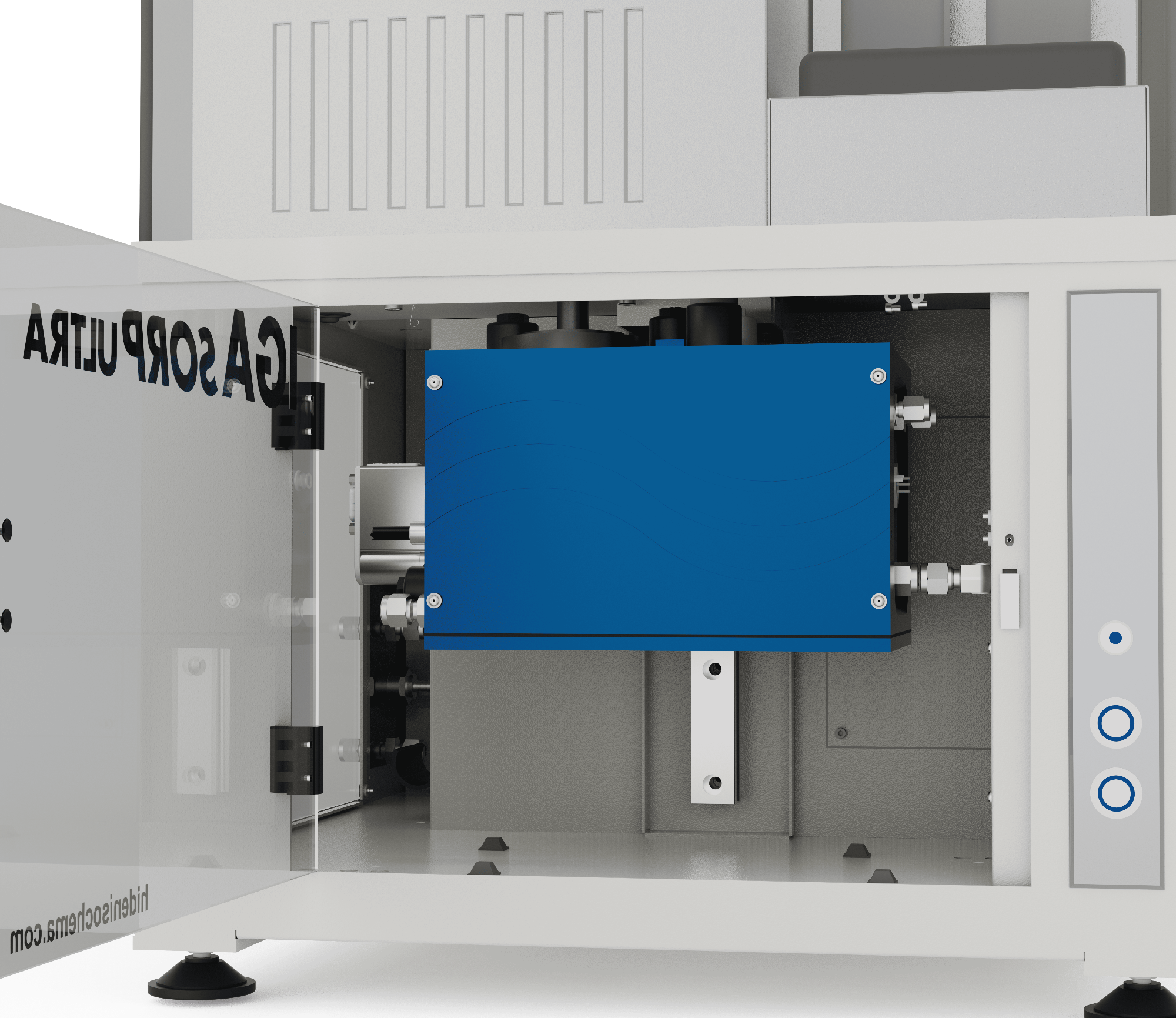
Image Credit: Hiden Isochema
IGAsorp Ultra: Flexibility for Advanced Water and Organic Vapor Measurements
Best for: Water and Organic Vapor Sorption Studies
The IGAsorp Ultra is the flagship system offering complete flexibility in performing water and organic vapor sorption measurements. The Next Generation Vapor Sorption Module and its dual vapor generators allow users to swap between water and organic vapors quickly and contamination free. External, easily accessible reservoirs keep the generators filled to a constant level, ensuring reproducible vapor generation for as long as required. A dedicated organics sensor also allows real time monitoring of organic vapor concentrations for that additional confidence.
The IGAsorp Ultra can be configured with the full complement of accessories, including preheater and color video microscope. And for applications flexibility, there is a range of four temperature ranges to choose from.
Typical applications include:
- Solvate studies of pharmaceuticals
- Amorphous content determination using different vapor species for plasticization
- Chemical compatibility/permeability of polymers
- Water and volatile organic uptake of porous materials
Source: Hiden Isochema
|
Feature
|
IGAsorp Core
|
IGAsorp Select
|
IGAsorp Select with CT temperature range
|
IGAsorp Select with XT temperature range
|
IGAsorp Ultra
|
|
Description
|
Reliable, cost-effective DVS at ambient conditions
|
Flexible research across ambient and moderately elevated temperatures
|
High-temperature humidity control
|
Extreme conditions requiring humidity up to 300 °C
|
Completely flexible advanced DVS system
|
|
Vapor Species
|
Water
|
Water, option for organic vapor compatibility
|
Water, option for organic vapor compatibility
|
Water, option for organic vapor compatibility
|
Combined water and organic vapor compatibility
|
|
Vapor Generation
|
Single vapor generator
|
Single vapor generator
|
Single vapor generator
|
Single vapor generator
|
Dual vapor generators
|
|
Temperature range
|
15–40 °C
|
5–50 °C
|
5–85 °C
|
5–300 °C
|
4 options:
- iSSB: 15-40 °C
- Standard: 5-60 °C
- CT: 5-85 °C
- XT: 5-300 °C
|
|
Humidity range
|
0–98 % RH (maximum humidity depends on temperature, with a maximum water vapor partial pressure of 500 mbar)
|
|
Thermal stability
|
± 0.05 °C
|
± 0.01 °C
|
± 0.01 °C
|
± 0.01 °C
|
±0.005 °C (± 0.05 °C for 15-40 °C option)
|
|
Preheater
|
Not available
|
Optional, maximum temperature of 250 °C
|
Optional, maximum temperature of 350 °C
|
Included, maximum temperature of 350 °C
|
Optional or included depending on configuration.
|
|
Organics capability
|
Not available
|
Optional
|
Optional
|
Optional
|
Advanced capability as standard
|
|
Hyphenation options
|
Not available
|
Optional
|
Optional
|
Optional
|
Optional
|
|
Examples of typical use
|
Routine QC, teaching
labs
|
Pharma, polymers, food
|
Fuel cells, electronics
|
Porous materials, catalysts
|
Pharma, polymers, porous materials
|
Conclusion
The IGAsorp family provides laboratories with a clear and scalable pathway into Dynamic Vapor Sorption, whether the requirement is routine quality control, advanced high-temperature materials research, or multi-species workflows. By combining a consistent engineering foundation with distinct capability tiers, the range allows users to select an instrument that aligns precisely with their analytical objectives and budget.
Together, the IGAsorp family enables users to approach sorption analysis with the confidence and capability they need to meet their scientific goals.

This information has been sourced, reviewed, and adapted from materials provided by Hiden Isochema.
For more information on this source, please visit Hiden Isochema.