The COLD SURFACE project is researching innovative photoluminescent materials to reduce heat build-up in façades and combat urban heat.
The initiative aims to cut the energy consumed for building cooling by between 5% and 10% and help mitigate the urban heat-island effect.
URDECON, the Plastics Technology Centre (AIMPLAS) and the Eduardo Torroja Institute for Construction Science (IETCC-CSIC) are collaborating on the research.
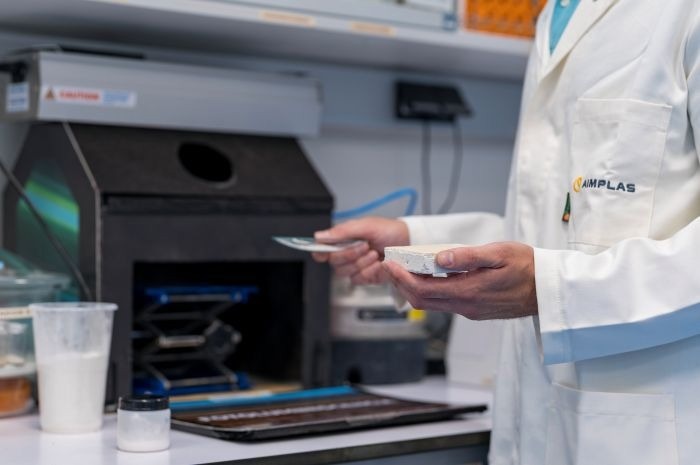 Image Credit: AIMPLAS
Every summer, the façades, roofs and pavements of cities absorb a large share of solar radiation and act as heat accumulators. This phenomenon not only raises temperatures in urban environments but also increases the need to cool buildings and homes, driving up energy consumption and associated emissions.
To address this challenge, the COLD SURFACE project is developing new prefabricated building-envelope systems incorporating innovative photoluminescent materials. These solutions are designed to reduce heat build-up in façades and improve buildings’ thermal performance. Coordinated by URDECON with the participation of AIMPLAS, the Plastics Technology Centre, and the Eduardo Torroja Institute for Construction Science (IETCC- CSIC), the initiative aims to reduce the surface temperature of building envelopes by up to 2 °C and cut the energy demand associated with building cooling by between 5% and 10%, thereby helping to mitigate the urban heat-island effect.
Manuel Asensio, Researcher in Construction and Renewable Energy at AIMPLAS, explains that “the COLD SURFACE project is promoting a new generation of architectural envelopes capable of remaining cooler through the use of advanced photoluminescent materials. These solutions are designed to capture part of the ultraviolet radiation and transform it into visible light, thereby reducing the energy converted into heat and limiting the warming of surfaces exposed to the sun.”
Materials That Turn Sunlight Into a Tool Against Heat
COLD SURFACE is researching innovative photoluminescent materials specifically adapted to the conditions of the construction sector. Unlike other solutions based solely on solar reflection, these materials absorb part of the ultraviolet radiation and re-emit it as visible light, reducing the energy converted into heat and helping cool the surfaces.
“We are also working to develop luminescent compounds that avoid the use of rare earths, which are considered critical raw materials for Europe, while improving their durability and compatibility with construction materials such as concrete,” Asensio adds.
The research also applies new simulation and characterization methodologies for this type of material, generating knowledge that will facilitate its future uptake by the building sector.
As Gloria Pérez of the Eduardo Torroja Institute for Construction Science (IETCC-CSIC) notes, “there are currently no widely established methodologies for evaluating this type of material in construction applications. The project will generate new testing and simulation protocols that will help us better understand their potential to reduce building temperatures and combat the urban heat-island effect.”
A Solution to the Urban Heat-Island Effect
Cities concentrate materials that absorb and store large amounts of solar energy, causing urban temperatures to be higher than those of the surrounding areas. This phenomenon, known as the urban heat-island effect, increases energy consumption, reduces thermal comfort and intensifies the impact of heatwaves on the population.
To transfer this innovation from the laboratory to real construction, the project will develop full-scale demonstrators that will make it possible to assess the performance of these new envelopes under real operating conditions and at different times of the year.
“One of COLD SURFACE’s main objectives is to validate this technology in real construction solutions and obtain data that will facilitate its future market uptake. We want to develop building-envelope systems that help reduce building overheating and provide new tools to address the challenges posed by climate change in cities,” says Antonio Jesús Martínez, Head of Innovation at URDECON, the company coordinating the project.
In addition to its energy and environmental benefits, the initiative will open up new opportunities for developing innovative, high-value construction solutions aimed at the decarbonization and climate adaptation of urban environments.
COLD SURFACE is a public-private partnership project funded by the Ministry of Science, Innovation and Universities through the Spanish State Research Agency, and co-funded by the European Union and the European Regional Development Fund (ERDF).