Sponsored by MKS OphirReviewed by Olivia FrostJul 23 2026
Automakers are heavily investing in electric vehicles, which presents significant hurdles. However, companies that plan strategically and integrate cutting-edge technology directly into their manufacturing processes will not only save money in the long run but will also ensure battery quality and safe vehicle operation.

Image Credit: sommart sombutwanitkul/Shutterstock.com
New industrial concepts and e-mobility technologies are inextricably tied to laser welding. The purpose is to maintain a consistently high level of production quality while continuously ensuring and recording it, and/or to gain insights from observed abnormalities.
This article investigates the problems and explains why laser beam quality is so important in the digitization of manufacturing processes.
Laser Power Affects Product Quality
Regardless of the exact laser welding process, the quality of the weld spots or weld seams has a considerable impact on the safety and dependability of the parts produced, which in turn impacts the overall quality of the vehicle. Figure 1 clearly shows the effects of a change in laser profile.
How can the makers and end-users of these laser systems, which are frequently integrated into automated manufacturing lines, assure correct operation? And how can one document the measures and get long-term insights from these changes? One thing is certain: anyone who relies on lasers for flawless function must accept quality degradation.
External factors, particularly in production contexts, affect laser beam systems, causing changes. Only by identifying these issues in time can quality losses, including possible product recalls, be avoided. This is the exact benefit of starting a new production line. New technologies may be implemented separately for each application right from the start.
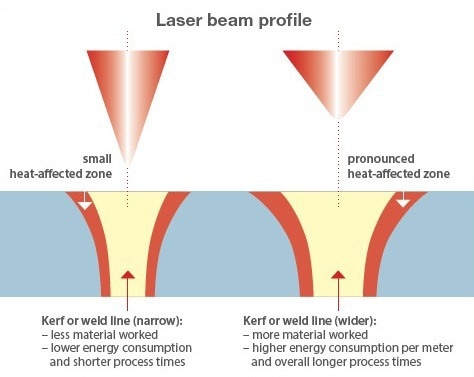
Figure 1. In battery production, high heat input is especially harmful. Image Credit: MKS Ophir
Lightweight but Stable
Weight is important in vehicle construction; nevertheless, while all components are designed to be as lightweight as possible, they must still be as rigid as required. Modern laser welding techniques allow very intricate welding geometries and material combinations in automotive body fabrication.
In drive control, this has resulted in design shifts from bolted to welded structures, leading to significant weight and space savings at greater strengths. Laser welding also allows for the reliable processing and joining of aluminum, high-strength steel, and even novel fiber-reinforced materials.
Given the foregoing, the fabrication of battery systems for electric cars exerts a special strain on laser welding equipment. To create small battery packs, the welded electrical contacts connecting the individual cells, whether in series or parallel, must be of excellent quality so that they may be set to the necessary operating voltage and capacity.
Laser welding techniques are particularly difficult to use with highly reflective materials like copper. In addition, even a single faulty cell connection can degrade the performance of a battery module. Power measurements provide a first indicator of whether a laser system is functioning properly.
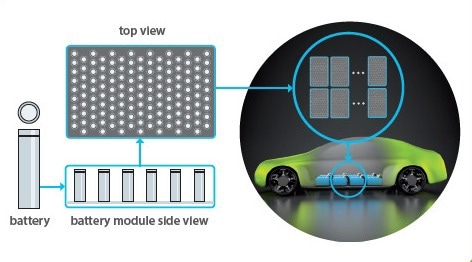
Figure 2. Modules are made up of numerous individual cells, the contacts of which also need to be welded. Several battery modules are then combined into a block, which is safely enclosed in a sealed housing. Image Credit: MKS Ophir
Power Measurement at the Processing Level
Lasers of kilowatt power are commonly used in the construction of automobile bodywork. Ophir®, an MKS Instruments trademark, developed Ariel, a compact and durable power-measuring instrument, to swiftly and easily measure these lasers.
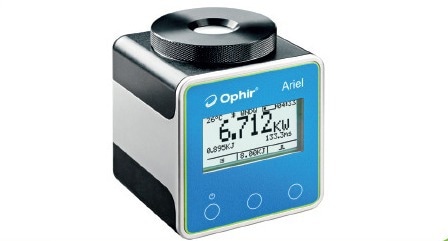
Figure 3. Ophir Ariel is a robust and self-contained power measurement device that can withstand high power densities. Image Credit: MKS Ophir
The device measures a wide range of wavelengths, including 440–550 nm green and blue lasers, increasingly used in copper welding; 900–1100 nm fiber lasers, commonly used in metal processing; and 10.6 μm CO2 lasers.
The Ariel industrial power meter operates in two modes to provide a wide measurement range of 200 mW to 8 KW: (a) measuring the energy of a short-time exposure for high-power lasers up to 8 KW, and (b) providing longer CW power measurements for lower powers up to 500 W.
The system's large thermal capacity of 14 kJ allows it to monitor many successive pulses with an accumulated energy of 14 kJ before cooling down.
A detachable diffuser enables the measurement of high-power-density beams. That implies that, for a pulse lasting half a second (for example), laser powers of up to 8000 W may be measured at a low cost and without the need for extra device cooling.
This is especially important when welding batteries, as water cooling must be avoided at all costs.
Measurements in Automated Manufacturing
When a laser is implemented in a fully automated setting, such as in car manufacture, the measuring technology needs to alter. Companies frequently require the measuring equipment to provide data into the production data network when digitizing an automated production environment.
This necessitates small and durable measurement equipment that can be quickly integrated into the manufacturing process. MKS designed Helios Plus specifically for such applications, as it is based on Ophir's pulsed-power sensor technology.
The power gauge measures the power and energy of industrial diodes, fiber lasers, and Nd:YAG lasers during a brief irradiation period of 0.1 to 10 seconds. In addition to sensing infrared wavelengths between 900 and 1100 nm, Helios Plus can also measure blue and green lasers used in copper welding in the automobile sector. It can also compute total power up to 12 kW and total energy up to 10 kJ without the need for air or water cooling.
The measurement itself only takes a few seconds (or fractions thereof); therefore, power tests may be performed during loading and unloading. Profinet, EtherNet/IP, and RS232 connections allow you to store and interpret measured quantities as needed.
If the laser's power on the machining plane deviates from the set tolerance, rapid countermeasures can be made to maintain production quality.
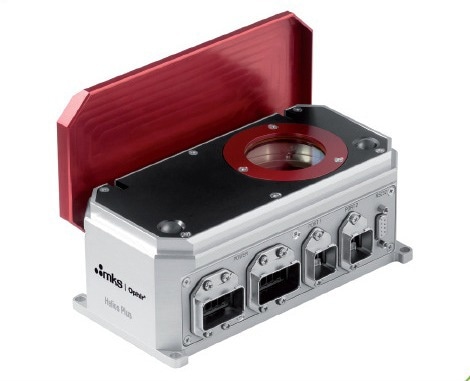
Figure 4. MKS developed Ophir Helios Plus for fast measurement of laser power in automated processes. It measures up to 12 kW without additional air or water cooling. Image Credit: MKS Ophir
Beam Profile Reveals Power Density
Knowing the laser's power at the machining plane provides a first indication of whether it is operating within specs.
Details about the focus location, or variations in focus position over time, can only be ascertained with beam profile measurement equipment. The focal location has a significant impact on the power density and hence the quality of the weld seam.
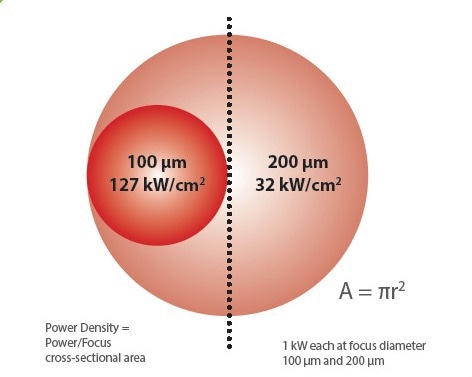
Figure 5. This illustration shows the relationship between focus size and power density: when the focus diameter is only half as large, it results in an intensity that is four times higher. Image Credit: MKS Ophir
Figure 5 shows that even a little variation in focus location results in a large change in power density.
This, in turn, directly affects the quality of the weld seam, which, especially in sensitive welding procedures, requires only extremely narrow tolerances for variations in power density. The high powers involved are once again at the heart of the problem.
Non-Contact Measurement
Ophir developed a non-contact measuring method based on Rayleigh scattering, which explains how electromagnetic waves disperse when they are deflected by air particles smaller than the radiation's wavelength, such as oxygen or nitrogen molecules.
The electric field of laser light causes an oscillation in the dipole molecule at the laser's frequency, resulting in elastic scattering at the same frequency. A telecentric lens assembly mounted on a CCD or CMOS camera captures the dispersed laser light from the side.
Each pixel in a single CCD camera line detects scattered light as a measure of intensity in the beam profile.
Using high-accuracy integrated software, beam-quality characteristics such as focus diameter, focus position, divergence, ellipticity, M2 (1/k), and beam parameter product (BPP) can be calculated in accordance with ISO 13694 and ISO 11146. The systems in the BeamWatch® product line are based on this measurement concept, enabling real-time monitoring of the beam profile.
This makes any changes to the focus noticeable. A recent study of multiple measurement methods revealed that, although non-contact measurement technology is not yet codified in ISO standards, it is entirely ISO-compatible.
Users therefore obtain ISO-compliant, dependable, and reproducible measurement results because the measuring equipment has no impact on the beam, nor does the beam affect the measuring device.
In the manufacturing process, these metrics can be integrated with the aforementioned power measures: Typically, laser power is evaluated momentarily, followed by a verification of the beam profile after a defined production duration.
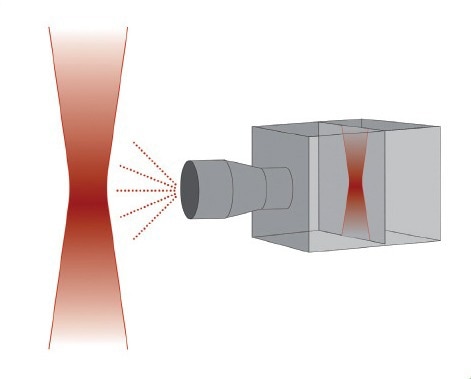
Figure 6. This diagram clearly shows that, during non-contact measurement, the beam is not affected by the instrument. And the device suffers no wear and tear, either. Image Credit: MKS Ophir
Alternatively, integrated systems that assess both power and beam profile may be employed. MKS provides many options for this purpose:
- Ophir BeamWatch: The Ophir BeamWatch measuring devices are lightweight and portable, with no power constraints as they measure laser beams without touch.
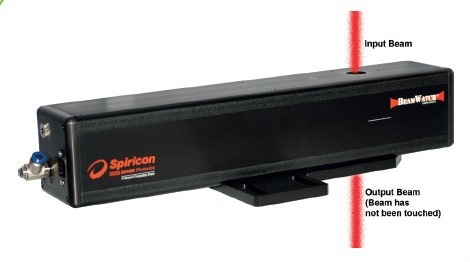
Figure 7. Ophir BeamWatch enables non-contact laser beam measurement. Image Credit: MKS Ophir
- Ophir BeamWatch Integrated: The Ophir BeamWatch Integrated device combines non-contact beam profile monitoring with a power gauge and beam trap. It was created in collaboration with the automobile industry and is best suited for incorporation into manufacturing lines.
If desired, the beam profile can be monitored during each loading cycle. Ophir BeamWatch Integrated is completely automated, and all measurement results may be accessed and processed through a single interface.
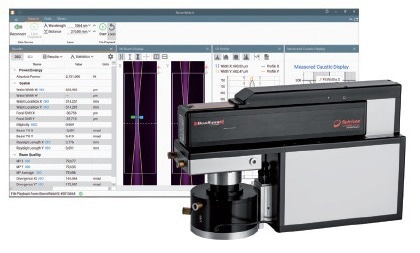
Figure 8. Ophir BeamWatch Integrated is optimized for use in automated production lines. Image Credit: MKS Ophir
Conclusion
Individuals can choose which measurement method is ideal for a certain application. Often, only a test measurement can give a solid foundation for a conclusion. But one thing is certain: just-in-time serial production of battery packs presents new hurdles for measuring technologies.
Not only are battery units the most important and expensive component of any electric vehicle, but their performance and safety are directly related to their quality.
Because these batteries can have up to several thousand welded connections, it is well worth the producers' time to constantly monitor the dependability of their manufacturing process. Only then will quality and maximum production be guaranteed in the long run.

This information has been sourced, reviewed and adapted from materials provided by MKS Ophir.
For more information on this source, please visit MKS Ophir.