Sponsored by UltrarayReviewed by Olivia FrostJul 17 2026
Sheet lead rolls are flat lead sheets supplied in a rolled format for easier shipping, storage, and handling. The roll form does not change the material; when unrolled, the lead flattens and is worked in the same way as standard flat-sheet lead. Density, malleability, corrosion resistance, and shielding performance are unchanged by the format.
This article covers the standard sizes and weights available for sheet lead rolls and the applications where each specification range is most commonly used.
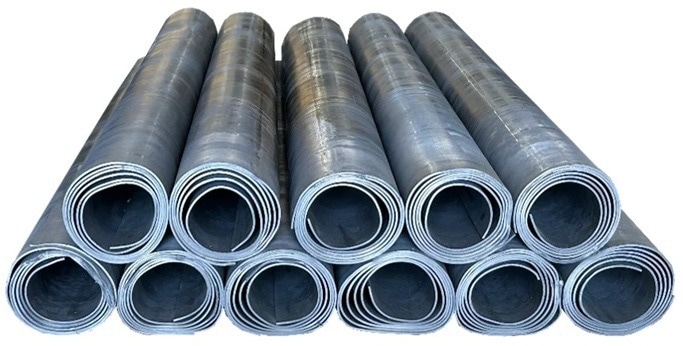
Image Credit: Ultraray
Standard Sizes and Weights for Sheet Lead Rolls
Sheet lead rolls are available across a broad range of thicknesses and weights. The table below reflects standard dimensions available for each thickness grade.
Standard Thickness and Size Reference. Source: Ultraray
| Thickness |
Available Dimensions |
| 1/32" |
4' x 7', 4' x 8', 4' x 10' |
| 1/16" |
4' x 7', 4' x 8', 4' x 10' |
| 5/64" |
4' x 7', 4' x 8' |
| 3/32" |
4' x 7', 4' x 8' |
| 1/8" |
4' x 7', 4' x 8' |
| 1/4" |
4' x 4' |
Maximum standard dimensions reach up to eight feet wide and 25 feet long. Non-standard widths, lengths, and thickness combinations are available through custom fabrication for projects with specific layout or coverage requirements.
Weight Reference
Lead rolls are available across a weight range of one to 60 lb/SF, corresponding to thicknesses from approximately 0.4 mm (1/64") up to 25.4 mm (1"). For most roofing, acoustic, and light-shielding applications, rolls in the 1–7.5 lb/SF range are appropriate. Heavier weights are used in radiation shielding and structural applications where design specifications require greater density.
This table shows the weights in pounds, grams, and kilograms for lead sheet sizes 4” x 7”, 4” x 8”, and 4" x 10" multiplied by the most common lead thicknesses of 1/32”, 1/16", 5/64", 3/32", 1/8", and 1/4".
Source: Ultraray
Sizes: Width x
Height (inches) |
Thickness
(inches) |
Weight
(pounds) |
Weight
(grams) |
Weight
(kilograms) |
| 4” x 7” |
1/32" |
0.358 lbs |
162.6 g |
0.163 kg |
| 4” x 7” |
1/16" |
0.717 lbs |
325.2 g |
0.325 kg |
| 4” x 7” |
5/64" |
0.896 lbs |
406.5 g |
0.407 kg |
| 4” x 7” |
3/32" |
1.075 lbs |
487.8 g |
0.488 kg |
| 4” x 7” |
1/8" |
1.434 lbs |
650.4 g |
0.650 kg |
| 4” x 7” |
1/4" |
2.868 lbs |
1300.8 g |
1.301 kg |
| 4” x 8” |
1/32" |
0.410 lbs |
185.8 g |
0.186 kg |
| 4” x 8” |
1/16" |
0.819 lbs |
371.7 g |
0.372 kg |
| 4” x 8” |
5/64" |
1.024 lbs |
464.6 g |
0.465 kg |
| 4” x 8” |
3/32" |
1.229 lbs |
557.5 g |
0.557 kg |
| 4” x 8” |
1/8" |
1.639 lbs |
743.3 g |
0.743 kg |
| 4” x 8” |
1/4" |
3.277 lbs |
1486.6 g |
1.487 kg |
| 4" x 10" |
1/32" |
0.512 lbs |
232.3 g |
0.232 kg |
| 4" x 10" |
1/16" |
1.024 lbs |
464.6 g |
0.465 kg |
| 4" x 10" |
5/64" |
1.280 lbs |
580.7 g |
0.581 kg |
| 4" x 10" |
3/32" |
1.536 lbs |
696.9 g |
0.697 kg |
| 4" x 10" |
1/8" |
2.048 lbs |
929.1 g |
0.929 kg |
| 4" x 10" |
1/4" |
4.097 lbs |
1858.3 g |
1.858 kg |
For those who wish to calculate their own sheet lead dimensions for sizes up to 12” x 12” and larger, Ultraray’s Lead Weight Calculator is a useful tool.
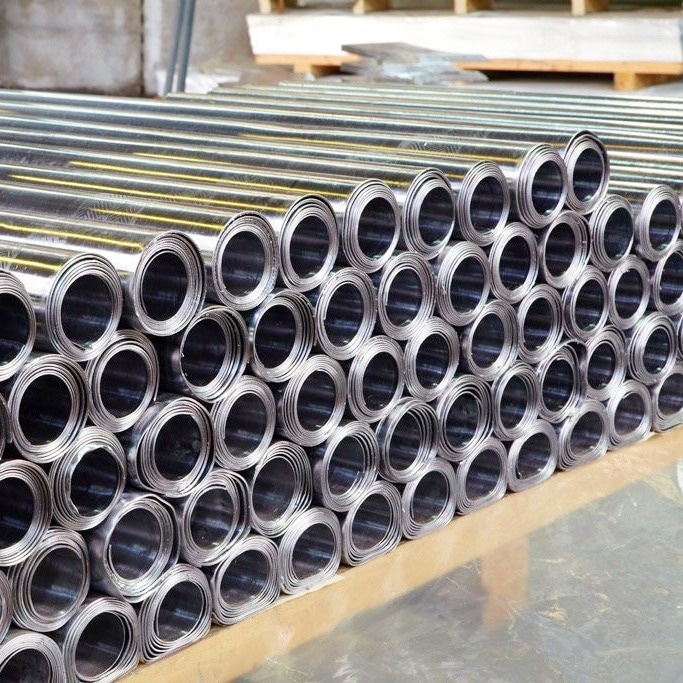
Image Credit: Ultraray
Common Applications for Sheet Lead Rolls
Radiation Shielding
Sheet lead rolls are used to line walls, ceilings, and floors in medical imaging rooms, nuclear medicine facilities, treatment suites, and industrial radiography enclosures. Lead is effective at reducing the transmission of X-ray and gamma radiation, and its malleability allows it to be cut and fitted around structural elements, penetrations, and irregular surfaces.
Key installation requirements for radiation shielding applications include:
- A minimum one inch overlap at all seams to maintain shielding continuity
- Lead batten strips over all joints
- Lead caps over fastener heads to eliminate gaps in coverage
- Thickness determined by the project physicist's shielding report, not assumed from standard specifications
Shielding thickness is not a general specification, as it varies by radiation source, energy level, room geometry, and the occupancy of adjacent spaces. A qualified medical physicist or radiation safety officer must confirm the required thickness before procurement.
Acoustic Control
Lead sheet rolls are used in acoustic control assemblies where mass is the primary mechanism for reducing airborne sound transmission. Adding lead to a wall, floor, or ceiling partition increases the assembly's surface density, which improves its resistance to sound transmission across a broad frequency range.
Common acoustic applications include:
- Floor underlayment in multi-story residential and commercial buildings
- Sound isolation in recording studios and broadcast facilities
- Partition wall lining in healthcare, legal, and government facilities
- Mechanical room and HVAC enclosure lining
- Noise control in industrial enclosures
For acoustic applications, sheet lead rolls are specified by weight per square foot rather than thickness. Rolls in the range of one to four lb/SF are commonly used in architectural acoustic assemblies. The specific weight required depends on the sound transmission class target for the assembly, which should be confirmed by an acoustic consultant.
Roofing and Flashing
Sheet lead rolls are a well-established material for roofing and flashing in both new construction and heritage restoration. Lead's malleability allows it to be formed around complex roof geometry including chimneys, valleys, dormers, parapets, and pipe penetrations without cracking or splitting. Its corrosion resistance supports long service life in exposed outdoor environments.
Common roofing and flashing applications include:
- Expansion joints in built-up roofing systems
- Chimney step and counter-flashing
- Pipe boots and roof penetrations
- Parapet and coping covers
- Skylight and dormer flashing
- Valley linings
Thicknesses of 1/16" to 1/8" are typical for most roofing and flashing applications, depending on exposure conditions and the project specification. Heritage and restoration projects frequently specify lead to match original building materials.
DIY, Crafts, and Ballast
Sheet lead rolls are also used in a range of non-construction applications where a dense, malleable, and corrosion-resistant material is required. The roll format is practical for small-quantity purchases and on-site cutting to size.
Common uses include:
- Stained glass and decorative leaded glazing work
- Fishing and diving weights and ballast
- Keel ballast for sailboats and model yachts
- Hobby casting and DIY fabrication
- Curtain and drapery weights
Thinner rolls in the 1/32" to 1/16" range are typically sufficient for most light ballast and craft applications. Lead should be handled with appropriate precautions in all applications, including wearing gloves and washing hands after contact.
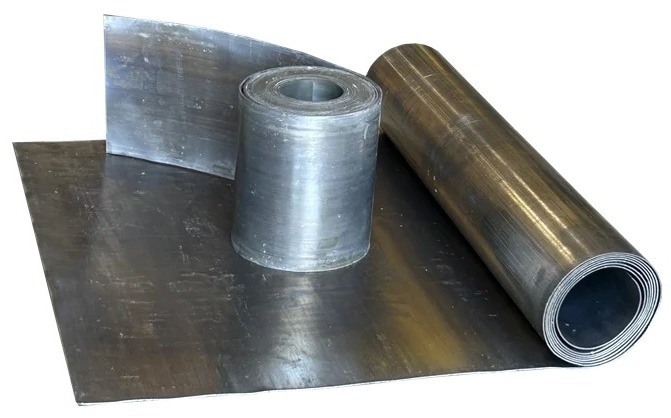
Image Credit: Ultraray
Selecting the Right Sheet Lead Roll Specification
Selecting the correct sheet lead roll requires confirming three variables before ordering: material grade, thickness or weight, and sheet dimensions.
Material grade is determined by the operating environment. Common lead suits most construction and shielding applications; chemical lead is appropriate where corrosion resistance is a priority; antimonial lead is used where additional hardness is required.
Thickness or weight is determined by the application. For radiation shielding, this information must come from the physicist's shielding report. For acoustic and roofing applications, it follows from the project specification or consultant's recommendation.
Sheet dimensions should be confirmed against the installation area. Where standard sizes do not suit the project layout, custom fabrication is available for non-standard widths, lengths, and thickness combinations. Custom orders require early confirmation to account for production and delivery scheduling.
Understanding the distinction is critical. Radiation shielding is a system problem, not a material selection exercise.

This information has been sourced, reviewed, and adapted from materials provided by Ultraray.
For more information on this source, please visit Ultraray.