In industrial operations and quality assurance, confirming lubricant compatibility is a persistent and significant issue. The introduction of the wrong oil into a system can lead to severe mechanical and chemical malfunctions, including additive incompatibility, adverse viscosity changes, and substantially increased mechanical wear.
To mitigate these risks, industrial facilities necessitate a dependable, proactive verification process during incoming checks to prevent costly misapplications before the lubricant encounters any machinery.
Automated FTIR spectral correlation offers an impartial method for positive product identification by comparing the distinct molecular signature of an unknown lubricant sample against a reference repository.
To assess the dependability and operational limits of this approach, the eraspec oil was used for testing. The eraspec oil and eraspec oil X are advanced mid-FTIR spectrometers specifically designed for lubricant examination and oil condition monitoring.
To facilitate automated spectral correlation, a comprehensive reference repository of fresh oils must first be established on the analyzer. Upon examining a new sample, the system automatically contrasts its spectrum with all repository entries, computing a similarity rating to pinpoint the optimal product correspondence.
The reference repository for this investigation was compiled using 19 different fresh oils supplied by a major European lubricant producer. To evaluate the system's matching capability, the producer furnished three samples from varied production lots for each of the 19 fresh oils. These lot samples were subsequently assessed against the reference repository using the eraspec oil.
Following the measurements, the top three reference matches are immediately presented in the main results display. Additional details regarding all matches are available under the “matches” tab. This section lists all repository entries, ordered from highest to lowest similarity.
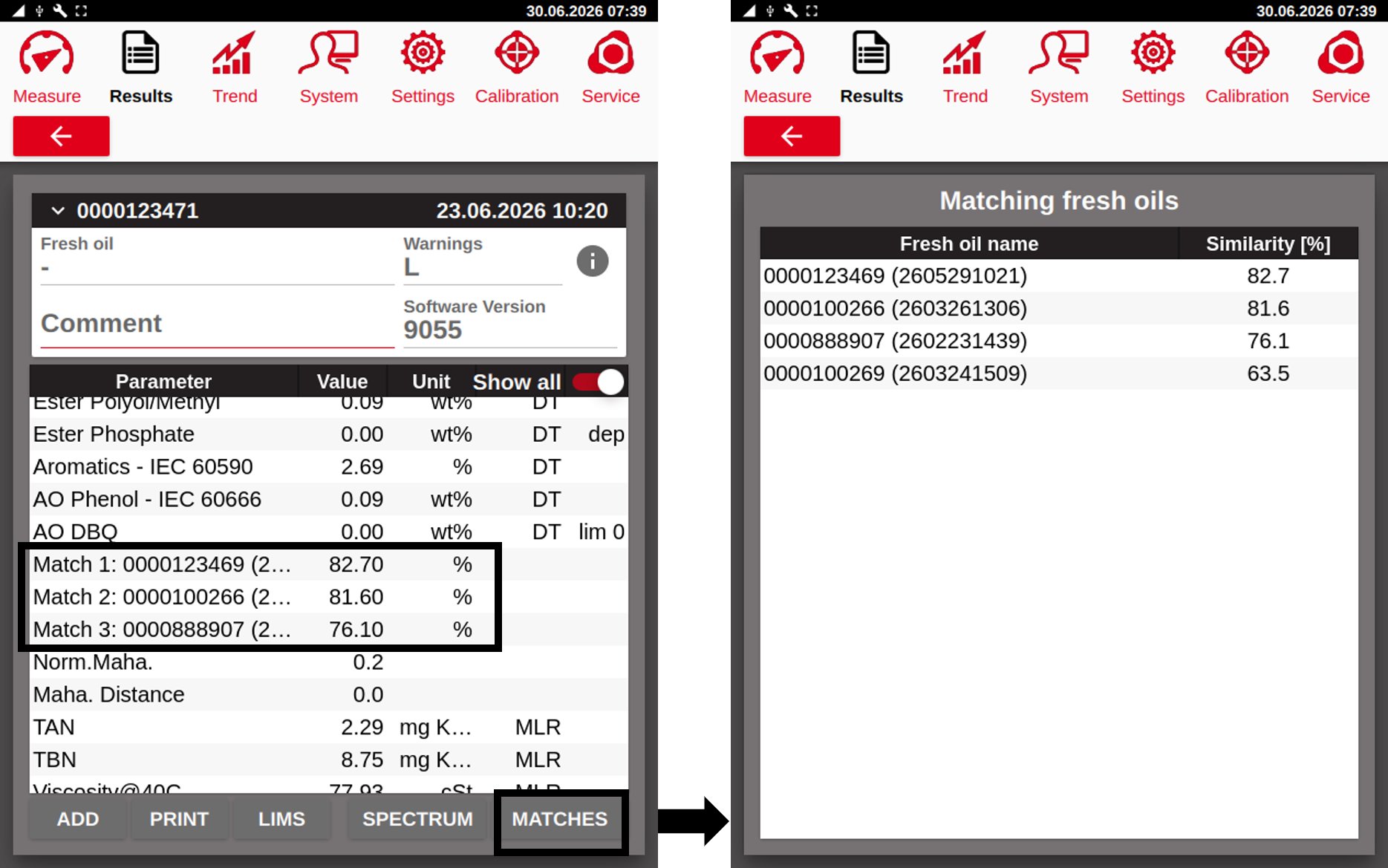
Figure 1. Top matches on the result screen of eraspec oil. Image Credit: eralytics GmbH
The algorithm's robustness was gauged using a reference collection of 19 fresh oil formulations. To account for typical manufacturing deviations, production lots for each oil were analyzed and correlated against all 19 reference spectra, generating a 19 x 19 cross-validation similarity matrix.
The robustness of the identification algorithm was assessed using four objective performance indicators applied to the cross-validation data:
- Spectral similarity: The fundamental alignment between the sample and the reference
- Discrimination margin: The critical "safety margin" that represents the statistical separation between the correct match and the closest incorrect alternative
- Rank: The position of the correct formulation within the outcome list
- Standard deviation (SD): A measure of consistency against measurement reproducibility and lot-to-lot variations
The system exhibited strong resistance to instrumental interference and lot-to-lot variances, with an overall measurement repeatability of roughly 0.5%. Eighteen of the 19 examined oil formulations were successfully matched to their corresponding reference profiles, with the cross-validation matrix consistently producing self-comparison similarity ratings close to 100% (Figure 2).
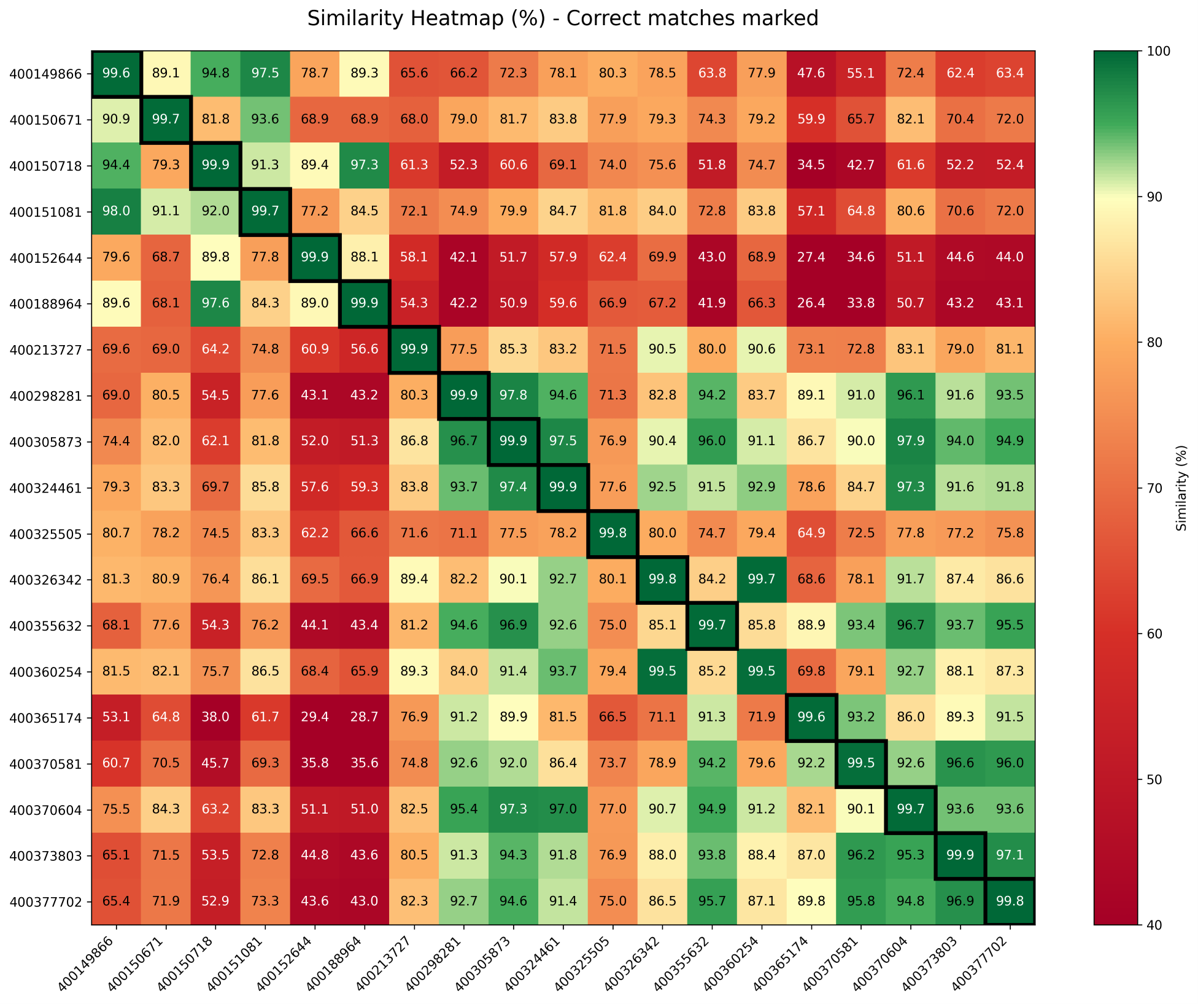
Figure 2. Cross-validation similarity matrix of pairwise similarity scores  . Image Credit: eralytics GmbH
Though the algorithm effectively distinguishes most industrial lubricants, differentiating between "sister products" represents the physical limit of FTIR matching. This was illustrated by the single misidentification in the validation study, where the target oil and its closest incorrect match possessed nearly identical chemical compositions, differing only in minor variations in additive quantities (see the red dot in Figure 3).
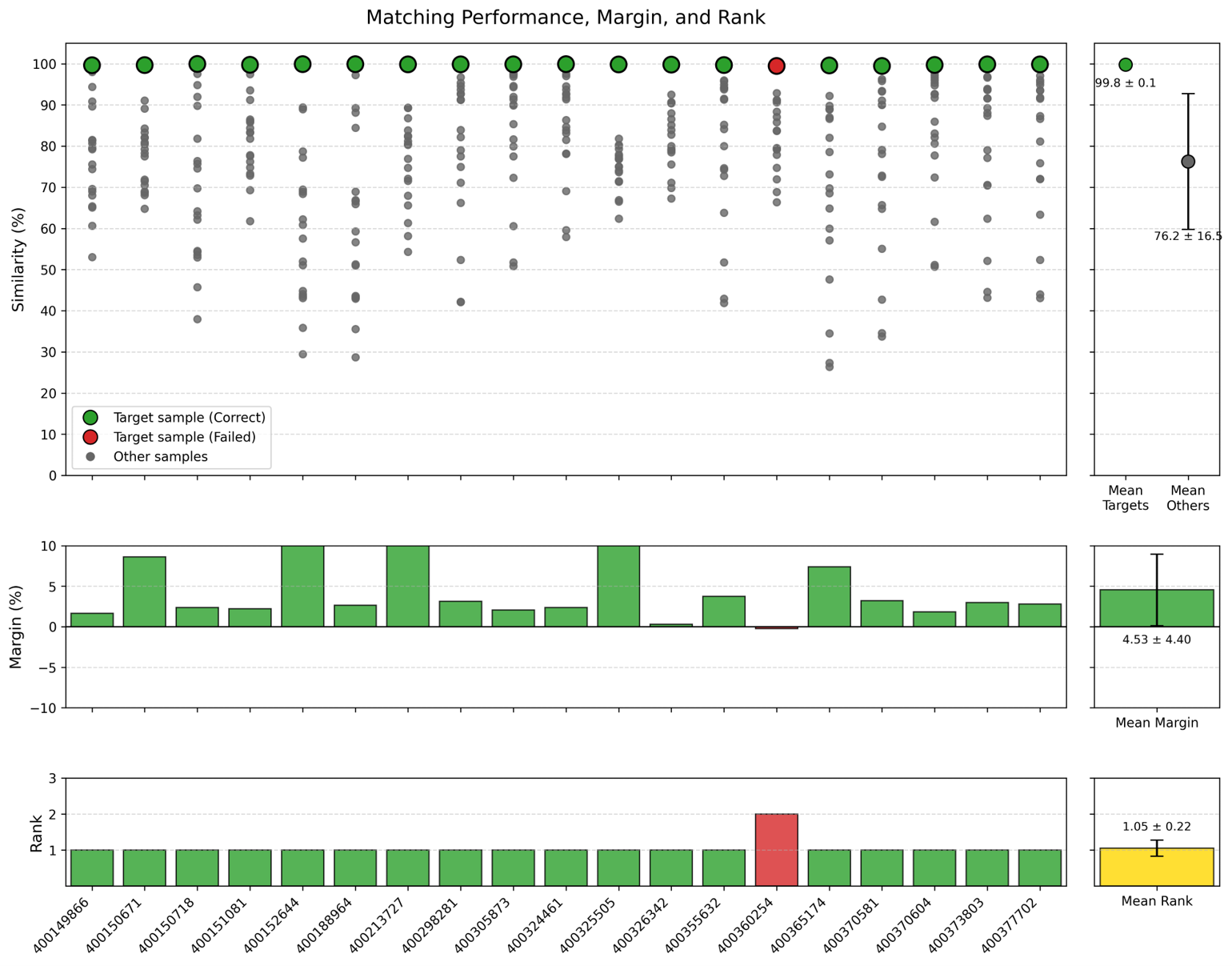
Figure 3. Spectral matching performance metrics. Top: Similarity scores of validation samples across all reference samples. Correct matches marked green. Middle: Discrimination safety margins across all reference samples.
Bottom: Ranks of the target reference samples. Rank 1 indicates a correct match. Right column: Average similarity score of targets and false competitors (top), average safety margin (middle), average rank (bottom). Image Credit: eralytics GmbH
Validation data for the eraspec oil confirm that automated FTIR spectral matching delivers a dependable, field-ready resolution for industrial quality assurance. By adopting this technology for routine incoming checks, facilities can transition to an impartial, automated standard for product verification.
This enhancement minimizes the operational hazards linked to lubricant cross-contamination or misapplication, directly contributing to asset safeguarding.
Integrating the eraspec oil into the quality control workflow offers several benefits:
- Securing incoming inspections: Conducting automated checks during routine incoming inspections provides an impartial means to confirm the identity of delivered items before their deployment into machinery. This directly prevents product mix-ups from the outset.
- Detecting cross-contamination in pipelines: At blending facilities, different oil types frequently traverse the same conduits. If a batch of oil A is inadvertently contaminated with a small quantity of oil B remaining in the line, spectral correlation will detect the foreign chemical signatures immediately, preventing an entire batch from being compromised or dispatched.
- Additive package verification: Fresh lubricants depend on additives such as anti-wear agents, detergents, antioxidants, and viscosity enhancers. The eraspec oil compares the fresh batch's spectrum to the master formulation from the repository and instantly flags mismatched batches.
- Identifying counterfeit oils at the loading dock: Because the eraspec oil comprises portable, robust spectrometers, they can be positioned directly at the loading dock for incoming inspections. Distributors can instantly confirm the authenticity of delivered premium lubricants by correlating a sample's spectrum with the onboard reference repository.
As counterfeit oils typically consist of inexpensive base oils lacking unique high-performance additive systems, their spectra will not align with those of the premium reference. The algorithm will compute a low correlation score, immediately exposing the counterfeit product.

This information has been sourced, reviewed, and adapted from materials provided by eralytics GmbH.
For more information on this source, please visit eralytics GmbH.