When discussing plastic materials and food contact, focus tends to revolve around the final package container: trays, bottles, films, caps, or utensils. However, there are many more things to consider.
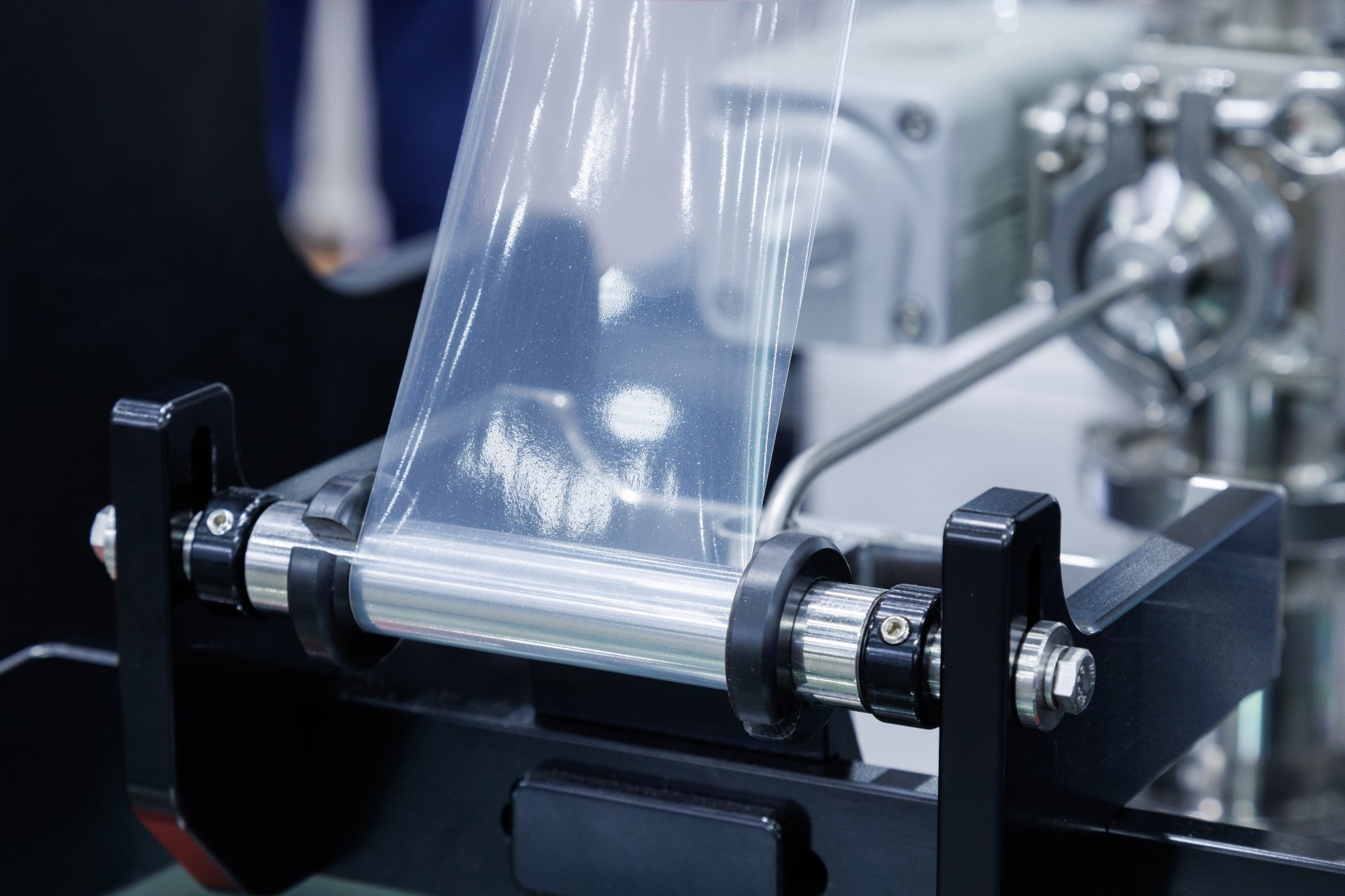
Image Credit: ultramansk/Shutterstock.com
Components of household appliances, parts of coffee machines, food processing equipment, or kitchen robots, as well as gaskets, closures, dosing systems, tanks, drinking water pipes, conveyor belts, and other components, are all expected to come into direct contact with food.
Food safety compliance for these items does not start with the migration test, nor does it occur at the final processing stage. Rather, it starts as early as possible when selecting raw materials during product development and design phases, and in controlling the industrial process used to acquire the compounded or formulated material.
This point is crucial for manufacturers of plastics and plastic-based materials. Throughout this article, manufacturers broadly refers to compounders, masterbatch manufacturers, PVC formulators, bioplastics producers, and those who design, mix, or modify polymer formulations before converting them into a usable, marketable product or component.
Each plays a key role in the food industry value chain when it comes to food contact. While manufacturers may not produce parts that will ultimately be in contact with food, their decisions have a direct impact on compliance:
- Which polymer is used?
- Which additives are present?
- Which pigments or fillers are selected?
- How is the material processed?
- Which masterbatch is used and at what dosage?
- What are the cross-contamination avoidance methods?
- What documentation is fed down the manufacturing and supply chain?
All of these questions and parameters, where food contact is concerned, determine why simply stating raw material is "suitable for food contact" is not enough. Moreover, there are other questions that need to be addressed:
- Is the complete formulation designed for the intended application?
- Is there batch-to-batch traceability?
- Are restrictions on the use of each component compatible with the type of food, the contact time, and the contact temperature?
- How is the manufacturing process managed?
- Has the risk of cross-contamination been mitigated?
- Does the documentation clearly state how the material can be used, and is this appropriately justified to the client?
This is where good manufacturing practices (GMPs) are crucial to the process. They should not be understood as simply box-ticking exercises; they are the best way to demonstrate that the formulation, the process, and the documentation are subjected to stringent control policies.
The European framework has laid out a series of general guidelines for materials intended to come into contact with food, with specific requirements established for the use of plastics. Regulation (EC) 1935/2004 outlines a general principle that there should be no transference of materials and components to food in quantities that could present a risk to human health, impact the food composition, or unacceptably alter its organoleptic characteristics.
For plastic materials, Regulation (EU) 10/2011 stipulates which substances are authorized, as well as restrictions on use and migration limits. Moreover, Regulation (EC) 2023/2006 establishes the good manufacturing practices appropriate for materials and articles that will likely come into contact with food.
The challenge is not simply knowing the regulations are there, but rather translating them into tangible industrial decisions. A positive list does not directly influence extruder controls or validate a cleaning procedure. Similarly, a Declaration of Conformity alone does not prevent the thermal degradation of an additive or the presence of residues from previous batches. All of this is controlled through stringent formulation criteria, process control, traceability, cleaning, segregation, and documentation.
During material and product formulation, it is a common error to believe compliance is simply achieved by submitting a collection of individual supplier declarations. It may seem that, if every part of the process is covered, the final material is covered; in practice, this is not always the case.
Compliance is not contingent on whether or not each element can be used, but rather on how it is used. The key parameters concern concentration, substance combinations, masterbatch dosage, possible component interactions, processing conditions, and the final use of the material and/or product/component.
For example, additives may have a specific migration limit, and pigments may only be valid under specific conditions. Purity specifications may be required for mineral fillers, whereas a masterbatch may be acceptable at a precise dosage but non-compliant if used above the intended level. Moreover, PVC formulations often depend on the plasticization, stabilization, or lubrication system selected, and bioplastics may demonstrate thermal sensitivity that influences the material's degradation profile.
This point is where the formulator provides tangible technical value. Formulators must go beyond collecting and passing on documentation and instead interpret it. Therefore, understanding whether the supplier's information is consistent with the recipe, the process, and the intended application is a key condition. Moreover, it is necessary to determine precisely which substances are present, which are subject to restrictions, what limits apply, what information should be communicated clearly to the client, and which conditions are most appropriate.
As well as documentation, another important area in formulation is the process: where food contact is concerned, the preparation of PVC formulations, or the modification of biopolymers, extrusion-compounding, and masterbatch manufacturing are not considered neutral stages.
Throughout the manufacturing process, rogue substances, known as NIAS (non-intentionally added substances), may appear. These substances present a real risk factor, and, if not properly managed, can result in unexpected non-conformities, audit issues, delays in approvals, or even poor customer retention.
NIAS are the result of impurities present in raw materials, cross-contamination, thermal degradation products, reaction byproducts, or residues left behind from previous batches of processed materials. That is why it is crucial to also state how the material is manufactured when offering technical advice on food contact, and not only focus on what the formulation contains.
However, manufacturers do not need to go into minute processing detail, and should instead establish the major associated risks each company should control. These include: excellent temperature control measures; good residence times; preventing material degradation; sufficient devolatilization; validated cleaning processes; avoiding cross-contamination between campaigns; appropriate segregation of raw materials; and adequately documenting any formulation changes to ensure material compliance and strengthen the supplier's documentary position.
Systematic management of all these factors is a must, while supplier approval helps ensure that raw materials arrive with appropriate and up-to-date technical information. Correctly identifying and segregating materials prevents mixing or improper use. Control and documentation of any formulation changes prevents even a minute modification from influencing compliance conditions.
Defining key process parameters helps limit degradation while controlling dispersion, thermal stability, and batch-to-batch repeatability. Validation of cleanings and purges mitigates carryover between food-contact and non-food-contact products. Preventive maintenance prevents the occurrence of leaks, dead zones, wear, or build-up that are likely sources of contamination.
Furthermore, appropriate staff training ensures responsibility is distributed across the workforce and day-to-day operations, not only at the feet of the technical manager.
This approach must be incorporated into each industrial reality. A technical compounder with numerous campaign changes is not equivalent to that of a color masterbatch manufacturer, a plasticized PVC formulator, or a manufacturer of bioplastics vulnerable to thermal degradation.
Each process has specific risks and weak points. It is not about providing documentation for documentation's sake, but to deliver evidence that can clearly demonstrate all processes from beginning to end are under control.
The Declaration of Conformity (DoC) should be understood within this logic; the formulator does not replace the converter or the manufacturer of the final article. Migration tests are carried out on the finished article, because migration depends on the geometry, thickness, contact surface, processing method, and real conditions of use. A pellet, a granulate, a masterbatch, or an intermediate formulation does not represent those conditions on its own.
However, the formulator must deliver all key information so the next link in the chain can remain compliant. All documentation must determine what materials are in use alongside applicable legislation, the substances subject to restrictions, the relevant limits, the intended conditions of use, and the product's limitations.
A useful DoC is a key technical tool that communicates important information across the supply chain. Any ambiguities or errors introduce uncertainty and can become a problem for the client during audits, approval processes, or a claim.
Recycling merits a chapter of its own, but briefly, the use of recycled material in food contact applications means there are additional requirements regarding origin, process, decontamination, traceability, and authorization.
In practice, the most well-established applications are focused primarily on recycled PET for food contact, with some specific and extremely controlled cases of HDPE. For a formulator, incorporating PCR or PIR is a technical and regulatory decision that must be carefully integrated into the company's control system.
The opportunity for manufacturers of plastic materials and formulations lies precisely there. In a market where several suppliers can offer similar mechanical, aesthetic, or functional performance, the capacity to constantly demonstrate technical judgment, industrial control, and good documentation raises the bar. This kind of formulator does more than simply sell a material; they offer product confidence by limiting any room for uncertainty in the chain, while maintaining final product compliance.
In food contact, regulations determine the framework, but trust is built through good practice. This includes selecting appropriate raw materials, ensuring high-quality formulation parameters throughout the process, maintaining traceability, preventing cross-contamination, and providing the right documentation. This is where formulation manufacturers can become a high-value technical partner.
Anticipating risks, interpreting restrictions, ensuring good process control, and generating consistent evidence can be the difference between being just another supplier or becoming a reference for food contact applications.
Therefore, when approaching a compounding, masterbatch, or formulation project for food contact, all care should be taken from the very beginning, not when the final product or component is in development and doubts arise during a test, an audit, or a client's documentation request.
Acknowledgments
Produced using materials originally authored by Luis Roca, Compounding Researcher at AIMPLAS.

This information has been sourced, reviewed, and adapted from materials provided by AIMPLAS.
For more information on this source, please visit AIMPLAS.