Sponsored by MKS NewportReviewed by Olivia FrostAug 27 2026
A synchrotron is a form of cyclic particle accelerator derived from the cyclotron in which the accelerating particle beam follows a set closed-loop path.
During the acceleration process, the magnetic field that bends the particle beam into its closed route grows with time, in coordination with the particles' rising kinetic energy.
The synchrotron was one of the first accelerator technologies to facilitate the development of large-scale facilities, since its bending, beam focusing, and acceleration can be split into independent components. The most powerful current particle accelerators are based on synchrotron designs.
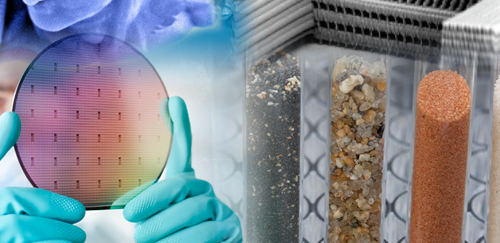
Image Credit: MKS Newport
The European Organization for Nuclear Research (CERN) developed the 27-kilometer-circumference Large Hadron Collider (LHC) near Geneva, Switzerland, in 2008. It is the world's largest synchrotron-type accelerator and particle accelerator, accelerating proton beams to 6.5 teraelectronvolts (TeV).
Application Types
Synchrotrons and free-electron lasers are commonly used to examine materials and develop procedures. The following is a list of research conducted in several synchrotrons.
- Life sciences, including protein and large-molecule crystallography
- LIGA-based microfabrication (lithography, electroplating, and molding)
- Drug discovery and research
- X-Ray lithography
- Analyzing chemicals to identify makeup
- Monitoring the response of living cells to medicines
- Inorganic crystallography and microanalysis
- Fluorescence investigations
- Analysis and study of semiconductor materials and structures
- Analysis of geological materials
- Medical imaging
- Particle therapy that treats certain types of cancer
MKS | Newport Products Used in High-Energy (HE) Facilities
Image Credit: MKS Newport
MKS motion, optomech, optics, instrumentation, and laser products are available in high-energy facilities. Standard and vacuum-compatible goods are available, depending on the environment (ambient or vacuum chamber).
Beam management and sample manipulation are two generic application areas. Because the HE beam is typically fixed, the sample is shifted relative to the beam. In rare cases, the beam is redirected in a very controlled manner by manipulating beam splitters or mirrors.

This information has been sourced, reviewed, and adapted from materials provided by MKS Newport.
For more information on this source, please visit MKS Newport.