Sponsored by MKS NewportReviewed by Olivia FrostAug 28 2026
The picomotor actuator's revolutionary design is based on a fundamental difference between dynamic and static friction.
A visual example of this is the "tablecloth trick," in which a quick draw of the cloth leaves the dishes on the table (low dynamic friction), whereas a long tug of the cloth results in the dishes being pulled off the table (high static friction, and a major mess).
NewportTM picomotor actuators work on the same concept, with a threaded jaw, comparable to two halves of a split nut, clamped around a precision 80-pitch screw. One jaw is attached to one end of a piezoelectric transducer, while the other is connected to the opposite end.
A slow electrical signal supplied to the piezo gradually changes its length, causing the two jaws to glide in opposing directions. This gradual sliding motion causes the screw to revolve (static friction). Upon completion of the transducer motion, a rapid electrical signal returns the jaws to their original positions.
Because of its inertia and minimal dynamic friction, the screw remains stationary and maintains its place. Simply switching the order of the fast and slow signals changes the direction of rotation.
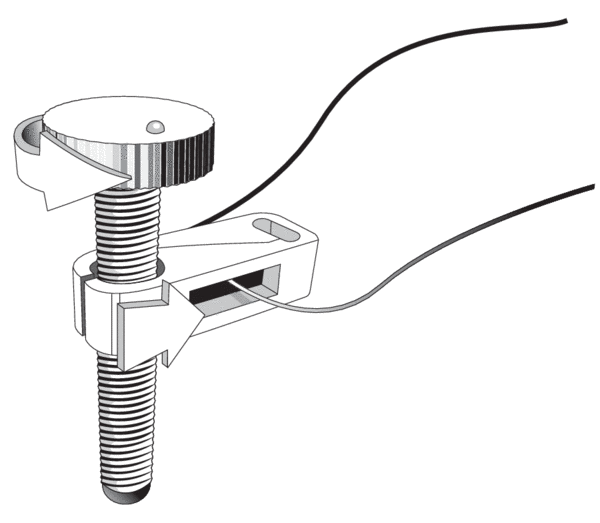
Image Credit: MKS Newport

This information has been sourced, reviewed, and adapted from materials provided by MKS Newport.
For more information on this source, please visit MKS Newport.