For applications requiring remarkable accuracy, small step sizes, and set-and-forget stability in a small package, picomotor actuators are well-suited for motorizing fine-positioning stages and mounts.
- Easy-to-use, flexible controller/drivers
- Manual adjustment knob
- Easy integration
- 30 nm positioning resolution
- Substantial 22 N axial load capacity
- Set-and-forget long-term stability
Specifications
Source: MKS Newport
| Models |
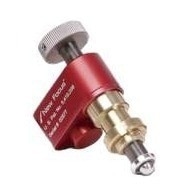
8301NF |
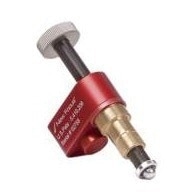
8302 |
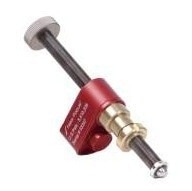
8303 |
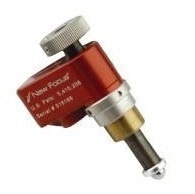
8321 |
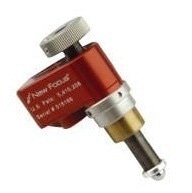
8322NF |
| Travel Range |
12.7 mm |
25.4 mm |
50.8 mm |
12.7 mm |
25.4 mm |
| Maximum Speed |
1.2 mm/min |
1.2 mm/min |
1.2 mm/min |
1.2 mm/min |
1.2 mm/min |
| Axial Load Capacity |
22 N |
22 N |
22 N |
22 N |
22 N |
Minimum Incremental
Motion |
< 30 nm |
< 30 nm |
< 30 nm |
< 30 nm |
< 30 nm |
| Drive Torque |
0.018 Nm |
0.018 Nm |
0.018 Nm |
0.018 Nm |
0.018 Nm |
| Frequency |
2 kHz |
2 kHz |
2 kHz |
2 kHz |
2 kHz |
| Mounting |
9.5 mm
Shank |
9.5 mm
Shank |
9.5 mm
Shank |
M12 x 0.5 mm
Thread |
M12 x 0.5 mm
Thread |
| Cable Length |
2.1 m |
2.1 m |
2.1 m |
2.1 m |
2.1 m |
| Connector Type |
4-Pin RJ-22 |
4-Pin RJ-22 |
4-Pin RJ-22 |
4-Pin RJ-22 |
4-Pin RJ-22 |
| Rated Life |
> 1 x 10⁹ steps |
> 1 x 10⁹ steps |
> 1 x 10⁹ steps |
> 1 x 10⁹ steps |
> 1 x 10⁹ steps |
| Operating Temperature |
10–40 °C |
10–40 °C |
10–40 °C |
10–40 °C |
10–40 °C |
Features
Picomotor Technology
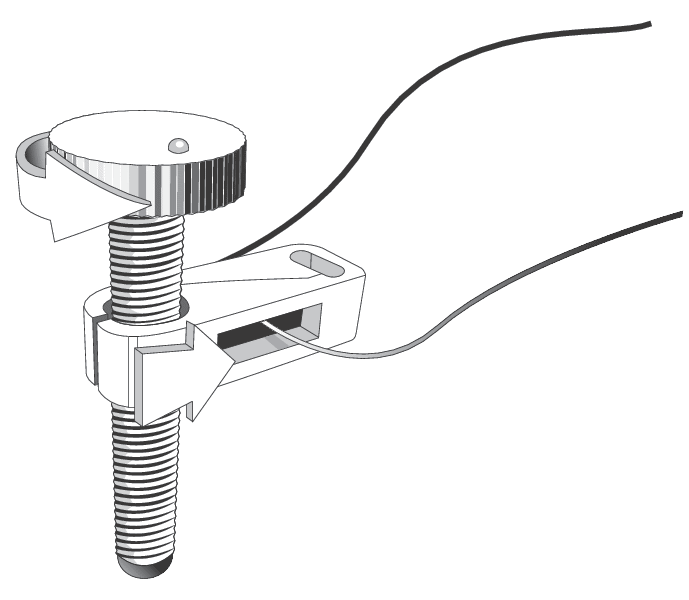
Image Credit: MKS Newport
The fundamental distinction between dynamic and static friction underpins picomotor actuators. The magician's “tablecloth trick” is an example of this. When the cloth is pulled quickly (low dynamic friction), the dishes remain on the table, but when it is pulled slowly (high static friction), they are pulled off the table and create a huge mess!
Using a threaded jaw that resembles two halves of a split nut and is clamped around a precise 80-pitch screw, the Picomotor actuator operates on the same principle.
A piezoelectric transducer has jaws attached at either end. The two jaws slide in opposing directions when a slow electrical signal is supplied to the piezo. The screw rotates (static friction) due to this gradual sliding action.
When the transducer motion is complete, a brief electrical signal restores the jaws to their original places. Due to its inertia and minimal dynamic friction, the screw remains stationary and holds its place. Simply switching the sequence of the rapid and slow signals reverses the direction of rotation.
< 30 nm Positioning Resolution
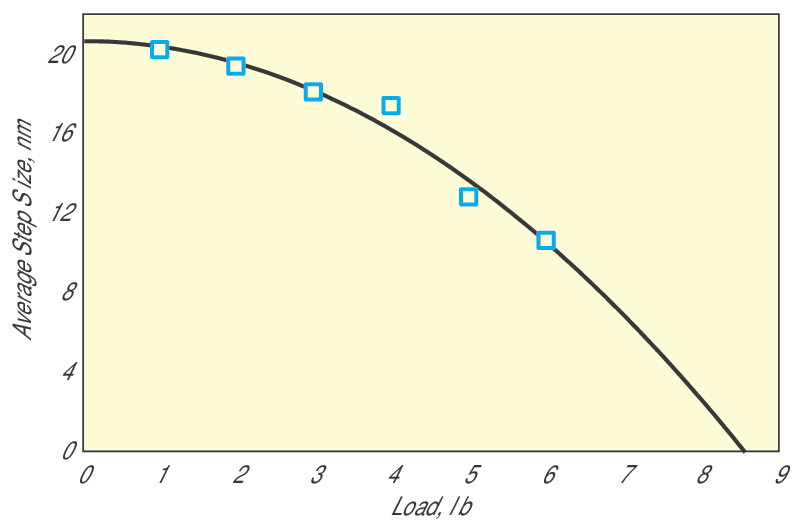
Image Credit: MKS Newport
The Picomotor actuators have a step size of less than 30 nm, enabling extremely small and precise motions. It is important to note that the step size for open-loop picomotors changes from step to step and between forward and backward directions, and is directly proportional to payload; while running an open-loop picomotor, position feedback should be given by an external signal.
Closed-Loop Picomotor actuators are ideal for applications that need absolute position calibration and great repeatability.
Substantial Force Contained in a Small Package
The Picomotor actuators are compact and offer significant push force with a load capacity of 5 lbs (22 N).
Simple Integration
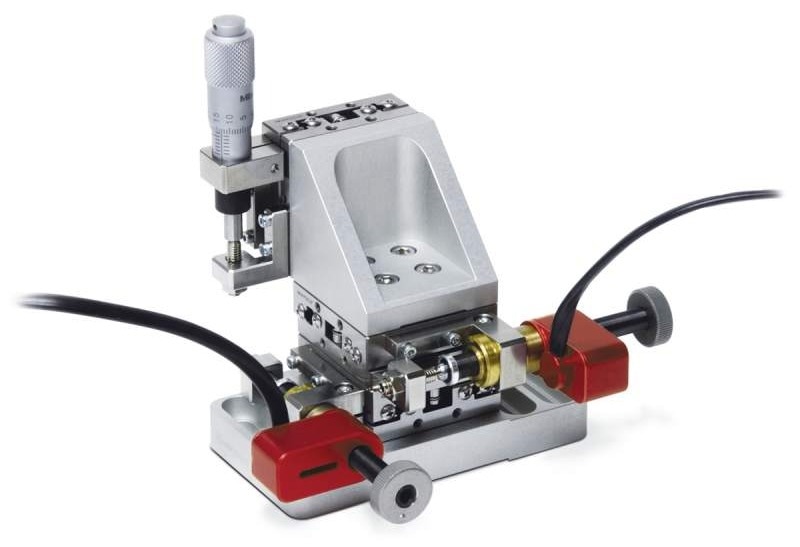
Image Credit: MKS Newport
Picomotor actuators can be readily incorporated into standard micrometer mounting holes, thanks to their standard mounting choices, which include 0.375” shank or M12 × 0.5 mm thread.
Easy-to-Use Flexible Motion Controllers and Drivers
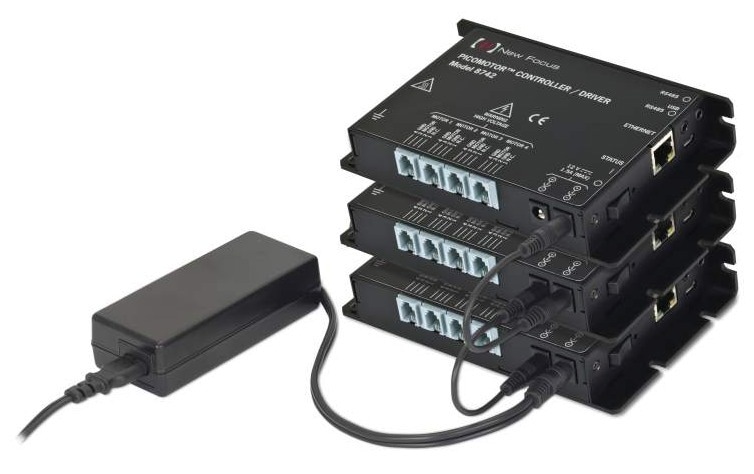
Image Credit: MKS Newport
The drivers and controllers for Open-Loop Picomotors are modular. A network of up to 124 standard Picomotor actuators can be created by daisy-chaining up to 31 drivers, each with four channels. The controller system offers two plug-and-play interface options: a computer or a hand pad. As an alternative, users can use the TTL/Analog Picomotor driver.
Set-and-Forget Stability with Virtually No Backlash
When voltage is delivered to the piezo, the Picomotor actuator changes length, which causes the jaws to move and turn the screw. The actuator does not move in the absence of electricity. When the system is turned off, users can be sure that the configuration will remain in place.